
Maximizing Efficiency, Safety, And Growth Through Smart Pallet Racking Solutions
By Tom Seest
At RackingWorld, we help guide you through selecting warehouse storage systems and racking.
Be sure to read our other related stories at RackingWorld to learn more about warehouse storage systems.
How Do Big-Box Retail Distribution Centers Leverage Pallet Racking?
When you walk into a big-box retail distribution center, what you see isn’t just a warehouse—it’s a finely tuned machine running on plain old elbow grease and smart planning. Pallet racking is the backbone holding up that machine, stacking goods higher than you’d think possible, turning chaos into order. It’s where raw muscle meets method, keeping the flow of products moving smoothly from truck to shelf, day in and day out.
Think about it: these distribution centers handle mountains of inventory. Without pallet racking, it would be like trying to stack firewood without a pile. Pallet racking makes use of every inch of space, turning cubic feet into usable real estate. It’s not just about cramming stuff in; it’s about making sure workers can reach what they need quickly and safely. No one wants to waste time hunting for boxes or risking a spill that could knock out the whole operation.
This system works because it’s built on common sense and proven reliability. Pallet racking isn’t some fancy gadget; it’s solid steel shelves engineered to hold heavy loads day after day. It respects the hard hats and work boots on the floor by making their jobs easier and safer. And when you rely on pallet racking, you’re respecting the people who keep the supply chain humming—the truck drivers, the forklift operators, the folks who make sure every product ends up where it belongs, on time.
There’s something honest and straightforward about a well-organized pallet rack setup that builds trust. When you know your inventory is secure, accessible, and accounted for, you feel confident your business won’t hamstring itself with chaos. It’s a quiet promise of stability—your goods won’t get lost, damaged, or delayed because of poor storage.
Behind every box on those racks is a story—of a kid’s new shoes, a family’s groceries, a business’s tools—vital pieces of everyday life. Pallet racking might be just steel and bolts, but it holds those stories up, steady as a heartbeat. It’s a partner in the blue-collar hustle, helping businesses deliver not just products, but promises kept.
So, the next time you see those towering racks, remember—there’s grit and brains behind that order. Pallet racking is what big-box distribution centers lean on to keep America’s stores stocked, and lives moving forward. It’s no-nonsense, reliable, and absolutely essential.
How Do Big-Box Retail Distribution Centers Leverage Pallet Racking?
How Do Big-Box Retail Distribution Centers Leverage Pallet Racking?
- Pallet racking is the backbone of big-box retail distribution centers, transforming chaotic inventory into organized, efficient storage.
- It maximizes space by converting cubic feet into usable storage, ensuring quick and safe access to products for workers.
- Constructed from solid steel shelves, pallet racking is built for durability and reliability, supporting heavy loads daily.
- The system enhances safety and efficiency for workers like forklift operators and respects the entire supply chain process.
- A well-organized pallet rack setup builds trust by securing inventory and preventing loss, damage, or delays.
- Each stored item represents important everyday life stories, making pallet racking an essential partner in business operations.
- Pallet racking is a no-nonsense, essential component that keeps stores stocked and the flow of products moving smoothly.
How Do Big-Box Retail Distribution Centers Leverage Pallet Racking?
Table Of Contents
- How Do Big-Box Retail Distribution Centers Leverage Pallet Racking?
- What Emotional Impact Does Efficient Pallet Racking Have on Workers?
- How Does Pallet Racking Improve Order Accuracy and Reduce Errors?
- What Ethical Practices Ensure Safe Pallet Racking Setup In Centers?
- How Does Expert Design Influence Pallet Racking Effectiveness?
- What Stories Highlight Pallet Racking Success In Retail Centers?
- How Do Social Teams Collaborate to Optimize Pallet Racking Use?
- Conclusion
- Other Resources
- Glossary Of Terms
- Other Questions
- Checklist
What Emotional Impact Does Efficient Pallet Racking Have on Workers?
There’s a kind of quiet confidence that comes with walking into a warehouse where the pallet racking is tuned up just right. It’s the difference between scrambling in a messy pit and moving through a well-oiled system. When the pallet racking is set up efficiently, workers don’t just save time—they feel respected. It’s a basic human thing: when your tools and workspace are organized, when everything has its place, it shows someone’s been thinking about you. That respect sinks in deep. It’s like the difference between being handed a cracked wrench or a solid, dependable one. That’s not just convenience. It’s a boost to morale that stays with you through the day.
On the head side of it, efficient pallet racking is a smart investment in safety and productivity. It lessens the chances of accidents—forklifts sliding into wobbly racks, heavy loads toppling over, people needing to scramble or strain to reach items. You don’t have to be a safety guru to know that fewer accidents mean fewer painful interruptions and lost hours. Instead, there’s a rhythm to the work that lets people focus on the job itself instead of worrying if the next pallet rack is going to give way. That sense of stability is something you carry in your gut. It settles nerves, builds confidence, and keeps the whole crew steady on their feet.
From an ethical angle, giving workers a well-organized and safe environment is the bare minimum of what any business should do. Efficient pallet racking isn’t just about stacking boxes; it’s about stacking respect—toward the folks who do the heavy lifting day after day. It’s an honest way to show that their health and dignity matter. And when workers see that management has invested in a system that makes their job smoother and safer, it creates a layer of trust that goes beyond paychecks. Trust that their well-being is front and center, not an afterthought.
Stories around the floor often talk about the difference that a sturdy, clear system makes. When pallet racking runs like clockwork, there’s less hassle, less downtime, and more smiles through the shift. It builds camaraderie, too. Everyone’s got each other’s backs when the workplace isn’t a hazard zone. The social perks ripple out: better teamwork, fewer grumbles, and a feeling that you’re all in this together.
Getting efficient pallet racking right isn’t just good business—it’s good for the people who make the business run. It’s a down-to-earth, no-nonsense way to say: We see you, we’ve got you, and we’re making your work something you can take pride in every day.
What Emotional Impact Does Efficient Pallet Racking Have on Workers?
What Emotional Impact Does Efficient Pallet Racking Have on Workers?
- Efficient pallet racking creates a well-organized workspace that saves time and shows respect to workers.
- Properly set up racks boost morale by providing reliable tools and a sense of thoughtful organization.
- It enhances safety by reducing accidents, interruptions, and physical strain in the warehouse.
- A stable and safe environment builds worker confidence and maintains steady workflow.
- Providing organized and secure storage is an ethical responsibility that demonstrates care for workers’ health and dignity.
- Effective pallet racking fosters trust between management and employees beyond financial compensation.
- A smooth system reduces downtime, improves teamwork, and creates a positive work atmosphere.
What Emotional Impact Does Efficient Pallet Racking Have on Workers?
How Does Pallet Racking Improve Order Accuracy and Reduce Errors?
When it comes down to it, pallet racking isn’t just some fancy steel shelves—it’s the backbone holding your whole operation together. You want your orders right the first time, every time. Mess-ups cost money, waste time, and wear on everyone’s patience. Pallet racking steps in like a steady, no-nonsense partner that keeps things lined up tight and easy to find. With everything clearly stored where it belongs, the chance of grabbing the wrong box or counting the wrong quantity takes a nosedive.
Think about the warehouse floor without organized pallet racking—it’s chaos. Staff stumble over misplaced pallets, double-checking every label like they’re defusing a bomb. Tired hands and rushed minds don’t mix well with mistakes, and errors start piling up. But with pallet racking, everything’s labeled and slotting into its own place, making it simple to spot what you need fast. That cuts down on guesswork and lets folks trust what they see. Trust is huge when every minute counts and customers expect spot-on deliveries.
There’s a real pride in getting it right, knowing your work helps keep the whole chain moving smooth. When you walk through aisles of sturdy racks stacked neat, it’s clear that this setup means business—that someone’s put in the sweat and common sense to build a system that makes sense for the team. It’s an ethical move, too: reducing errors means less waste, fewer returns, and happier customers. That’s not just smart; it’s the right thing to do.
Over time, pallet racking shapes the warehouse culture. It says you respect your workers and their time by giving them the tools that make their job easier, not harder. When employees feel confident that what they pull off the rack is exactly what’s on the order, it lifts morale and keeps mistakes from snowballing into bigger problems. It’s a simple win you feel in your gut—less stress, fewer headaches.
So yeah, pallet racking is more than steel and bolts. It’s the silent commander behind accurate orders, the quiet partner cutting errors, and the firm handshake that says, “We get it done right here.” For anyone serious about running a tight ship, that kind of reliability is worth its weight in gold.

How Does Pallet Racking Improve Order Accuracy and Reduce Errors?
How Does Pallet Racking Improve Order Accuracy and Reduce Errors?
- Pallet racking is essential for accurate order fulfillment, reducing costly mistakes and saving time.
- Without organized pallet racking, warehouse operations become chaotic, increasing the risk of errors.
- Properly labeled and organized racks minimize guesswork and build trust in the accuracy of inventory.
- Well-maintained pallet racking reflects pride and ethical responsibility by reducing waste and returns.
- It positively influences warehouse culture by respecting workers’ time and providing efficient tools.
- Confidence in pallet racking boosts employee morale and prevents small errors from escalating.
- Pallet racking acts as a reliable foundation for smooth, error-free operations crucial for business success.

How Does Pallet Racking Improve Order Accuracy and Reduce Errors?
What Ethical Practices Ensure Safe Pallet Racking Setup In Centers?
When it comes to pallet racking in any center, ethics aren’t just a nice-to-have; they’re the bedrock of safety and trust. Setting up these heavy-duty shelves isn’t just about slapping steel together. It’s about respect—respect for the people working beneath those racks, the equipment that moves the loads, and the very walls that hold up the system. The best setups come from folks who care enough to do things right the first time, not just the cheapest or fastest.
You can’t cut corners with pallet racking. It’s pretty simple: if those racks fail, someone could get hurt. That hits close to home. Think about the guy stacking boxes or the forklift driver moving pallets—they rely on a stable system every day. And that makes ethics much more than a corporate phrase; it’s real life. Doing your job well means checking every bolt, listening to experienced hands on the floor, and following specs down to the letter. No flashy shortcuts or “good enough” fixes. That’s the kind of work that builds trust—among teams, with management, and with everyone who steps into the distribution center.
There’s also an honest, straightforward logic behind these ethical practices. Proper pallet racking setup prevents accidents, reduces downtime, and saves money on costly repairs or replacements. That means profits and safety go hand in hand, not one over the other. When companies invest in quality materials and training, it’s not a waste—it’s smart business. You get a system that lasts, keeps people safe, and runs like clockwork.
Setting up pallet racking right is a shared responsibility, too. It’s knowing that your work affects someone else’s day, their family, their paycheck. You don’t want to be the reason a co-worker faces injury or loses trust in the system. When everyone’s on board—installers, supervisors, safety inspectors—the whole operation becomes a team effort built on respect and accountability.
The bottom line is, ethical pallet racking setup is about honoring the human element behind the steel beams. It’s a promise that safety won’t be compromised, that quality matter, and that every person walking those aisles can trust the ground beneath their feet. That kind of integrity doesn’t just keep the place running—it keeps it standing strong.

What Ethical Practices Ensure Safe Pallet Racking Setup In Centers?
What Ethical Practices Ensure Safe Pallet Racking Setup In Centers?
- Ethics in pallet racking setup are essential for safety and trust, not just optional.
- Proper installation respects workers, equipment, and infrastructure, prioritizing doing it right over cost or speed.
- Cutting corners risks injury to workers like stackers and forklift drivers who rely on stable racks daily.
- Following detailed specifications and thorough checks builds trust among teams and management.
- Ethical practices prevent accidents, reduce downtime, and save money, linking safety with profitability.
- Quality materials and training are smart investments for long-lasting, reliable pallet racking systems.
- Setting up racks correctly is a shared responsibility ensuring safety, respect, accountability, and operational integrity.
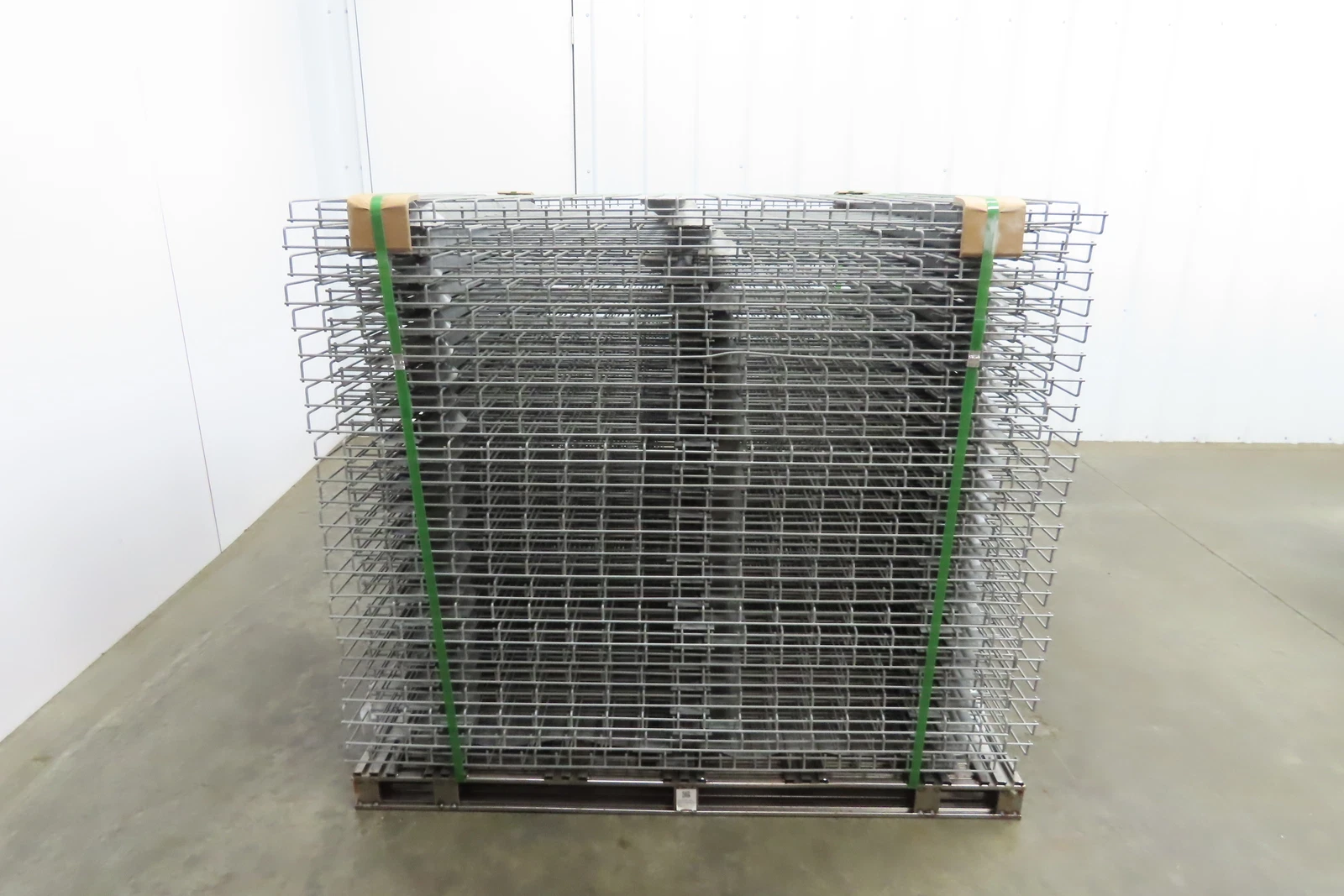
What Ethical Practices Ensure Safe Pallet Racking Setup In Centers?
How Does Expert Design Influence Pallet Racking Effectiveness?
When it comes to Pallet Racking, nobody wins by guessing or cutting corners. You’ve got heavy loads, tight schedules, and people depending on that gear not to fall apart like a house of cards. Expert design isn’t just some fancy blueprint with circles and lines; it’s the difference between a warehouse that runs smooth and one held together by duct tape and prayers.
Think about it: every beam, bolt, and shelf has a reason. A pro who’s been in the trenches knows how weight spreads, how to prevent those costly bends and breaks that shut things down and dig deep into your wallet. There’s more riding on those racks than just boxes—there’s safety, productivity, and pride in doing a job right. You don’t want equipment that’s second-guessing each step, because that uncertainty isn’t just a slow-down; it’s a risk, one nobody wants on their conscience.
Designing effective Pallet Racking means planning for the real world—the kind where forklifts sneak around corners, pallets stack high, and demands change faster than the weather. It’s practical wisdom earned from seeing what works and, just as important, what fails. When the racks fit the flow of your operation, everything clicks: people move faster, stock stays organized, and deadlines get hit without breaking a sweat. It’s not magic; it’s respect for the work and the folks on the floor.
There’s a quiet trust that builds when you know your storage isn’t just some temporary fix but a foundation you can lean on for years. That’s ethical too—because making sure your team works in a safe place with equipment built to last isn’t just good business; it’s the right thing to do. When everyone can walk tall after a shift without worrying about a stack collapsing, you feel it in your gut—that confidence that you did the job the right way.
At the end of the day, Pallet Racking designed by someone who knows their trade turns a cluttered mess into a well-oiled machine. It’s about honoring hard work with solid solutions, cutting out the guesswork, and building something dependable. That’s the kind of design that doesn’t just store pallets—it nurtures trust, drives efficiency, and keeps the whole operation standing strong.

How Does Expert Design Influence Pallet Racking Effectiveness?
How Does Expert Design Influence Pallet Racking Effectiveness?
- Expert pallet racking design is essential for safety, productivity, and reliability, especially under heavy loads and tight schedules.
- Every component of the racking system has a purpose, informed by professional knowledge of weight distribution and structural integrity.
- Proper design prevents costly equipment failures, operational shutdowns, and reduces risks that affect both safety and efficiency.
- Effective pallet racking planning takes into account real-world dynamics like forklift movement, high pallet stacking, and fluctuating demands.
- Well-designed racks improve workflow by organizing stock, speeding up operations, and helping meet deadlines smoothly.
- Durable pallet racking systems provide a long-term, safe foundation for warehouse operations, fostering trust and ethical responsibility.
- Quality design transforms chaotic storage areas into efficient, dependable systems that support workforce pride and operational success.

How Does Expert Design Influence Pallet Racking Effectiveness?
What Stories Highlight Pallet Racking Success In Retail Centers?
Every successful retail center worth its salt has a story about how pallet racking saved the day. Picture a busy warehouse where the clock’s always ticking, space is tight, and every inch matters. That’s where pallet racking steps up, turning chaos into order, and stress into steady progress. It’s not just metal bars and beams—it’s the backbone holding up a whole operation, silently doing the heavy lifting so workers can move fast and keep shelves stocked without breaking their backs.
Take the tale of a small retail center that doubled its inventory capacity without doubling its footprint. By swapping out old, flimsy storage setups for a solid pallet racking system, they unlocked vertical space they didn’t even know they had. The folks running it went from tripping over crates to smoothly loading and unloading trucks, making their deliveries on time and customers happier. It’s the kind of efficiency story that makes you nod and think, “Now that’s common sense put to work.”
Beyond just space, pallet racking brings safety into the picture—a big deal for any retail center watching family livelihoods. When boxes stack uneven or aisles look like obstacle courses, accidents aren’t just a headache; they can shut things down. Installing a well-designed racking system means fewer bumps, bruises, and costly downtime. It’s about care for the crew and confidence that everyone goes home in one piece. That’s an ethical win alongside the bottom line.
From an expert’s viewpoint, pallet racking isn’t a flashy fix—it’s trusted proven hardware tested on countless floors where people sweat and hustle. Industry pros swear by its durability and adaptability. You don’t buy pallet racking to impress; you buy it because it works and lasts, no fuss. When you invest in it, you’re not just spending cash—you’re securing a solid foundation that carries everything a retail center needs to succeed.
The best stories come back to the people—workers who take pride in knowing their gear won’t let them down, managers who finally breathe easier during peak seasons, and customers who find what they need on the shelves. Pallet racking changes the game by making day-to-day grit a little less grind, turning hard work into steady progress. For any retail center ready to roll up its sleeves, it’s more than storage—it’s a partner that earns trust through every pallet stacked right.

What Stories Highlight Pallet Racking Success In Retail Centers?
What Stories Highlight Pallet Racking Success In Retail Centers?
- Pallet racking transforms busy, crowded warehouses by organizing space and enabling faster, safer work.
- A small retail center doubled inventory capacity without expanding footprint by switching to pallet racking, improving efficiency and customer satisfaction.
- Pallet racking enhances safety by preventing accidents caused by uneven stacking and cluttered aisles, reducing downtime and protecting workers.
- Industry professionals trust pallet racking for its durability and adaptability, making it a reliable long-term investment.
- Pallet racking serves as the foundational support system for retail operations, enabling consistent stocking and delivery processes.
- Workers and managers benefit from reduced physical strain and smoother workflows, especially during peak periods.
- Pallet racking builds trust and reliability by supporting daily operations and turning hard work into steady progress.

What Stories Highlight Pallet Racking Success In Retail Centers?
How Do Social Teams Collaborate to Optimize Pallet Racking Use?
When it comes to making the most of pallet racking, you don’t get there by going it alone. Social teams—folks who handle everything from inventory to logistics—have to roll up their sleeves together and figure it out. It’s like a well-oiled machine with each part doing its job, or else the whole thing grinds to a halt. The secret? Open talk, shared goals, and knowing that every rack full of pallets tells a part of the story.
On the ground, these teams know that every inch of pallet racking means space saved or wasted. There’s a real pride in nailing down just how to slot stuff in tight without crushing efficiency or safety. You hear the grumbles when space gets sloppy or the stress when shipments back up. It’s not just about shoving boxes onto shelves; it’s about respect for the process and each other, because one mistake can set off a chain reaction that eats up time and money. That shared responsibility builds trust. Everyone’s got skin in the game.
Smart teams start by walking the warehouse floor together — eyes peeled, ideas shared. They talk about the weight limits, the height clearances, and the shuffle of daily work that changes demands on the racks. When different voices—warehouse crew, planners, forklift drivers—come together, the solutions get sharper. It’s not fancy corporate stuff, just good old-fashioned collaboration: listening, adjusting, and learning from the bumps in the process. Those hands-on tweaks, fueled by experience, shape the smartest use of pallet racking.
Ethically, it’s about safety as much as efficiency. When teams respect the realities of load limits and maintenance schedules, they aren’t just following rules, they’re protecting each other’s backs. Running a tight ship makes everyone feel safer and more confident. It shows that the team values the wellbeing of every person who steps into the warehouse, fostering a culture that’s more than just work—it’s a shared commitment to doing the right thing.
So, when teams get together and own the way they handle pallet racking, it sparks a rhythm that’s steady and reliable. There’s satisfaction in knowing the space is optimized, the work flows smoother, and the whole team rides the momentum forward. It’s that mix of grit, trust, and plain-speaking teamwork that turns a cluttered warehouse into a smart, solid operation. When you see those racks packed right, you know it wasn’t luck—it was teamwork, plain and simple.

How Do Social Teams Collaborate to Optimize Pallet Racking Use?
How Do Social Teams Collaborate to Optimize Pallet Racking Use?
- Effective pallet racking relies on collaboration across social teams handling inventory and logistics, functioning like a well-oiled machine.
- Every inch of pallet racking impacts space efficiency and safety, requiring pride and respect for the process to prevent costly mistakes.
- Teams walk the warehouse floor together, sharing ideas and observing weight limits, height clearances, and daily workload changes for smarter solutions.
- Collaboration among warehouse crew, planners, and forklift drivers enhances problem-solving through listening, adjusting, and learning from experience.
- Safety and efficiency go hand in hand; respecting load limits and maintenance schedules protects team members and fosters confidence.
- Maintaining a well-run operation shows a shared commitment to doing the right thing and valuing the wellbeing of every warehouse worker.
- Optimized pallet racking results from teamwork, trust, and practical communication, transforming clutter into a smooth, reliable workflow.

How Do Social Teams Collaborate to Optimize Pallet Racking Use?
Conclusion
At its core, pallet racking in big-box retail distribution centers is more than steel beams and shelves—it’s the unsung backbone that holds the whole operation together. It turns a potential mess of crates and boxes into a well-organized system where every inch of space is earned and every pallet has its place. This isn’t about fancy tricks or shortcuts; it’s about good, solid common sense and respect for the folks on the floor. When the racks are set up right, workers don’t just get the job done faster—they feel recognized, safe, and valued. That quiet confidence comes from knowing the gear they rely on won’t fail them and that their well-being matters as much as the bottom line.
Smart pallet racking is a practical investment in safety and accuracy. It keeps those towering stacks stable and accessible, cutting down on costly mistakes and accidents. When orders get picked right the first time, it means fewer headaches and happier customers. But it’s not just about avoiding errors—it’s about building trust. Trust that every person in that warehouse has what they need to work efficiently and without fear, that every box on those shelves represents a family’s needs or a business’s livelihood. This sets the tone for a stronger, more connected team where everyone watches each other’s back, knowing their work matters.
Ethics run through every bolt tightened and every rack installed. There’s no room for cutting corners when people’s safety is on the line. Doing it right means following specs thoroughly and respecting the crew who live and breathe that environment daily. It’s honest work that builds both solid structure and solid relationships because the truth is, businesses don’t just succeed by stacking products—they succeed by stacking respect for their workers and customers alike.
Design plays a crucial role too. Experienced hands know a well-planned rack system isn’t guesswork—it’s engineered to fit the chaos and rhythm of real warehouse life. Racks that endure, that make moving day tight and smooth, turn tough days into manageable ones. That kind of design nurtures pride in the work and steadies the guts of everyone who passes beneath those shelves.
Behind every successful center lies a story of how pallet racking brought order from disorder—doubling storage capacity, reducing injuries, or simply making sure no shipment got delayed. It’s a daily grind made bearable by the dependability of a system built for the long haul.
Finally, none of it works without teamwork. The folks who run inventory, move pallets, and plan shipments need to collaborate, communicate, and own the process together. When everyone respects the rules, weight limits, and layout, they create a rhythm—the kind of well-oiled operation that hums along not by chance but by grit, trust, and plainspoken teamwork. Pallet racking isn’t just storage; it’s the foundation under all that hustle, holding up not only products but promises kept.

Conclusion
Conclusion:
- Pallet racking is the essential backbone of big-box retail distribution centers, organizing space efficiently and giving every pallet a designated place.
- Proper setup improves worker efficiency, safety, and morale by providing reliable equipment and showing respect for the workforce.
- Smart pallet racking enhances safety and accuracy, stabilizing stacks, reducing errors, accidents, and fostering customer satisfaction.
- Ethical installation and maintenance prioritize safety and respect for workers, supporting strong relationships and business success.
- Well-designed rack systems are engineered to fit warehouse operations, making daily tasks manageable and instilling pride in the workforce.
- Pallet racking improves operational outcomes such as storage capacity, injury reduction, and timely shipment handling.
- Successful distribution centers depend on teamwork, communication, and adherence to rules, with pallet racking serving as a foundation for coordinated effort and trust.

Conclusion
Other Resources

Other Resources
Here is a list of other resources you can review online to learn more:
- Cantilever Racks Chicago
- New Cantilever Racks and Racking Kits
- CMMA
- Warehouse Storage Racking in Illinois
- Arrow Industrial Sales
- Wolter
- What is Cantilever Racking? – AK Material Handling Systems
- WERC
- CA Wire
- Illinois Pallet Racking – WPRP
- Storage Equipment Manufacturers’ Association
- Pallet Racking systems in Illinois and Great Lakes
- Bradford Systems
- IIWS Inc. Rack Installation Illinois & Rack Repairs Illinois
- Material Handling Industry
- Warehousing Education and Research Council: https://www.werc.org/
- Pallet Rack Systems – New and Used Pallet Racking and Shelving Experts
- IWLA
- Teardrop Uprights
- Warehouse Automation
Use This Prompt To Get More Resources With Your Favorite Online AI Tool: Please provide me with a list of online articles with their URLs in a bulleted list that I can read regarding How Do Big-Box Retail Distribution Centers Leverage Pallet Racking?

Other Resources
Glossary Terms
How Do Big-Box Retail Distribution Centers Leverage Pallet Racking? – Glossary Of Terms
1. Pallet Racking: A storage system designed to hold pallets in horizontal rows with multiple levels.
2. Distribution Center: A warehouse facility where goods are stored, sorted, and shipped to retail locations.
3. Big-box Retailer: Large retail stores offering a wide variety of products, typically selling in volume.
4. Inventory Management: The process of overseeing and controlling stock levels in a warehouse.
5. Load Capacity: The maximum weight a pallet rack or shelf can safely support.
6. SKU (Stock Keeping Unit): A unique identifier for each product type stored in the warehouse.
7. Pallet Jack: A manual or motorized tool used to lift and move pallets within the warehouse.
8. Forklift: A powered industrial truck used to lift and transport pallets at various heights.
9. Slotting: The strategic placement of products within the racking system to optimize picking efficiency.
10. Picking: The process of selecting items from pallet racks to fulfill customer orders.
11. FIFO (First In, First Out): An inventory method where older stock is shipped out before newer stock.
12. LIFO (Last In, First Out): An inventory method where the most recently received items are shipped first.
13. Pallet: A flat platform used to stack, store, and transport goods within the warehouse.
14. Aisle Width: The space between pallet racks allowing for movement of equipment and personnel.
15. Mezzanine: An intermediate floor in a warehouse that can increase storage capacity vertically.
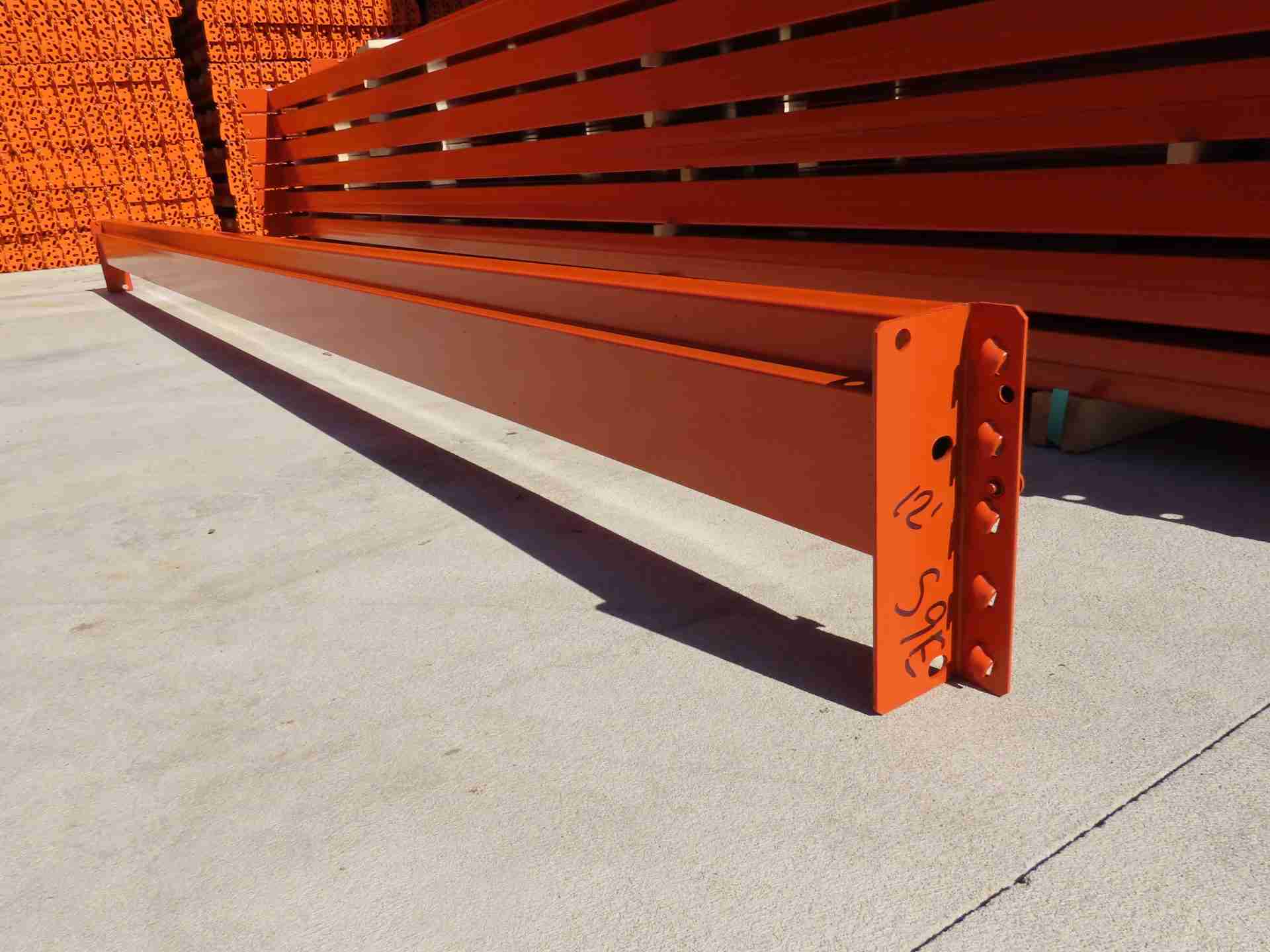
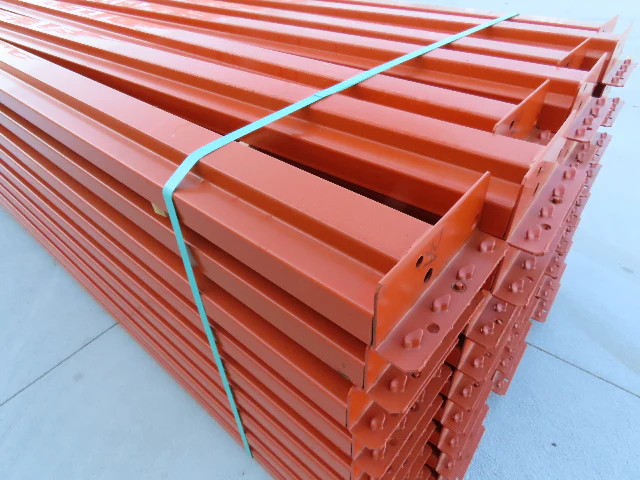
16. Load Beam: Horizontal beams in a pallet rack that support the pallets.
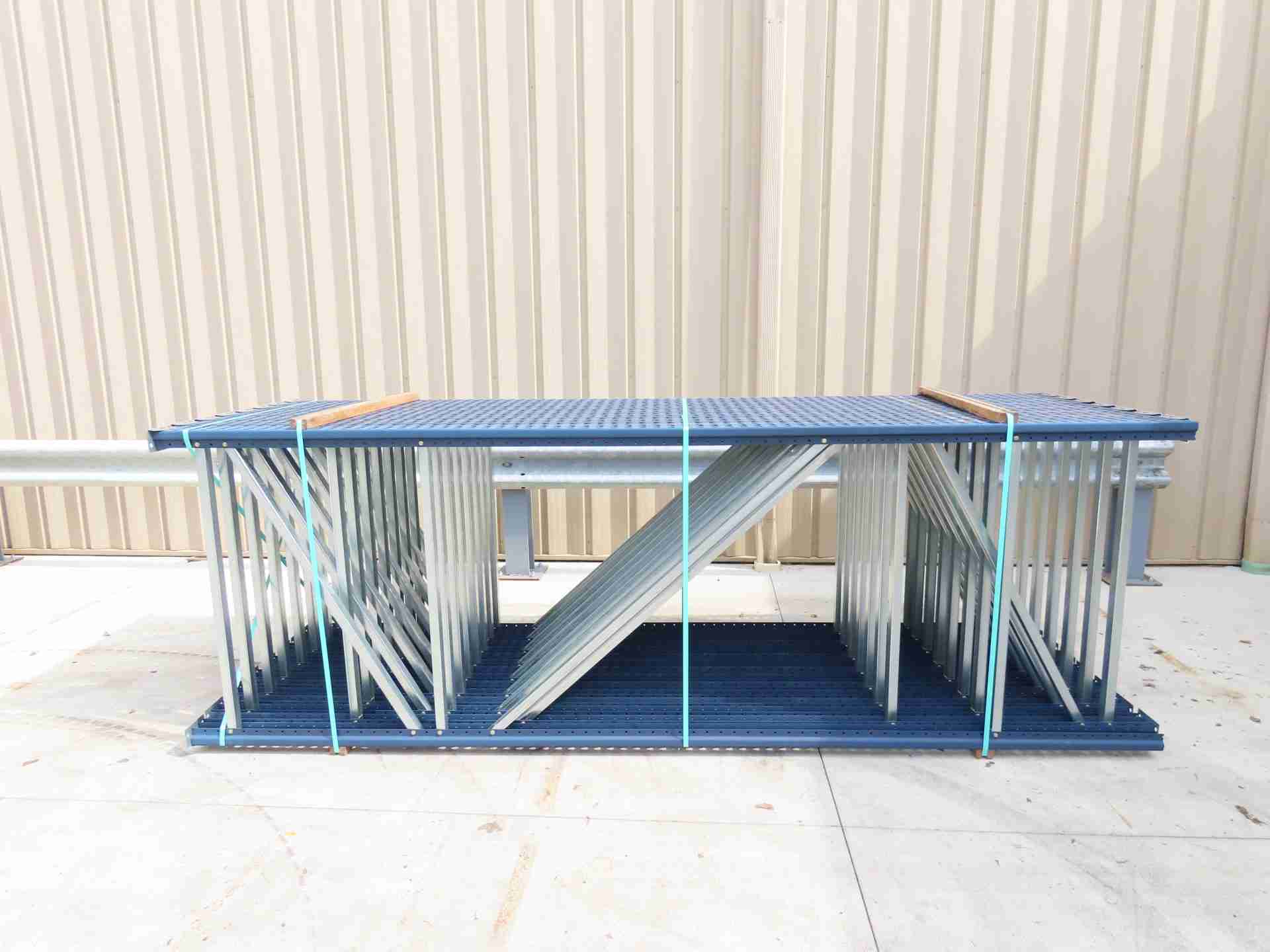
17. Upright Frame: The vertical supports of a pallet racking system.
18. Pick Face: The location within the racks where items are retrieved for orders.
19. Cross Docking: Transferring goods directly from inbound to outbound transportation with minimal storage time.
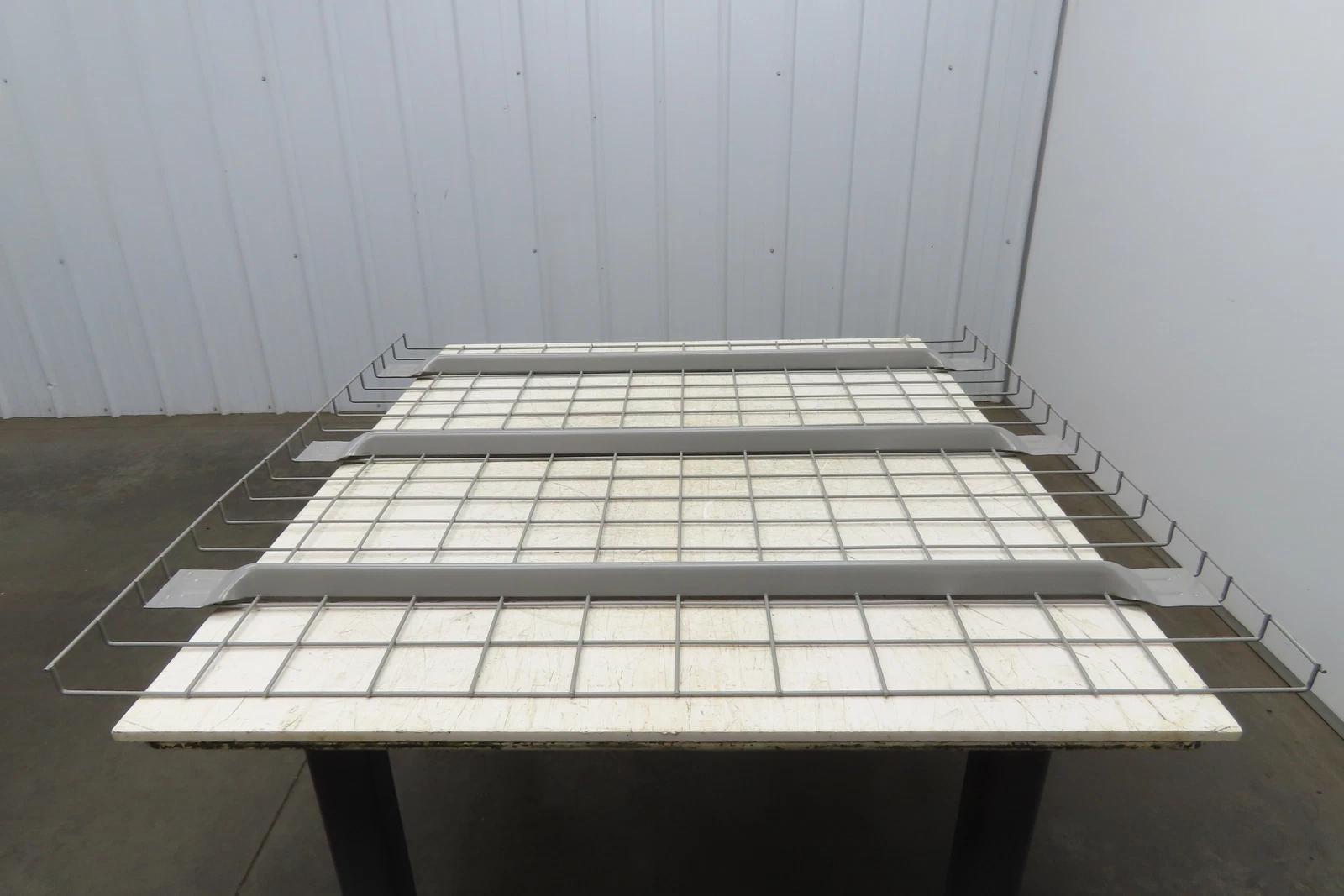
20. Wire Decking: A mesh platform placed on rack beams to support pallets and improve safety.
21. Pallet Flow Racking: A racking system that uses gravity to move pallets forward on rollers for easier picking.
22. Drive-In Racking: A storage system where forklifts drive directly into the rack lanes to place or retrieve pallets.
23. Push Back Racking: A dense storage system where pallets are loaded on carts that roll back and forth on rails.
24. Picking Tower: A vertical structure for high-density product storage and order picking.
25. Automation: Use of machines or robotics to handle storage, retrieval, and sorting in the distribution center.
26. Space Utilization: Maximizing the volume of storage within the distribution center footprint.
27. Throughput: The rate at which products move through the warehouse from receiving to shipping.
28. Safety Clips: Devices used to secure pallet beams to upright frames to prevent accidental dislodging.
29. Load Stability: Ensuring pallets and items are securely placed to prevent shifting or falling.
30. Warehouse Management System (WMS): Software used to track inventory, orders, and optimize warehouse operations.

Glossary Of Terms
Other Questions
How Do Big-Box Retail Distribution Centers Leverage Pallet Racking? – Other Questions
If you wish to explore and discover more, consider looking for answers to these questions:
- What are the upfront and ongoing costs of installing pallet racking in a big-box distribution center?
- How do you calculate ROI and payback period for a pallet racking investment?
- What different pallet racking configurations (selective, drive-in, push-back, pallet flow, cantilever) are best for specific product types?
- How do racking design choices affect pick/put-away speeds and overall throughput?
- How does pallet racking integrate with warehouse management systems (WMS) and automation technologies (ASRS, conveyors, robots)?
- What are the load capacities, safety factors, and engineering standards for different rack components?
- How do you determine optimal rack height, bay depth, and aisle width for a given facility?
- What are the common causes of pallet rack failures and how can they be prevented?
- What inspection, maintenance, and repair schedules should be followed to ensure rack safety?
- What training should forklift operators and warehouse staff receive related to rack safety and use?
- Which codes, standards, and regulations (OSHA, local building codes, seismic requirements) apply to pallet racking?
- How do you factor floor load capacity and structural considerations into racking layout decisions?
- What are the best practices for labeling, slotting, and location management on pallet racks to improve order accuracy?
- How does rack selection impact inventory management strategies like FIFO, LIFO, and batch picking?
- What strategies exist for retrofitting or expanding existing racking systems without major disruptions?
- What are the lead times for design, permitting, delivery, and installation of pallet racking systems?
- How do environmental factors (temperature, humidity, corrosive conditions) affect rack choice and maintenance?
- What insurance or warranty considerations should retailers include when purchasing and installing racking?
- How do you measure the operational impact of racking changes (KPIs to track like picks per hour, errors, safety incidents)?
- What are common cost-saving mistakes to avoid when selecting or installing pallet racking?
- How do you choose reliable suppliers and installers, and what qualifications or certifications should they have?
- What contingency plans and emergency procedures should be in place for rack collapse or major damage?
- How can pallet racking support seasonal surges, promotions, or rapid inventory changes?
- What sustainability or recycling options exist for racking materials at end of life or during upgrades?
- How do different pallet types and packaging dimensions influence rack design and throughput?
- What role do safety accessories (column guards, row spacers, rack protectors, netting) play and when are they required?
- How do big-box centers balance dense storage with safe egress, fire suppression, and sprinkler system requirements?
- What are the latest innovations and trends in pallet racking technology and warehouse layout design?
- How should performance and safety audits be documented and used to improve rack operations over time?
- What real-world case studies or metrics demonstrate improvements after implementing new racking systems?

Other Questions
Checklist
How Do Big-Box Retail Distribution Centers Leverage Pallet Racking? – A Checklist
Planning and Objectives
✅______ Defined throughput goals, SKU mix, and growth horizon (12–36 months)
✅______ Current and future pallet counts and turns modeled
✅______ Clear operating modes identified (case pick, pallet-in/pallet-out, cross-dock, seasonal peaks)
Data and Standards
✅______ Verified pallet types, dimensions, and conditions (GMA, CHEP, Euro, custom)
✅______ Accurate unit load weights and center-of-gravity data captured
✅______ Standard pallet build, wrapping, and overhang limits documented
Rack Strategy and Layout
✅______ Rack types matched to velocity and profiles (selective, double-deep, drive-in, push-back, pallet flow)
✅______ Beam elevations set for product heights, lift mast clearance, and ergonomics
✅______ Aisle widths set to equipment (sit-down, stand-up reach, turret, VNA)
✅______ Clear height, sprinkler clearance, and flue spaces maintained
✅______ Dedicated staging for inbound, outbound, and returns
✅______ One-way traffic, crossings, mirrors, and line striping planned
✅______ Lighting, signage, and visibility adequate at all pick and drive lanes
Engineering and Compliance
✅______ PE-stamped calculations for load, slab, and seismic (as required)
✅______ Local code, OSHA, RMI/ANSI MH16.1, and NFPA 13 requirements satisfied
✅______ Slab capacity verified; shims and base plates specified where needed
✅______ Rack load plaques designed and posted at every bay
Protection and Hardware
✅______ Anchors specified and torque values defined
✅______ Beam locks and locking pins installed on all beams
✅______ Row spacers, wall ties, and column protectors in place
✅______ End-of-aisle and corner guards installed
✅______ Wire decking or pallet supports specified for load type
✅______ Backstop beams or netting for fall protection where required
Labeling and Systems
✅______ Location schema standardized (aisle/bay/level/position) with check digits
✅______ Durable location labels and rack signs installed; scan quality verified
✅______ WMS/WES slotting rules aligned to rack types and pick paths
✅______ ASN, putaway, and pick scanning enforced (no paper-only exceptions)
Installation Quality
✅______ Certified installer engaged; manufacturer instructions followed
✅______ Plumb and straightness tolerances measured and recorded
✅______ Anchor torque tested and documented
✅______ As-built drawings and documentation completed
✅______ Final acceptance inspection completed with punch list closed
Safety and Training
✅______ Operator training for forklifts, order pickers, and pedestrian safety completed
✅______ Rack-specific safety training (load limits, beam heights, damage protocols) completed
✅______ Pre-shift rack and pallet condition checks implemented
✅______ Damage tag-out process with “do-not-use” controls active
✅______ Emergency egress, extinguishers, and eyewash stations accessible and marked
✅______ Housekeeping and spill controls enforced to keep aisles clear
✅______ PPE requirements posted and followed
Order Accuracy and Flow
✅______ ABC slotting implemented; fast movers at optimal heights/locations
✅______ Replenishment triggers and windows defined to prevent stockouts and congestion
✅______ Pick-to-light, RF, or voice confirmation in place for high-volume zones
✅______ Cycle counting program active with root-cause correction for variances
✅______ Error metrics tracked (mis-picks, shorts, damages) with corrective actions
Worker Experience and Ethics
✅______ Beam elevations and pick faces set for ergonomic reach and lift limits
✅______ Anti-fatigue options and safe lift aids in high-touch zones
✅______ Break areas, hydration, and temperature controls appropriate for conditions
✅______ Respectful scheduling that avoids rushed, unsafe peak practices
✅______ Floor-level feedback loop active; issues resolved and communicated back to teams
Maintenance and Inspections
✅______ Monthly visual rack inspections with documented findings
✅______ Annual expert inspection and remediation plan
✅______ Immediate replacement of damaged uprights, beams, and anchors with OEM parts
✅______ Preventive maintenance calendar for racks, labels, and protection devices
✅______ Cleaning schedule to keep flue spaces and aisles clear
Collaboration and Governance
✅______ Regular cross-functional walk-throughs (ops, safety, maintenance, IT)
✅______ Formal change control for layout, slotting, and equipment updates
✅______ Vendor qualification for rack suppliers, installers, and inspectors
✅______ Shared KPI dashboard (throughput, accuracy, damages, incidents)
Scalability and Resilience
✅______ Modular rack design that supports future levels or reconfiguration
✅______ Space reserved for growth, seasonal overflow, and new SKUs
✅______ Spare parts kit maintained (anchors, beam locks, protectors, labels)
✅______ Contingency plans for equipment downtime and peak volume surges
Go-Live and Continuous Improvement
✅______ Dry runs completed for putaway, replenishment, and picks
✅______ Safety and load limit audits passed before full production
✅______ Post-implementation review with measured improvements and next actions
✅______ Ongoing kaizen events focused on flow, accuracy, and safety outcomes

Checklist
At RackingWorld, we help guide you through selecting warehouse storage systems and racking.
Be sure to read our other related stories at RackingWorld to learn more about warehouse storage systems.
0 Comments