
Uncovering The Deadly Threat Of Neglected Warehouse Racks
By Tom Seest
At RackingWorld, we help guide you through selecting warehouse storage systems and racking.
Be sure to read our other related stories at RackingWorld to learn more about warehouse storage systems.
Are Unsafe Warehouse Racking Systems Putting Lives At Risk?
When you think about the bustling warehouse environment—buzzing forklifts, employees hustling to meet deadlines—it’s easy to overlook one crucial element that could spell disaster: pallet racking. Picture a stack of pallets, towering high, filled with goods that are meant to sustain your business’s rhythm. Now, imagine what happens if that racking system isn’t robust or adequately secured. The stakes are as high as the pallets themselves, and the potential for catastrophe is all too real.
Every day, employees step into those warehouses with the expectation that they’ll return home safe and sound. Yet, if their surroundings are governed by subpar pallet racking, that expectation is compromised. The dangers of an unsafe racking system extend far beyond the risk of physical injury. They create a ripple effect that can impact morale, productivity, and ultimately, your bottom line. Yes, it’s about compliance and regulations, but let’s not forget the human element—your team deserves an environment where safety isn’t just a checkbox, but a fundamental value.
Safety is not merely a legal obligation; it’s a moral one. Investing in quality pallet racking is more than just precaution; it’s a commitment to your team and your operational integrity. Imagine your workers moving about their tasks, confident that their safety is prioritized. The peace of mind that comes from knowing your racking systems are up to standard can transform the atmosphere of an entire workplace. More focus on productivity, fewer accidents, and a team that feels valued—this isn’t just a dream; it could be your reality.
So, what are you waiting for? Evaluate your current pallet racking systems and ask the tough questions: Are they designed for stability? Are they up to code? If there’s even a hint of doubt, it’s time to take action. Proper inspections, investing in high-quality materials, and training your team on safety protocols can ensure that both lives and businesses flourish.
Don’t become another statistic. Don’t wait for a near-miss incident to spark change. Elevate your standards today and ensure that when it comes to pallet racking, safety is at the forefront. Join the growing number of businesses that prioritize a safe workplace—because every life matters, and your commitment to safety is the first step in safeguarding those lives.

Are Unsafe Warehouse Racking Systems Putting Lives At Risk?
Are Unsafe Warehouse Racking Systems Putting Lives At Risk?
- Pallet racking is a crucial element in warehouse safety and productivity.
- Subpar racking systems create risks that can lead to physical injuries and affect employee morale and productivity.
- Safety is both a legal and moral obligation for businesses.
- Investing in quality pallet racking demonstrates a commitment to employee safety and operational integrity.
- Proper safety measures can improve workplace atmosphere, reduce accidents, and enhance productivity.
- Evaluate and inspect current racking systems to ensure they meet stability and safety standards.
- Act proactively to improve safety standards and protect employees to avoid becoming a statistic.

Are Unsafe Warehouse Racking Systems Putting Lives At Risk?
Table Of Contents
- Are Unsafe Warehouse Racking Systems Putting Lives At Risk?
- What Are The Common Signs Of Unsafe Racking Systems?
- How Can You Identify Potential Hazards In Warehouse Racking?
- What Regulations Govern Warehouse Racking Safety Practices?
- What Are The Consequences Of Ignoring Racking Safety Standards?
- How Often Should Warehouse Racking Systems Be Inspected?
- What Training Is Necessary For Employees Handling Racking Equipment?
- Conclusion
- Other Resources
- Glossary Of Terms
- Other Questions
- Checklist
What Are The Common Signs Of Unsafe Racking Systems?
In the fast-paced world of warehousing and logistics, the integrity of your pallet racking systems is paramount. Imagine walking through a bustling warehouse, where every corner is bustling with activity. Yet, hidden among the hustle and bustle could be the lurking threat of unsafe racking systems. Knowing the warning signs can be your first line of defense in safeguarding not only your inventory but the health and safety of your employees.
Listen Closely to Your Pallet Racking: Is It Speaking to You?
One of the first indicators of an unsafe racking system is obvious: visible damage. Are you spotting bent beams or cracked columns? These aren’t just visual blemishes; they’re red flags demanding your immediate attention. After all, the moment your pallet racking starts to show signs of wear and tear, it may be struggling under the weight of the loads it’s meant to support. Ignoring such signs might just be the riskiest cost-saving strategy in your operational playbook.
Inspect the Load Capacity Labels
Another critical element is the load capacity labels. While they seem like simple stickers, they hold the key to a well-functioning system. Are these labels obscured or missing? That’s like sailing without a compass. You’re steering your team into a potential disaster, unaware of the limits your pallet racking can handle. Trust me, a simple inspection here can save you from headaches—both figurative and literal.
Watch for Uneven Loads
Have you considered how your products are stacked? Unevenly loaded pallets can lead to severe imbalances, causing racking to sway, shake, or in worst cases, collapse. Take a moment to observe how products are arranged; if things look haphazard, it might be time to recalibrate your stacking strategy.
Employee Feedback Matters
Lastly, never underestimate the power of your team’s voice. If employees are expressing concerns or showing hesitance when placing or retrieving loads, this can be a sign of deeper issues within your pallet racking system. Engaging with your team in open dialogue is essential—not merely for their safety but also for fostering a culture where everyone is invested in maintaining a reliable warehouse environment.
The bottom line? Recognizing these signs effectively empowers you to take action before it’s too late. By being proactive, you not only protect your assets but also cultivate an environment of trust, confidence, and safety within your operation. After all, the goal isn’t just storage; it’s sustainable, safe success!

What Are The Common Signs Of Unsafe Racking Systems?
What Are The Common Signs Of Unsafe Racking Systems?
- The integrity of pallet racking systems is crucial in warehousing and logistics, affecting both inventory and employee safety.
- Visible damage, such as bent beams or cracked columns, signals an unsafe racking system that requires immediate attention.
- Inspecting load capacity labels is essential; obscured or missing labels can lead to dangerous situations.
- Unevenly loaded pallets can cause imbalances, swaying, or even collapse of racking systems.
- Employee feedback is vital; concerns from team members may indicate deeper issues with the pallet racking.
- Proactive recognition of safety signs can prevent accidents and foster a culture of safety and reliability.
- The ultimate goal is to ensure sustainable, safe success in warehouse operations.

What Are The Common Signs Of Unsafe Racking Systems?
How Can You Identify Potential Hazards In Warehouse Racking?
In the bustling world of logistics and inventory management, the backbone of your warehouse is undoubtedly your pallet racking systems. However, like any sturdy structure, they come with their own set of potential hazards. Identifying these threats doesn’t just make good business sense; it ensures the safety of your employees and the integrity of your operations. So how exactly can you pinpoint these risks?
First, start with an attentive eye by conducting regular inspections. Just as you wouldn’t ignore a check engine light in your vehicle, you shouldn’t overlook signs of wear and tear on your pallet racking. Look for visible signs of damage, such as bent beams, misaligned frames, or rust. These indicators are often the first red flags that something needs immediate attention. Remember, your racking systems are the lifeline of your productivity, and ignoring them is a disservice to both your team and your bottom line.
Next, consider your inventory methods. Overloading pallet racking with too much weight can create dangerous conditions that can result in catastrophic failures. Ensure that your team is well-trained in load distribution and weight limits—this simple oversight can prevent accidents that can affect morale and potentially lead to costly lawsuits. Foster a culture of safety where every team member feels empowered to double-check weight allocations.
Another effective strategy is to leverage technology. Modern solutions offer real-time monitoring systems that can alert you to structural stress or load imbalances. By embracing these tools, you’re not only identifying hazards but also demonstrating a commitment to innovation and safety—all critical elements in building trust with your employees.
Encourage open communication. Cultivating an environment where employees feel comfortable reporting potential problems can significantly reduce risks. Schedule regular safety meetings to discuss observations, concerns, and insights. When people feel heard, they are more likely to stay vigilant in spotting hazards.
Finally, always keep the lines of safety training open. Revisit training sessions regularly to ensure everyone is up to speed with the best practices for pallet racking safety. By prioritizing education, you empower your workforce while reinforcing your commitment to their well-being.
By actively investing in these strategies, you demonstrate not only an understanding of hazards in your pallet racking but also a sincere commitment to improved safety. This is your chance to turn a potential risk into an opportunity to showcase your dedication to safety, efficiency, and a thriving workplace.

How Can You Identify Potential Hazards In Warehouse Racking?
How Can You Identify Potential Hazards In Warehouse Racking?
- Regular inspections are crucial for identifying signs of wear and tear, such as bent beams and rust.
- Overloading pallet racking can lead to dangerous conditions; proper training in load distribution is essential.
- Implement real-time monitoring systems to detect structural stress or load imbalances.
- Encourage open communication among employees to report potential hazards and foster a culture of safety.
- Schedule regular safety meetings to discuss observations and concerns regarding hazards.
- Continuously revisit safety training sessions to keep everyone informed on best practices.
- Investing in these safety strategies enhances employee well-being and operational efficiency.

How Can You Identify Potential Hazards In Warehouse Racking?
What Regulations Govern Warehouse Racking Safety Practices?
Running an efficient warehouse is a balancing act where every piece has its place, and safety stands as a cornerstone of success. Have you taken a moment to consider how the regulations governing warehouse racking, particularly pallet racking, play into this balance? Your racking systems aren’t merely metal structures; they’re vital components of your operational symphony, ensuring that products are stored efficiently while maintaining safety for your workforce.
First, let’s delve into the heart of the matter: regulations. Several key standards govern warehouse safety practices. The Occupational Safety and Health Administration (OSHA) sets strict guidelines that all employers must follow. Think of these regulations as the foundational blueprint for a secure warehouse environment. They address the installation, maintenance, and use of pallet racking systems, providing essential protocols that help protect your employees from hazards associated with improper stacking, structural failures, and even collisions from warehouse vehicles.
In addition to OSHA, industry standards such as those from the American National Standards Institute (ANSI) and the Material Handling Industry (MHI) outline best practices specifically tailored to racking systems. These organizations serve as guardians of safety, offering insights and recommendations that can easily be integrated into your warehouse operations. Aligning your practices with these regulations isn’t just about compliance; it’s a proactive way to enhance productivity while ensuring that every employee feels secure in their workspace.
Moreover, staying abreast of local and state regulations is paramount. Different regions may have additional requirements tailored to specific industries or operational nuances. It’s wise to engage in regular training sessions and audits, ensuring that all staff members understand these regulations and embrace a culture of safety.
But regulations are just the beginning. They inspire a mindset where safety isn’t simply a checkbox—it becomes a core value of your business. Every time an employee reaches for a pallet, you want them to feel secure, knowing that the systems holding heavy loads are reliable and compliant with robust safety standards.
Transform your warehouse from a mere storage space into a safe haven of efficiency and trust. Remember, investing time and resources into understanding and implementing these regulations not only protects your workforce but also bolsters your brand reputation, paving the way for long-term success. Embrace safety in pallet racking; your team’s well-being and your business’s prosperity depend on it.

What Regulations Govern Warehouse Racking Safety Practices?
What Regulations Govern Warehouse Racking Safety Practices?
- Running an efficient warehouse is crucial, balancing operational efficiency and safety.
- Warehouse racking, particularly pallet racking, plays a vital role in ensuring product storage and employee safety.
- Regulations from OSHA outline mandatory safety standards for pallet racking systems’ installation, maintenance, and use.
- Industry standards from ANSI and MHI provide best practices for racking systems, enhancing safety and productivity.
- Regular training and audits are essential to ensure compliance with local, state, and industry regulations.
- Emphasizing a culture of safety transforms regulations into a core business value, benefiting both employees and operations.
- Investing in safety not only protects the workforce but also enhances brand reputation and long-term business success.

What Regulations Govern Warehouse Racking Safety Practices?
What Are The Consequences Of Ignoring Racking Safety Standards?
In the bustling world of warehousing and logistics, the importance of pallet racking cannot be overstated. It’s not just about putting boxes on shelves; it’s about ensuring that every pallet is stored safely and securely. But what happens when the crucial safety standards for these systems are ignored? The consequences can be dire and far-reaching.
Picture this: a warehouse becomes a hub of chaos because a few safety guidelines were overlooked. A racked pallet collapses, sending boxes plummeting to the floor. The immediate fallout isn’t just damage to products; it’s a risk to the lives of your dedicated employees. An accident like this can lead to serious injuries or even fatalities, sparking an avalanche of liabilities that no business can afford. In fact, statistics show that companies ignoring racking safety standards can face soaring insurance premiums and damaging legal repercussions.
Moreover, think about your equipment. Properly maintained pallet racking contributes to the longevity of your warehouse infrastructure. When safety standards are brushed aside, you’re not just jeopardizing human lives but also the very assets that keep your business running. A poorly maintained rack can lead to catastrophic failures, costing you not only money in repairs but also valuable productivity time as your operation is sidelined by preventable issues.
Let’s not forget the impacts on morale. Employees want to feel safe in their workplace. When safety standards are ignored, trust erodes. You may find that your best talent opts for employment elsewhere, seeking stability and assurance that their health and safety are prioritized. Replacing skilled workers is expensive and time-consuming; it’s a hit you don’t want to take.
Additionally, consider your business reputation. In today’s interconnected world, a single safety incident can tarnish your brand. Word spreads quickly, and potential clients may hesitate to partner with a provider known for disregarding safety protocols.
Ignoring pallet racking safety standards is not merely a minor oversight; it’s a ticking time bomb. The risks are too significant, and the costs too great. Take action now to ensure your safety protocols are up to par. Prioritize the safety of your employees, protect your assets, and safeguard your industry reputation. Remember, safety is not just a regulatory requirement; it’s a foundational element of a thriving business. Start investing in safety today, and watch your operation flourish tomorrow!

What Are The Consequences Of Ignoring Racking Safety Standards?
What Are The Consequences Of Ignoring Racking Safety Standards?
- Pallet racking is essential for safely storing goods in warehouses and logistics.
- Ignoring safety standards can result in accidents, causing injuries and fatalities.
- Companies neglecting racking safety face high insurance premiums and legal issues.
- Proper maintenance of pallet racking preserves the longevity of warehouse infrastructure.
- Neglecting safety can harm employee morale and lead to talent loss.
- Safety incidents can damage a business’s reputation and deter potential clients.
- Prioritizing safety is crucial for protecting employees, assets, and overall business health.

What Are The Consequences Of Ignoring Racking Safety Standards?
How Often Should Warehouse Racking Systems Be Inspected?
When you think about the efficiency of your warehouse, the focus often lands on inventory management, order fulfillment, and picking accuracy. But here’s a big question that might be lurking in the shadows: how often are you checking your pallet racking systems? Just like any other critical component in your operation, your racking systems require attention, care, and a set schedule for inspections.
Think about the last time you walked through your warehouse. Did you notice the subtle signs of wear on your pallet racking? Maybe a bent beam or some loose bolts? It’s easy to overlook these things, but even the most minor issues can lead to significant, costly consequences down the line. Regular inspections are your first line of defense against accidents and inefficiencies.
So, how often should these inspections occur? The golden rule is to conduct a thorough inspection of your pallet racking systems at least once a year. However, if your warehouse is highly dynamic—busy with frequent loading and unloading, high traffic, or heavy usage—you should consider more frequent checks. Quarterly or even monthly inspections can truly make a difference in spotting potential problems before they spiral out of control.
“But that sounds like a lot of extra work,” you might be thinking. Here’s the truth: investing in regular inspections can save you a fortune in downtime, repair costs, and even insurance claims. Think of it as an ounce of prevention being worth a pound of cure. A proactive approach fosters a safer environment, boosts employee morale, and enhances overall efficiency.
And don’t worry, you don’t have to do it alone. Empower your team to take ownership of this responsibility. Make it a part of their routine, turning inspection into an engaging task that promotes warehouse pride and safety culture. Some companies invest in training sessions to teach staff how to identify issues, ensuring everyone is on the same page regarding safety standards.
The question isn’t whether you should inspect your pallet racking systems—it’s how often you’ll commit to doing it. Taking the initiative today can secure your warehouse’s success tomorrow. So grab that checklist and start inspecting. Your future self will thank you!

How Often Should Warehouse Racking Systems Be Inspected?
How Often Should Warehouse Racking Systems Be Inspected?
- Focus on efficiency in warehouses usually emphasizes inventory management and order fulfillment.
- Pallet racking systems require regular inspections and maintenance just like other critical components.
- Regular checks can prevent minor issues from escalating into significant problems and costs.
- Conduct thorough inspections at least once a year; consider quarterly or monthly inspections for high-traffic warehouses.
- Regular inspections can save costs related to downtime, repairs, and insurance claims, demonstrating the value of prevention.
- Empower warehouse teams to conduct inspections, creating a culture of safety and pride within the workplace.
- Initiate a regular inspection schedule today to ensure the long-term success and safety of your warehouse operations.

How Often Should Warehouse Racking Systems Be Inspected?
What Training Is Necessary For Employees Handling Racking Equipment?
When it comes to ensuring safety and efficiency in your warehouse, the importance of proper training for employees handling pallet racking cannot be overstated. In a world where every second counts, investing in thorough and effective training is not just a choice—it’s a necessity.
First, let’s talk about the heart of the operation: your employees. They are the backbone of your business and the primary operators of your pallet racking system. Giving them the knowledge and skills to handle this equipment not only boosts their confidence but also fosters a culture of safety and responsibility. Imagine a workplace where every employee feels empowered to speak up about potential hazards, making collective safety a priority. That’s the power of effective training.
Start with a foundational course that covers the basic principles of pallet racking. Employees should gain a clear understanding of how the system works, focusing on load capacities and configuration principles. This is more than just a checklist; it’s about instilling a firm grasp of the underlying mechanics that can make or break warehouse operations. Once they know how to maneuver within the confines of these racks safely, they will feel more in control and less overwhelmed, easily translating this knowledge into their day-to-day tasks.
Next, ensure your training includes hands-on experience. Simulation is essential in this industry. From the correct use of forklifts to the nuances of loading and unloading products securely, practice is what turns knowledge into action. Employees should experience real-life scenarios where they can apply their skills. This approach demystifies the equipment and shows them they’re capable of handling it successfully.
Furthermore, regular refresher courses are crucial. As technologies and safety protocols evolve, so should your team’s knowledge. By holding these sessions periodically, you reinforce the importance of safety and make it a priority instead of a checkbox on a form. This also demonstrates that you genuinely care about their well-being and value them as indispensable threads in the fabric of your business.
Ultimately, establishing a robust training program creates a safe working environment where employees can thrive. Not only will you see a decrease in accidents, but you’ll also notice a productivity boost—resulting in satisfied customers and a flourishing business. Equip your team today, and watch as they transform your warehouse into an efficient powerhouse! Your journey toward unparalleled safety and efficiency starts with the investment you make in your people.

What Training Is Necessary For Employees Handling Racking Equipment?
What Training Is Necessary For Employees Handling Racking Equipment?
- Proper training for employees handling pallet racking is essential for warehouse safety and efficiency.
- Employees are the backbone of the operation; effective training empowers them to prioritize safety.
- Foundational courses should cover basic pallet racking principles, load capacities, and configuration.
- Hands-on experience through simulations is vital for practical application of skills and confidence.
- Regular refresher courses are necessary to keep up with evolving technologies and safety protocols.
- A robust training program leads to a safer work environment and increased productivity.
- Investing in employee training transforms the warehouse into an efficient powerhouse, benefiting the business.

What Training Is Necessary For Employees Handling Racking Equipment?
Conclusion
In the labyrinthine world of warehousing, where every detail influences operational success, one element stands at the forefront—pallet racking safety. As we’ve explored, the alarming reality of neglected warehouse racking systems poses a tangible threat to not only your business but, more importantly, the lives of those who keep it running. Failing to prioritize this critical safety component isn’t just a matter of compliance; it invokes a moral responsibility toward your employees, your productivity, and your bottom line.
Imagine the repercussions of a minor oversight—an employee injured, a cascade of legal issues, and a reputation tarnished irreparably. The consequences of ignoring safety standards are staggering— skyrocketing insurance premiums, costly downtime, and a workforce plagued with fear instead of confidence. Now picture instead a workplace where workers operate with assurance, knowing their safety is paramount, fostering a culture that prioritizes vigilance and accountability. This isn’t just a hopeful vision; it’s a tangible reality waiting for those who take immediate, decisive action.
So, what should you do? It’s simple: assess your pallet racking systems without delay. Look for those warning signs—bent beams, damaged supports, or obscured load capacity labels. Conduct regular inspections and invest in quality materials that can withstand the daily skirmishes of a warehouse environment. Involve your team, embrace their insights, and create an open dialogue about safety and compliance. Make safety training and refreshing knowledge a cornerstone of your operational ethos. Don’t overlook the power of technology—monitor your systems in real-time to catch potential hazards before they become catastrophic.
But time is of the essence. The longer you hesitate, the more you risk becoming another statistic in the alarming trends of workplace accidents. Your call to action is clear: get in touch with Arrow Industrial Sales at (574) 349-6575. Don’t just aim for compliance; strive for excellence in safety. Prioritize the integrity of your warehouse and the well-being of your workforce today.
By committing to these proactive measures, you are investing in a sustainable future—one where safety harmonizes with efficiency, creating an empowered workforce that feels valued. The journey toward a safer, stronger warehouse begins now; let’s take the first step together.
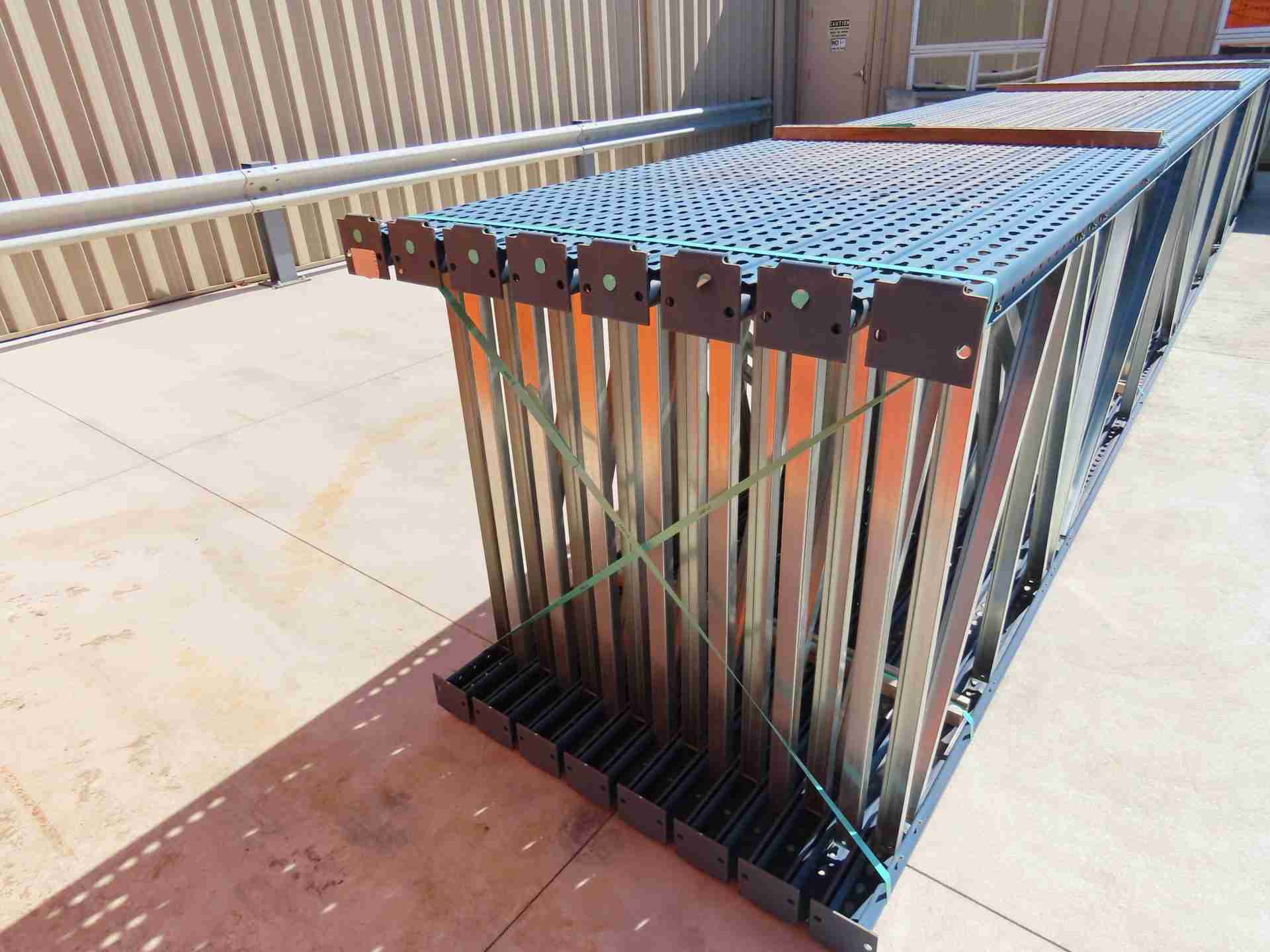
Conclusion
Conclusion:
- Pallet racking safety is critical for operational success in warehousing.
- Neglecting safety poses risks to employees’ lives and business operations.
- Ignoring safety standards can lead to legal issues, increased insurance costs, and lower employee confidence.
- Regular assessments of pallet racking systems should be conducted, looking for key warning signs.
- Involve your team in safety discussions and training to foster a culture of vigilance.
- Utilize technology for real-time monitoring of potential hazards.
- Act now to ensure safety and compliance; contact Arrow Industrial Sales for support.

Conclusion
Other Resources

Other Resources
Here is a list of other resources you can review online to learn more:
- Interlake Mecalux
- ASSP
- The Ultimate Pallet Racking Guide – Speedrack West
- Overhead Lifting
- Cantilever Rack Guide: Ordering Cantilever Racking
- Racking World
- What is Selective Pallet Racking
- Warehouse Racking Systems: Beginner’s Guide to Rack Systems
- Teardrop Industrial Shelving Rack
- Cantilever Racks Chicago
Use This Prompt To Get More Resources With Your Favorite Online AI Tool: Please provide me with a list of online articles with their URLs in a bulleted list that I can read regarding Are Unsafe Warehouse Racking Systems Putting Lives At Risk?

Other Resources
Glossary Terms
Are Unsafe Warehouse Racking Systems Putting Lives At Risk? – Glossary Of Terms
1. Racking System: *A framework for storing goods in warehouses that supports horizontal and vertical loads. *
2. Forklift: *A powered industrial vehicle used to lift and transport heavy materials within a warehouse. *
3. Load-Bearing: *The ability of a structure to support weight without collapsing. *
4. Stability: *The state of being firm and steady, particularly in relation to how racking systems maintain their structure under load. *
5. Pallet: *A flat transport structure, commonly made of wood or plastic, used to support goods in a warehouse. *
6. Overloading: *Exceeding the weight limit specified for a racking system, potentially leading to failure. *
7. Safety Regulations: *Laws and guidelines established to ensure workplace safety, including proper design and use of warehouse racking systems. *
8. Inspection: *A systematic examination of warehouse racking systems to identify defects or compliance with safety standards. *
9. Aisle Width: *The space between rows of racking that allows for the safe maneuvering of forklifts and personnel. *
10. Tilt Test: *A test to assess the stability of a racking system by checking its ability to withstand lateral loads. *
11. Anchoring: *Securing racking systems to the ground or wall to prevent tipping or collapse. *
12. Weight Distribution: *The manner in which weight is spread across a racking system, crucial for maintaining stability. *
13. Inventory Management: *The process of overseeing and controlling stock levels, which can be affected by the effectiveness of racking systems. *
14. Clearance Height: *The vertical space above the stored goods, important to prevent safety risks and ensure accessibility. *
15. Compliance: *Adherence to safety regulations and standards applicable to warehouse operations and racking systems. *
16. Damaged Racking: *Racking that has suffered harm from accidents or misuse, posing safety risks. *
17. Ergonomics: *The study of workplace efficiency that includes designing safe and comfortable workspaces and equipment. *
18. Safety Training: *Programs designed to educate warehouse staff on safe handling practices and proper use of racking systems. *
19. Risk Assessment: *The process of identifying potential hazards in a warehouse environment and evaluating their impact. *
20. Fall Protection: *Safety measures aimed at preventing falls from heights, relevant in warehouses with multi-level racking systems. *
21. Operational Procedures: *Established methods for conducting warehouse operations safely and efficiently, including the use of racking. *
22. Pallet Rack: *A specific type of racking system designed to hold pallets stacked on top of each other for storage. *
23. Emotional Stress: *Psychological strain on workers, which can increase in environments perceived as unsafe due to inadequate racking systems. *
24. Spill Containment: *Measures taken to prevent the leakage of hazardous materials, which can affect racking system safety. *
25. Near Miss: *Incidents where an accident almost occurred, providing critical data for improving safety measures. *
26. Maintenance: *Regular upkeep of racking systems to ensure they remain safe and functional. *
27. Workplace Culture: *The shared values and behaviors in a workplace that can affect safety practices surrounding racking systems. *
28. Fall Hazard: *Any condition or situation that could result in a person falling, especially concerning racking systems. *
29. Load Chart: *A document outlining the maximum weight capacities for specific racking configurations. *
30. Incident Reporting: *The process of documenting safety incidents or accidents to improve future racking system safety and compliance. *

Glossary Of Terms
Other Questions
Are Unsafe Warehouse Racking Systems Putting Lives At Risk? – Other Questions
If you wish to explore and discover more, consider looking for answers to these questions:
- What are the best practices for maintaining warehouse racking systems?
- How can I train my employees to recognize unsafe racking systems?
- What are the specific OSHA regulations regarding warehouse racking safety?
- How can I improve employee morale related to safety in the warehouse?
- What technology is available for monitoring racking safety in real-time?
- How can I create a culture of safety within my warehouse team?
- What should I do if I identify a safety issue with my racking system?
- What types of racking systems are safest for warehouses?
- How can regular inspections be effectively integrated into our operations?
- What are the costs associated with non-compliance in warehouse safety?

Other Questions
Checklist
Are Unsafe Warehouse Racking Systems Putting Lives At Risk? – A Checklist
Regular Inspections
_____ Conduct a thorough inspection of pallet racking systems at least once a year.
_____ Increase inspection frequency to quarterly or monthly if the warehouse has high traffic or heavy use.
_____ Look for visible damage such as bent beams, misaligned frames, or rust during inspections.
Load Management
_____ Verify that load capacity labels are clearly visible and not obscured.
_____ Check for even loading of pallets to prevent imbalances.
_____ Ensure employees are trained in load distribution and weight limits.
Employee Engagement
_____ Encourage regular feedback from employees regarding racking safety concerns.
_____ Hold safety meetings to discuss observations and reinforce the culture of safety.
_____ Create a system for reporting potential hazards without fear of reprisal.
Training Protocols
_____ Implement a foundational training course covering basic principles of pallet racking safety.
_____ Include hands-on training to allow employees to practice handling equipment safely.
_____ Schedule refresher courses regularly to keep safety protocols up-to-date.
Compliance with Regulations
_____ Familiarize staff with OSHA and industry standards set by ANSI and MHI regarding racking safety.
_____ Complete regular audits to ensure compliance with local and state safety regulations.
Incident Preparedness
_____ Create an action plan for responding to racking system failures or safety incidents.
_____ Ensure your insurance coverage is up-to-date to handle potential liabilities from safety incidents.
Continuous Improvement
_____ Invest in monitoring technology for real-time alerts on structural stress or load imbalances.
_____ Foster a culture of safety where employees feel empowered to prioritize and promote safety practices.
_____ Document and review any incidents to learn from past experiences and improve safety measures.
By following this checklist, you can create a safer warehouse environment and help safeguard the well-being of your employees and your business.

Checklist
At RackingWorld, we help guide you through selecting warehouse storage systems and racking.
Be sure to read our other related stories at RackingWorld to learn more about warehouse storage systems.
0 Comments