
Unlocking OSHA’s Forklift Aisle Width Standards
By Tom Seest
At RackingWorld, we help guide you through selecting warehouse storage systems and racking.
Be sure to read our other related stories at RackingWorld to learn more about warehouse storage systems.
What Are Forklift Aisle Width Standards From OSHA?
In the fast-paced world of warehousing and logistics, the importance of safety cannot be overstated. When it comes to the safe and efficient operation of forklifts, OSHA (Occupational Safety and Health Administration) provides stringent guidelines that dictate not just the operation of the machinery but also the necessary conditions for optimal, accident-free performance. One of the critical components of these guidelines is the regulation of aisle widths.
Understanding OSHA Standards for Aisle Widths
OSHA does not provide a one-size-fits-all measurement for aisle widths, mainly because the required space will depend on several factors like the type of equipment being used and the specific operations in place. However, industry standards suggest that aisles should be at least 36 inches wide for pedestrian traffic and a minimum of 48 inches for standard forklift operations in general warehousing situations. For more maneuverable forklifts, such as narrow aisle trucks, the required width may be reduced to as little as 30 inches.
Imagine trying to navigate a standard-sized forklift through a crowded warehouse with barely enough space to breathe. Not only is this inefficient, but it poses a significant risk of accidents—not to mention the potential costs associated with injuries and damaged goods. Just in the last year, incidents stemming from inadequate aisle widths have cost many companies hefty fines and disrupted supply chains, making it clear that compliance with OSHA standards is not just a legal obligation but a vital business strategy.
Examples of Compliance in Action
Consider a warehouse that specializes in e-commerce. Infrastructures designed with narrow aisles can dramatically improve warehouse efficiency while still adhering to OSHA standards. By utilizing specialized equipment, such as reach forklifts, facilities can benefit from narrower aisles that allow for more shelving and, therefore, more inventory. This scenario not only maximizes space but fosters productivity and quick turnaround, a necessity in today’s lightning-speed logistics environment.
But it’s not just about compliance; it’s about competitive advantage. Companies that understand and implement OSHA’s forklift aisle width standards often find themselves reducing operational costs while improving safety measures. Think about it—less congestion leads to greater speed, fewer accidents, and ultimately a healthier bottom line.
In this era where supply chain disruptions and safety protocols are under constant scrutiny, adhering to OSHA’s standards isn’t merely a checkbox exercise; it’s a proactive approach to creating a sustainable, compliant, and safe working environment. It’s time to reevaluate your warehouse layout and ensure you’re both safe and savvy. By investing in proper aisle widths and education, your business won’t just meet regulations; it will thrive under them.

What Are Forklift Aisle Width Standards From OSHA?
What Are Forklift Aisle Width Standards From OSHA?
- OSHA establishes important guidelines for safe forklift operation in warehouses.
- Aisle widths are crucial for optimal performance and accident prevention.
- Minimum aisle widths suggested are 36 inches for pedestrian traffic and 48 inches for standard forklifts.
- Narrow aisle trucks may require widths as little as 30 inches.
- Inadequate aisle widths pose risks and can lead to costly injuries and fines.
- Implementing narrow aisle designs with specialized equipment can enhance efficiency while meeting OSHA standards.
- Adhering to OSHA standards can reduce costs, improve safety, and enhance overall business performance.

What Are Forklift Aisle Width Standards From OSHA?
Table Of Contents
- What Are Forklift Aisle Width Standards From OSHA?
- What Are The OSHA Guidelines For Forklift Aisle Widths?
- How Do Aisle Widths Affect Forklift Safety?
- What Factors Determine Optimal Forklift Aisle Width?
- How Do Different Types Of Forklifts Impact Aisle Width Needs?
- What Are The Consequences Of Inadequate Aisle Width?
- How Can Businesses Measure Their Current Aisle Widths?
- Are There Industry Standards For Forklift Aisle Widths?
- How Can Aisle Width Be Adjusted For Different Warehouse Layouts?
- What Role Do Pallet Sizes Play In Aisle Width Requirements?
- How Does Compliance With Aisle Width Standards Benefit A Business?
- What Are Common Mistakes In Determining Aisle Width For Forklifts?
- How Can Aisle Sizes Affect Warehouse Efficiency?
- What Training Do Operators Need Regarding Aisle Width Standards?
- How Often Should Aisle Widths Be Evaluated Or Tested?
- Are There Technologies To Help Measure And Optimize Aisle Widths?
- Conclusion
- Other Resources
- Glossary Of Terms
- Other Questions
- Checklist
What Are The OSHA Guidelines For Forklift Aisle Widths?
When it comes to ensuring safety and efficiency in the workplace, adhering to OSHA guidelines isn’t just a box to check; it’s a crucial investment in your business’s future. The Occupational Safety and Health Administration (OSHA) establishes stringent standards for forklift operation, including the crucial topic of aisle widths in warehouses and industrial settings. Proper aisle width is not merely about compliance; it’s a competitive advantage that promotes safer operations, minimizes accidents, and maximizes productivity.
So, what do the OSHA guidelines say about forklift aisle widths? According to OSHA standards, the minimum clear width for aisles should be dictated primarily by the type of forklift being used and the size of the loads being transported. For instance, a standard counterbalance forklift necessitates aisles that are at least 36 inches wide for single pallet handling and 48 inches wide for double pallet handling. On the other hand, narrower stand-up forklifts can operate in aisles as narrow as 28 inches, depending on the maneuverability of the specific model.
Let’s take a deeper look at the real-world implications of these guidelines. Imagine your warehouse is bustling with activity, but narrow aisles force operators to move cautiously, leading to delays and reduced productivity. Conversely, well-planned aisles that comply with OSHA standards enable forklifts to navigate efficiently, thereby enhancing workflow and boosting your bottom line. Companies that have invested in optimizing their warehouse layout report up to a 30% or more increase in operational efficiency, translating directly into revenue growth.
Moreover, the importance of aisle width can’t be understated in light of current supply chain challenges. With cargo delays and labor shortages plaguing many industries, the last thing you want is a bottleneck in your warehouse due to inadequate aisle space. Imagine the positive impact on your operations if you’re able to swiftly adjust and pivot as market demands shift.
In today’s fast-paced environment, making sure that your warehouse is OSHA-compliant is not about merely avoiding penalties; it’s about positioning your business for success. Prioritizing proper aisle widths in your forklift operations will not only keep your employees safe but will also enhance your operational efficiency and adaptability—key components to thriving in an unpredictable market landscape. Don’t leave your safety and productivity to chance; invest in understanding and implementing OSHA guidelines today, and watch your business resonate with success!

What Are The OSHA Guidelines For Forklift Aisle Widths?
What Are The OSHA Guidelines For Forklift Aisle Widths?
- OSHA guidelines are essential for enhancing safety and efficiency in workplace forklift operations.
- Minimum aisle widths depend on the type of forklift and load size: 36 inches for single pallets and 48 inches for double pallets with counterbalance forklifts; 28 inches for stand-up forklifts.
- Narrow aisles can lead to delays and reduced productivity in bustling warehouse environments.
- Compliance with OSHA standards can improve operational efficiency by up to 30% or more, positively impacting revenue.
- Proper aisle widths help mitigate supply chain challenges by preventing bottlenecks in warehouses amid cargo delays and labor shortages.
- Being OSHA-compliant is crucial for business success, not just to avoid penalties but to enhance adaptability in a changing market.
- Investing in understanding and implementing OSHA guidelines leads to improved safety and productivity in operations.

What Are The OSHA Guidelines For Forklift Aisle Widths?
How Do Aisle Widths Affect Forklift Safety?
In the bustling landscape of modern warehousing and distribution, the safety of your workforce and the efficiency of your operations hinge significantly on one often-overlooked factor: aisle widths. While it may seem like a minor detail, the dimensions of your aisles play a pivotal role in forklift safety, impacting not only the health of your employees but also your bottom line.
Imagine navigating a narrow aisle crammed with goods, where a mistake can lead to catastrophic outcomes—not just in terms of equipment damage but also potentially harmful accidents. Aisles that are too narrow can restrict the maneuverability of forklifts, thereby increasing the likelihood of collisions and near misses. According to the Occupational Safety and Health Administration (OSHA), improper aisle widths contribute to a staggering number of workplace accidents each year. By ensuring that aisles are appropriately sized, companies can reduce risk and create a safer work environment.
Consider a real-world example: A leading logistics provider recently revamped their warehouse layout by widening aisles to the optimum width of 12 feet for standard forklifts. They reported a remarkable 30% decrease in accidents over a six-month period. This case exemplifies how a strategic investment in aisle design not only enhances safety but also improves operational efficiency by allowing for smoother traffic flow.
Furthermore, staying updated with current events is vital. As supply chain disruptions ripple through industries, companies are prompted to adapt quickly. This adaptability is stunted when your warehouse design hinders flexibility. A well-planned aisle system enables rapid retrieval of goods and efficient handling, essential for tackling modern supply chain challenges. In the face of rising demands, your operational agility is dictated by whether your forklift operators can safely navigate their environment.
It is also essential to consider the implications of your aisle widths on compliance. Warehousing standards dictate minimum aisle sizes for safety, and failure to adhere to these can result in costly inspections, fines, or worse—serious injuries. Savvy business owners know that investing in the proper aisle width is not merely a matter of compliance; it’s an investment in brand reputation and the long-term health of the business.
The width of your aisles is a crucial factor in ensuring forklift safety. This seemingly minor detail can significantly impact not only compliance and operational efficiency but also the very safety of your workforce. Don’t let narrow aisles be a bottleneck in your success story—widen them and watch your safety records improve.

How Do Aisle Widths Affect Forklift Safety?
How Do Aisle Widths Affect Forklift Safety?
- Aisle widths are crucial for workforce safety and operational efficiency in warehousing and distribution.
- Narrow aisles restrict forklift maneuverability, increasing the likelihood of accidents and equipment damage.
- According to OSHA, improper aisle widths contribute significantly to workplace accidents annually.
- A leading logistics provider saw a 30% decrease in accidents by widening aisles to 12 feet.
- Well-planned aisles enhance operational agility, facilitating faster retrieval and handling of goods amidst supply chain disruptions.
- Compliance with warehousing standards on aisle sizes is critical to avoid costly fines and serious injuries.
- Investing in proper aisle width boosts safety, compliance, and brand reputation while safeguarding long-term business health.

How Do Aisle Widths Affect Forklift Safety?
What Factors Determine Optimal Forklift Aisle Width?
When it comes to maximizing space efficiency in a warehouse, the optimal aisle width for your forklifts can make or break your operation. Understanding the pivotal factors that influence aisle width can deliver greater productivity, enhanced safety, and ultimately, a stronger bottom line. Let’s unpack these critical elements.
First, consider your choice of forklift. Different models have varying sizes and turning radii. For instance, if you’re using a narrow aisle forklift, you can create tighter spaces for maximum storage efficiency. However, conventional forklifts, like counterbalance designs, often require wider aisles. Businesses should assess their current and future needs regarding fleet size and type. Is it time to invest in more specialized equipment? Upgrading to forklifts that fit narrower aisles can unlock a staggering potential for increasing inventory capacity—think of it as squeezing every last drop from your warehouse.
Next, evaluate your inventory. The characteristics of your products dictate aisle width too. Larger, bulkier items such as appliances or machinery require more space than smaller boxes or pallets. For example, if you’re running an operation that handles industrial components, it might make sense to analyze the dimensions of these items closely. If you notice they consume vast areas and crowd the aisles, that might signal a need for wider passages to ensure safe movement without risking accidents or product damage.
Seasonal fluctuations in inventory can also dictate aisle width preferences. During peak seasons, when stock levels rise dramatically—think holiday shopping for e-commerce—being able to adjust aisle widths quickly to accommodate inventory changes can save time and reduce costs. Forward-thinking companies are not just investing in technology but also training their workforce to adapt aisle configurations on the fly.
Don’t overlook safety standards and regulations. Agencies like OSHA have guidelines that may impact your operational design. Narrow aisles can increase the risk of collisions and accidents; therefore, ensuring sufficient clearance can mitigate these risks and foster a positively charged safety culture within your team.
Ultimately, the optimal aisle width hinges on a careful blend of equipment choice, inventory characteristics, seasonal demands, and safety compliance. Your warehouse layout isn’t just about making the most of physical space; it’s about leveraging conditions that lead to efficiency and safety. In today’s fast-paced supply chain landscape, making an informed decision can set your business apart, positioning you not just as a participant but as a leader in your industry. Work smarter, invest wisely, and watch your operational efficiency soar.

What Factors Determine Optimal Forklift Aisle Width?
What Factors Determine Optimal Forklift Aisle Width?
- Optimal aisle width is crucial for maximizing warehouse space efficiency.
- Forklift choice affects aisle width; narrow aisle forklifts allow for tighter spaces.
- Evaluate inventory characteristics; larger items require wider aisles for safe movement.
- Seasonal inventory fluctuations may necessitate quick adjustments to aisle widths.
- Compliance with safety standards and regulations, such as OSHA, is essential for safety.
- Optimal aisle width results from a combination of equipment choice, inventory, and safety factors.
- An informed decision on warehouse layout can enhance operational efficiency and competitive positioning.

What Factors Determine Optimal Forklift Aisle Width?
How Do Different Types Of Forklifts Impact Aisle Width Needs?
In the ever-evolving landscape of warehousing and logistics, the selection of the right forklift plays a pivotal role in streamlining operations. But here’s the kicker: not all forklifts are created equal, and their unique characteristics can dramatically influence your aisle width requirements. Choosing the right type isn’t just a matter of personal preference; it can make or break the efficiency of your entire operation.
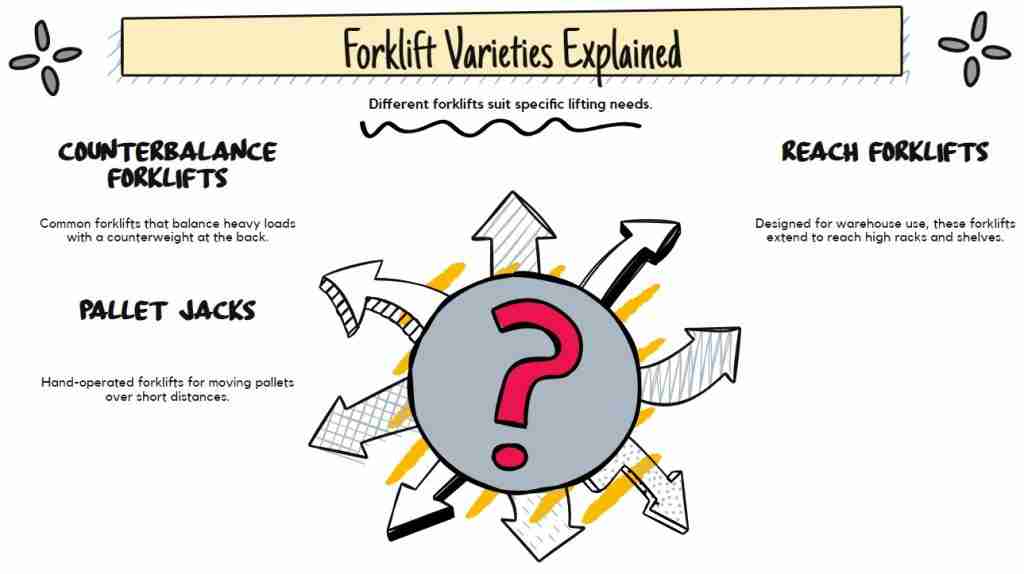
Let’s dive into the thick of it. Traditional counterbalance forklifts, for instance, are the workhorses of most warehouses. They require wider aisles due to their rear counterweight and turning radius. Typically, you’ll need aisles that are at least 12 to 15 feet wide to maneuver effectively. But what if you’re short on space? This is where narrow aisle and turret forklifts come into play. Designed specifically for tight environments, these machines can operate efficiently in aisles as narrow as 8 to 10 feet. For example, many of the new models available on the market today come equipped with advanced technology that allows for tighter turns and better positioning, perfect for crammed warehouses.
Now let’s take a look at reach trucks, the superheroes of vertical storage. These forklifts lift loads high while traveling in narrow aisles. With their slim profiles, they can navigate spaces that traditional forklifts can’t. All you need is about 8 to 10 feet of aisle width. Think about the increased storage density you could achieve by integrating reach trucks into your operation – thereby maximizing vertical space and cutting down on valuable ground area.
And if we’re talking about current events, consider how trends in e-commerce are pushing warehouses to reconsider their layouts and storage strategies. As online shopping skyrockets, warehouses are under pressure to optimize inventory space and speed up order fulfillment. Companies are now gravitating toward automated guided vehicles (AGVs) that can operate in ultra-narrow aisles. These driverless technologies may require even less space, compelling businesses to rethink not just forklift choices but the entire design of their warehousing operations.
As you ponder your forklift options, remember that every inch counts in optimizing efficiency. Before investing, assess your operational needs, the type of forklift best suited for your task, and how that choice will dictate aisle width. In a marketplace characterized by rapid change and increased competition, making informed decisions about your equipment can lead to significant business advantages, keeping you ahead of the curve.

How Do Different Types Of Forklifts Impact Aisle Width Needs?
How Do Different Types Of Forklifts Impact Aisle Width Needs?
- Choosing the right forklift is crucial for streamlining warehousing and logistics operations.
- Not all forklifts are equal; their characteristics can significantly impact aisle width requirements.
- Traditional counterbalance forklifts require wider aisles of 12 to 15 feet for effective maneuvering.
- Narrow aisle and turret forklifts can operate in aisles as tight as 8 to 10 feet, ideal for limited spaces.
- Reach trucks are designed for vertical storage, needing only 8 to 10 feet of aisle width and maximizing vertical space.
- E-commerce trends are pushing warehouses to adopt automated guided vehicles (AGVs) that operate in ultra-narrow aisles.
- Every inch matters when optimizing efficiency; assess operational needs and forklift types before investing.

How Do Different Types Of Forklifts Impact Aisle Width Needs?
What Are The Consequences Of Inadequate Aisle Width?
In the world of retail, space is not merely a commodity; it’s a critical element that influences customer behavior, shopping experience, and ultimately, sales outcomes. When businesses overlook the importance of adequate aisle width, they invite a cacophony of unwelcome consequences that can ripple through their operations and customer relations.
Imagine this: A bustling grocery store during peak hours, where customers try to navigate narrow aisles packed with shoppers and products. Frustration mounts as individuals find themselves squeezed between towering shelves and other patrons, leading to a chaotic shopping experience. Research has shown that physical discomfort can lead to diminished customer satisfaction, increasing the likelihood of abandoned carts and unfavorable reviews. According to a recent study, stores designed with wider aisles saw a 20% increase in returning customers, while those lacking in navigation space reported a notable drop in repeat business.
Moreover, consider the operational implications. Inadequate aisle width doesn’t just hinder customer mobility; it complicates merchandise restocking and inventory management. Employees grapple with maneuvering carts and equipment through constricted spaces, leading to longer restocking times and operational delays. This inefficiency is not only frustrating for staff but can also lead to missed sales opportunities, especially during high-demand periods.
Further compounding the problem are safety concerns. In a retail environment where crowd density can spike unexpectedly, narrow aisles can hinder emergency evacuations. Vulnerabilities are highlighted when one considers recent events, such as emergency evacuations during Black Friday sales, where patrons found themselves wedged in tight spots, leading to potential injuries. Retailers who ignore safety regulations concerning aisle width may find themselves facing legal ramifications and negative publicity.
Let’s not forget the aesthetic aspect. A store’s layout is the first impression it makes on its customers, and an overly cramped shopping experience can counteract even the finest merchandise displays. Shoppers are more likely to linger — and spend — in an open, well-planned environment. Consider retailers like Target, which emphasize welcoming spaces. Their successful merchandising strategies are rooted in allowing customers the freedom to browse comfortably, thus turning foot traffic into revenue.
The message is clear: adequate aisle width is not a detail to overlook; it’s a pivotal aspect of the retail experience that affects customer satisfaction, operational efficiency, and brand reputation. As businesses continue to evolve in an ever-competitive landscape, prioritizing space is not just a preference—it’s an essential strategy for survival.

What Are The Consequences Of Inadequate Aisle Width?
What Are The Consequences Of Inadequate Aisle Width?
- Retail space influences customer behavior, shopping experience, and sales outcomes.
- Narrow aisles lead to frustration and chaos, resulting in abandoned carts and unfavorable reviews.
- Wider aisles can increase returning customers by 20%, while narrow aisles reduce repeat business.
- Inadequate aisle width complicates inventory management and slows down restocking processes.
- Narrow aisles pose safety risks, especially during high-crowd events like Black Friday, increasing potential for injuries and legal issues.
- Aesthetic layout impacts customer perception; spaciousness encourages shoppers to linger and spend more.
- Prioritizing adequate aisle width is essential for customer satisfaction, operational efficiency, and brand reputation.

What Are The Consequences Of Inadequate Aisle Width?
How Can Businesses Measure Their Current Aisle Widths?
In today’s fast-paced retail environment, creating an efficient shopping experience is more crucial than ever. One key component of that experience is the width of your aisles. Narrow aisles can frustrate customers and limit their ability to move freely, while excessively wide aisles can reduce the sense of variety and choice. Therefore, measuring your current aisle widths is not just about compliance; it’s about ensuring that you are providing the best possible environment for your customers to shop.
First, let’s start with the basics: Grab a reliable measuring tool—a tape measure will suffice. But don’t stop at merely measuring the aisles. Take into account the foot traffic patterns in your store. Utilize data analytics tools to assess peak shopping times, which can reveal if your aisles are congested during these periods. For instance, retailers have seen a resurgence in foot traffic this year, as shoppers return to brick-and-mortar stores post-pandemic. It begs the question: Are your aisles ready for the influx?
Next, consider your product placement. Ensuring that your Aisle Widths accommodate optimal product visibility and accessibility is key. The objective isn’t just to measure but to create an inviting space. For example, if you have end caps bursting with products but your aisles are too narrow for customers to navigate comfortably, you’re losing potential sales.
A practical exercise is to use customer feedback. Engage with your clientele to ask about their shopping experience. Survey tools like SurveyMonkey or social media platforms can provide insights. A recent report indicated that 76% of shoppers say they prefer stores with wider aisles because they feel more relaxed and have a better shopping experience. If your surveys reveal satisfaction rates below this threshold, it’s time for a review.
Additionally, investigate industry standards. The Americans with Disabilities Act (ADA) suggests that aisles should be at least 36 inches wide to ensure accessibility. However, many retailers are now adopting wider aisles, anywhere from 48 to 60 inches, to cater to the increased demand from families and those using mobility devices.
Finally, conduct regular assessments. Allocate time monthly or quarterly to reevaluate your aisle widths as your inventory changes. As the holiday season approaches, converting aisles into optimal layouts and measuring widths effectively can lead to increased sales during one of the busiest times of year.
Measuring aisle widths isn’t merely a matter of compliance; it’s a dynamic strategy to enhance customer experience and drive sales. Make sure you’re measuring up to meet the expectations of today’s shoppers!

How Can Businesses Measure Their Current Aisle Widths?
How Can Businesses Measure Their Current Aisle Widths?
- Efficient shopping experience is essential in today’s retail environment.
- Aisle width impacts customer movement and perception of choice.
- Measure aisle widths using reliable tools and analyze foot traffic patterns.
- Product placement should prioritize visibility and accessibility for better sales.
- Gather customer feedback through surveys to assess their shopping experience.
- Adhere to industry standards, aiming for aisle widths of 36 inches or more, with many retailers opting for 48 to 60 inches.
- Regular assessments of aisle widths are necessary to adapt to changing inventory and maximize sales opportunities.

How Can Businesses Measure Their Current Aisle Widths?
Are There Industry Standards For Forklift Aisle Widths?
When it comes to optimizing warehouse operations, every square foot counts, especially when you’re managing tight inventory space. Now, you might wonder: “Are there established standards for forklift aisle widths?” The short answer is: it depends. However, understanding the general guidelines can dramatically enhance your operational efficiency and ensure compliance with safety regulations.
Aisle widths are typically determined by the type of forklift you are using and the environment in which you operate. For instance, traditional counterbalance forklifts generally require aisles ranging from 10 to 12 feet wide to navigate comfortably. In contrast, narrow aisle forklifts and order pickers can operate efficiently in aisles as narrow as 6 to 8 feet. The flexibility of a narrow aisle system can increase storage density by as much as 50%, which is a compelling boost for any warehouse seeking to maximize space without sacrificing safety.
Consider the current buzz surrounding sustainability in logistics. The push for eco-friendly practices has many companies reevaluating their storage layouts. By adopting narrower aisles and integrating more compact shelving systems, businesses can reduce their carbon footprints. Not only does this transition optimize space, but it also lowers energy consumption for lighting and climate control, ensuring that you align with industry trends focused on sustainability.
Another factor to consider is the specific types of products you’re storing. For example, if your warehouse handles larger items like appliances or furniture, wider aisles may be necessary to accommodate these dimensions, promoting safe handling and maneuverability. Conversely, if you’re dealing mostly with smaller, uniform items, a narrow aisle approach could boost storage capacity while enhancing order-picking efficiency.
Current events, such as the ongoing labor shortages in various sectors, emphasize the need for operational efficiency. Automating aspects of your warehouse management, while maintaining optimal aisle widths, can help you overcome these challenges. Technologies like automated guided vehicles (AGVs) thrive in environments designed with standardized aisle widths, allowing you to optimize both labor and space effectively.
In summary, while there may not be rigid industry standards for forklift aisle widths, there are established practices that can significantly impact your operational efficiency. By properly assessing your warehouse’s needs and aligning aisle dimensions accordingly, you can improve workflow, heighten safety, and contribute positively to the ever-evolving landscape of logistics. Ultimately, the key is to strike a balance between maximizing space and maintaining accessibility—ensuring that your warehouse runs like a well-oiled machine, capable of meeting the demands of today’s fast-paced market.

Are There Industry Standards For Forklift Aisle Widths?
Are There Industry Standards For Forklift Aisle Widths?
- Aisle widths for forklifts depend on the type of forklift and the operational environment.
- Counterbalance forklifts typically require 10 to 12 feet wide aisles, while narrow aisle forklifts need only 6 to 8 feet.
- Narrow aisle systems can boost storage density by up to 50%, maximizing space while ensuring safety.
- Adopting narrower aisles and compact shelving reduces carbon footprints and lowers energy consumption.
- Wider aisles are necessary for larger items, while narrow aisles can enhance efficiency for smaller products.
- Current labor shortages highlight the importance of operational efficiency through automation in warehouse management.
- Assessing warehouse needs and aligning aisle dimensions can improve workflow, safety, and overall efficiency.

Are There Industry Standards For Forklift Aisle Widths?
How Can Aisle Width Be Adjusted For Different Warehouse Layouts?
In the fast-paced world of logistics and warehousing, optimizing space is akin to striking gold. Aisle width might seem like a minor detail, yet it wields immense power in enhancing operational efficiency. Understanding how to adjust aisle width for specific warehouse layouts can unlock significant value for your business.
First, let’s acknowledge the pivotal role aisle width plays in the bustling activity of a warehouse. Consider a situation where narrow aisles are employed. This layout is ideal for maximizing storage density, particularly in environments leveraging high-density racking systems. These configurations allow companies to fit more goods into less space, which is especially valuable given the rising real estate costs in urban areas. Companies like Amazon have mastered this technique, employing advanced technologies such as autonomous guided vehicles to operate efficiently in tighter spaces while ensuring safety is never compromised.
On the other hand, wide aisles offer unique advantages, particularly in operations requiring heavy machinery. For example, if your warehouse frequently handles large volumes of bulky items or accommodates specialized moving equipment, wider aisles enable greater maneuverability. A company such as Walmart, which utilizes both wide and narrow aisle strategies according to product size and demand, exemplifies a flexible approach to aisle management that helps maintain efficiency in its well-known distribution centers.
Implementing an aisle width strategy is predicated on understanding your inventory and workflows. Regularly reviewing your warehouse layout is essential. For instance, if you anticipate seasonal surges in demand—like the recent uptick in e-commerce during holiday seasons—you might consider temporarily adjusting aisle widths. By shifting from narrow to wider aisles during peak periods, you increase the speed at which staff can fulfill orders, thereby bolstering customer satisfaction—a vital ingredient in today’s competitive marketplace.
Additionally, technology can aid in these adjustments. Warehouse management systems (WMS) can analyze pick patterns and suggest optimal aisle configurations. With innovative robotic solutions coming to the fore, the blend of AI and warehouse layouts can ensure that aisle widths dynamically adapt to meet demand fluctuations, allowing for an agile response.
In summary, adjusting aisle width is not merely a logistical necessity; it’s an opportunity for businesses to enhance efficiency, safety, and ultimately, profitability. With careful planning, strategic implementation, and the right technology, warehouses can harness the power of adaptable aisles, paving the way for a streamlined operation that’s ready for today’s ever-evolving market challenges. Embrace this game-changing maneuver—your bottom line will thank you.

How Can Aisle Width Be Adjusted For Different Warehouse Layouts?
How Can Aisle Width Be Adjusted For Different Warehouse Layouts?
- Optimizing space in logistics and warehousing is crucial for operational efficiency.
- Aisle width significantly impacts storage density and workflow in warehouses.
- Narrow aisles maximize storage density, particularly in high-density racking systems.
- Wide aisles improve maneuverability for heavy machinery and bulky items.
- Adjusting aisle widths based on inventory and seasonal demand can boost order fulfillment speed.
- Technology, including warehouse management systems and robotic solutions, can help optimize aisle configurations.
- Strategic aisle width adjustments enhance efficiency, safety, and profitability in warehousing operations.

How Can Aisle Width Be Adjusted For Different Warehouse Layouts?
What Role Do Pallet Sizes Play In Aisle Width Requirements?
In the world of logistics and warehousing, understanding the relationship between pallet sizes and aisle width requirements is not just a matter of convenience; it’s a strategic imperative. As businesses strive to streamline operations and enhance efficiency, the dimensions of pallets become crucial players in this narrative. A well-planned layout can directly impact productivity, workflow, and safety—all vital components in today’s competitive market.
Consider the standard pallet size in North America—48 inches by 40 inches. This ubiquitous size has become the backbone of many companies’ warehousing strategies, influencing everything from inventory management to employee movement within aisles. The general rule of thumb dictates that aisles should be wide enough to accommodate both the pallet’s dimensions and the equipment used to transport it, such as forklifts or pallet jacks. For instance, a standard aisle width ranges from 12 to 14 feet, allowing ample room for maneuverability and reducing the risk of accidents—a critical factor in any warehouse operation.
But it’s not just about fitting pallets into a space. In the aftermath of a global pandemic that accelerated e-commerce and reshaped customer expectations, businesses find themselves navigating a host of new challenges. Warehouses must now adapt to increased order fulfillment speeds, demanding wider aisles to facilitate swift passage and minimize delays. Companies like Amazon have raised the bar by optimizing their operations, using advanced analytics to design warehouses with a keen eye on aisle layout and pallet alignment, fostering efficiency and speed.
Moreover, the rise of vertical storage solutions has drawn attention to the interplay between pallet dimensions and aisle width. When using narrow or double-deep racking systems, the need for wider aisles becomes even more pronounced. Companies adopting these systems can maximize vertical space utilization while also ensuring that their operational efficiency does not suffer. In this context, even a few extra inches of aisle width can make the difference between a streamlined operation and costly bottlenecks.
Furthermore, regulatory requirements and safety standards cannot be overlooked. OSHA guidelines often dictate specific aisle sizes for safety reasons, mandating that businesses adhere to particular dimensions when moving goods and ensuring that they do so with minimal risk.
Ultimately, pallet size and aisle width are interconnected cogs in the larger machinery of warehousing operations. As businesses navigate shifting markets and evolving consumer demands, recognizing and optimizing this relationship will not only enhance operational efficiency but could also very well provide the competitive edge necessary to thrive in today’s dynamic landscape.

What Role Do Pallet Sizes Play In Aisle Width Requirements?
What Role Do Pallet Sizes Play In Aisle Width Requirements?
- Understanding the relationship between pallet sizes and aisle width is crucial for logistics and warehousing efficiency.
- The standard pallet size in North America is 48 inches by 40 inches, affecting warehouse strategies significantly.
- Aisle widths typically range from 12 to 14 feet to accommodate pallets and transport equipment like forklifts.
- The pandemic has accelerated e-commerce, prompting the need for wider aisles to speed up order fulfillment.
- Companies like Amazon optimize warehouse layouts using analytics to enhance aisle design and pallet alignment.
- The shift to vertical storage solutions increases the need for wider aisles to maintain operational efficiency.
- Regulatory requirements, such as OSHA guidelines, emphasize the importance of maintaining specific aisle sizes for safety.

What Role Do Pallet Sizes Play In Aisle Width Requirements?
How Does Compliance With Aisle Width Standards Benefit A Business?
In today’s fast-paced retail environment, where customer experience and operational efficiency dictate profitability, compliance with aisle width standards is more than just a regulatory checkbox—it’s a strategic advantage. Aisle width is not merely a detail; it significantly influences customer behavior, safety, and service efficiency, ultimately impacting your bottom line.
Imagine walking into a grocery store where aisles are cramped, forcing you to navigate through tightly packed displays and avoid bumping into fellow shoppers. Frustrating, right? Research shows that wider aisles not only enhance customer flow but also encourage more browsing time. A spacious layout invites customers to explore, which can lead to impulse purchases. According to a study by the Journal of Consumer Research, shoppers in wider aisles can spend up to 20% more time in-store. This increased foot traffic can translate directly into higher sales.
Let’s also consider safety—a critical aspect often overlooked in retail spaces. Non-compliance with aisle width standards can create hazardous situations that could lead to accidents. In today’s litigious society, the cost of these accidents can harm your business reputation and lead to costly legal battles. Take the case of a major retail chain facing a lawsuit due to insufficient aisle width that resulted in a shopper’s injury. This not only cornered them financially but also led to a significant public relations nightmare. By ensuring compliance, you foster a safe shopping environment, which builds trust and loyalty among customers.
Furthermore, compliance can streamline operations. Wider aisles facilitate easier restocking and efficient movement for staff, allowing employees to focus on customer service rather than maneuvering through tight spaces. For instance, look at a major home improvement store that revamped its aisle layout. By expanding kitchen and bathroom aisle widths, they reported a 15% increase in customer satisfaction scores and a corresponding boost in sales.
Current trends show a growing emphasis on inclusivity in retail design. With an aging population and a rise in accessibility awareness, businesses that adhere to aisle width standards cater not just to able-bodied shoppers, but to everyone, including those who rely on mobility aids. This inclusivity can enhance a brand’s reputation and widen its customer base.
Complying with aisle width standards is not just about meeting regulations; it’s about creating an excellent shopping experience, ensuring safety, and ultimately driving profit. Embrace this investment in your business, and watch as your sales and customer loyalty soar. Investing in compliance is investing in your future success.

How Does Compliance With Aisle Width Standards Benefit A Business?
How Does Compliance With Aisle Width Standards Benefit A Business?
- Compliance with aisle width standards is essential for customer experience and operational efficiency.
- Wider aisles enhance customer flow and encourage browsing, leading to impulse purchases and increased sales.
- Research indicates that shoppers in wider aisles may spend up to 20% more time in-store.
- Safety concerns arise from non-compliance with aisle width, potentially leading to accidents and legal issues.
- Wider aisles streamline operations, improving staff efficiency and customer service.
- Inclusivity in retail design caters to all shoppers, enhancing brand reputation and expanding customer base.
- Investing in aisle compliance drives profit and boosts customer loyalty, ensuring future success.

How Does Compliance With Aisle Width Standards Benefit A Business?
What Are Common Mistakes In Determining Aisle Width For Forklifts?
When it comes to optimizing your warehouse space, one of the most crucial factors is determining the proper aisle width for your forklifts. Yet, many businesses fall into common traps that can lead to inefficiencies and costly mistakes. Here’s a detailed look at these pitfalls and how to avoid them.
1. Miscalculating Equipment Size and Maneuverability
A prevalent mistake occurs when businesses fail to consider the actual size of their forklifts. Ignoring the specific turning radius can lead to improperly sized aisles that don’t accommodate necessary movements. For example, if you’re using a larger counterbalance forklift in an aisle width designed for a compact model, you’ll find that not only will navigating become difficult, but damage to both the forklift and racking systems becomes almost inevitable. Always take the time to review the specifications and maneuverability of your equipment before committing to your layout.
2. Overlooking Load Size and Shape
Another critical aspect is the type and dimensions of the loads being transported. Imagine a warehouse where teams routinely move items with varying dimensions—some tall, some bulky. If the aisles are too narrow, operators could face challenges where forklift tines can’t fit properly or are unable to load and unload efficiently. A recent report highlighted how companies that properly assessed their load capacities found a 20% increase in throughput! Don’t fall into the trap of standardizing your aisle width based solely on your smallest item; consider the biggest and bulkiest loads too.
3. Ignoring Future Growth and Changes
Business dynamics change rapidly. Aisle width determination often reflects current operations without considering future scalability. If your company is planning to expand its product offerings or increase inventory levels, your initial aisle width decisions may soon become obsolete. As seen in the e-commerce surge during the pandemic, businesses had to quickly adapt to new stock sizes and shapes. Always design with potential growth in mind, ensuring you have room to be flexible.
4. Not Involving Forklift Operators in the Planning Stage
Finally, one of the most underappreciated yet impactful mistakes is neglecting the input of forklift operators when determining aisle widths. These are the men and women who know the ins and outs of navigating your warehouse. Engaging them can yield invaluable insights into practical aisle width requirements based on real-world experience.
In summary, avoiding these common mistakes in determining aisle width for forklifts can lead to a streamlined operation, minimize damage, and enhance productivity. Make space for efficiency—literally!
What Are Common Mistakes In Determining Aisle Width For Forklifts?
- Proper aisle width is essential for forklift maneuverability in warehouse optimization.
- Miscalculating equipment size can lead to inefficient aisle space and potential damage.
- Overlooking load size and shape can hinder loading and unloading efficiency.
- Companies that assess load capacities can experience a significant increase in throughput.
- Future growth and changing business dynamics should be considered when determining aisle width.
- Involving forklift operators in the planning can provide valuable insights into aisle requirements.
- Avoiding these mistakes can streamline operations, minimize damage, and enhance productivity.
What Are Common Mistakes In Determining Aisle Width For Forklifts?
How Can Aisle Sizes Affect Warehouse Efficiency?
In the bustling world of modern commerce, where speed and precision reign supreme, the design of your warehouse can make or break your operation. Aisle sizes, often overlooked, play a pivotal role in driving efficiency. Let’s unpack this critical component of warehouse management.
First, consider the flow of goods. Wider aisles may seem appealing, allowing larger equipment and more significant personnel movement, but they can lead to wasted space and reduced storage capacity. For instance, if you’re operating a warehouse with 12-foot aisles to accommodate a few pallet jacks, you might have larger aisles than necessary. Instead, a 7-foot aisle could be ideal for electric pallet trucks, resulting in more room for shelving, enhancing your storage capability—think more SKUs and, ultimately, more sales—all while maintaining a smooth flow of operations.
Conversely, if terrains and design permit, narrower aisles can significantly boost efficiency, especially in high-density storage systems. For example, implementing a narrow-aisle setup with specialized equipment reduces wasted space, optimizing your warehouse layout. This enables you to store more goods in a smaller footprint, which can be crucial in today’s economy where real estate is increasingly expensive. Remember, every foot of aisle width represents potential lost revenue!
But the efficacy of aisle sizing goes beyond mere inches. It supports the ergonomic aspect of order picking. Take the recent surge in e-commerce, driven in part by pandemic-induced changes in consumer behavior. Retailers are racing to fulfill orders faster than ever. A well-planned aisle size can minimize travel time for workers picking items, increasing pick rates and reducing labor costs. A real-world example is Amazon’s use of state-of-the-art software to modify aisle dimensions dynamically based on demand, showcasing how agile companies are leveraging warehouse designs for competitive advantage.
Let’s also consider automation trends. With the rise of automated guided vehicles (AGVs) and robots, aisle widths must be optimized to ensure these technologies can navigate effectively. Today, as companies invest heavily in robotic solutions to maintain efficiency, the significance of precise aisle sizing cannot be overstated. A warehouse that caters to advanced technologies will see increased operational efficiency—ultimately translating to happier customers and a robust bottom line.
Aisle sizes hold the key to unlocking warehouse efficiency that is often underestimated. Investing time and resources into optimizing aisle width is not merely a design choice; it’s a strategic move towards creating a leaner, more effective operation. Whether you’re planning an expansion or looking to revamp your current layout, don’t let aisle sizes become an afterthought; your profits may depend on it!
How Can Aisle Sizes Affect Warehouse Efficiency?
- The design of a warehouse significantly impacts operational efficiency in modern commerce.
- Aisle sizes are crucial for optimizing the flow of goods, storage capacity, and ultimately sales.
- Wider aisles may enable larger equipment but can waste space; narrower aisles can enhance storage capacity.
- Narrow-aisle setups maximize storage in high-density systems, particularly important in a high-cost real estate environment.
- Ergonomic aisle planning can reduce travel time and labor costs, boosting order fulfillment rates.
- Optimized aisle widths are essential for the navigation of automated guided vehicles and robots in warehouses.
- Proper aisle sizing is a strategic investment for creating an efficient warehouse operation that can lead to increased profits.

How Can Aisle Sizes Affect Warehouse Efficiency?
What Training Do Operators Need Regarding Aisle Width Standards?
In today’s fast-paced logistics environment, ensuring your operators are up to speed on aisle width standards isn’t just a formality—it’s a necessity. With the rise of e-commerce and an increasing focus on efficiency, leveraging the right training can drastically enhance safety and productivity within your facility. Here’s how to ensure your team is ready.
First and foremost, operators must understand the reasons behind aisle width standards. The Occupational Safety and Health Administration (OSHA) and the National Fire Protection Association (NFPA) provide guidelines that prioritize worker safety and access for emergency services. Training sessions should center on these regulations, emphasizing not only compliance but the rationale behind them. Use real-life case studies—such as the recent incidents in crowded distribution centers during peak season—to highlight the risks of non-compliance and the dire consequences of obstructed pathways.
Next, operators should be well-versed in adapting their strategies based on the specific aisle configurations in your warehouse. Training that covers how to navigate varying aisle widths, along with practical exercises using forklifts or pallet jacks, ensures that operators develop muscle memory and confidence. For instance, contrast the experience of navigating narrower aisles typical in urban distribution hubs against the expansive spaces in rural setups. Integrate hands-on workshops where operators can practice maneuvering in different scenarios while receiving direct feedback from instructors.
Additionally, emphasize the importance of continuous improvement. Teach operators to always be on the lookout for potential obstructions and to implement best practices for aisle organization. Encourage them to conduct regular audits of their working environment and stay updated on changes in standards. An example to illustrate this is the recent push for improved efficiency in supply chains post-pandemic, where companies are re-evaluating their layouts to accommodate increased volume without sacrificing safety.
Lastly, incorporate technology into your training. With advancements in warehouse management systems, having your team adept at using software that helps track aisle metrics can significantly enhance efficiency. Real-time data allows operators to identify potential bottlenecks and rectify them promptly.
In summary, effective training for operators on aisle width standards should incorporate the regulatory framework, practical navigation exercises, a proactive safety culture, and technological tools. This multifaceted approach will not only instill confidence in your workforce but also cultivate a culture of safety and efficiency that resonates through every inch of your operation. In an age where every detail matters, getting aisle width training right is a critical step towards operational excellence.
What Training Do Operators Need Regarding Aisle Width Standards?
- Operators must understand aisle width standards for safety and accessibility, incorporating guidelines from OSHA and NFPA.
- Training should highlight the rationale for compliance using real-world case studies to underscore risks of non-compliance.
- Operators need to adapt to various aisle configurations, with training that includes practical exercises on navigating different widths.
- Hands-on workshops help build muscle memory, confidence, and provide immediate feedback for operators navigating varying setups.
- Continuous improvement is vital; operators should regularly audit their environments and stay informed on safety standards.
- Incorporating technology, such as warehouse management systems, helps track aisle metrics and enhances operational efficiency.
- A comprehensive training approach fosters a culture of safety and efficiency, crucial for operational excellence.

What Training Do Operators Need Regarding Aisle Width Standards?
How Often Should Aisle Widths Be Evaluated Or Tested?
In the fast-paced world of retail and logistics, aisle widths are more than mere measurements; they are pivotal pathways that influence everything from customer experience to operational efficiency. As we navigate the evolving landscape of consumer expectations and technological advancements, understanding how frequently aisle widths should be evaluated is crucial for maintaining a competitive edge.
First and foremost, the frequency of assessments should align with your business goals and industry standards. Major retail chains, for instance, often analyze aisle widths quarterly to adapt to seasonal shifts in inventory and foot traffic. During peak shopping seasons, like the holiday rush or Black Friday, you don’t just want to accommodate customers; you want to guide them effortlessly through your aisles. A narrow aisle can feel congested, causing shoppers to abandon their carts and head for the exit.
Moreover, the advent of e-commerce and online shopping trends has led to more in-store pickup options. This means the need for wider aisles is more pressing than ever. Let’s look at Amazon’s physical stores. With their push towards instant gratification, they’re keenly aware that a smooth shopping experience translates directly into higher customer satisfaction. They periodically assess aisle widths to ensure they meet the evolving needs of customers who may opt to buy online and pick up in-store.
Additionally, consider the implications of health and safety regulations, particularly in light of recent global events. Social distancing measures during the pandemic have reshaped how we think about physical spaces. Businesses must reevaluate aisle widths regularly—ideally monthly—to maintain compliance and ensure a safe shopping environment. Think of grocery stores that widened their aisles in response to health guidelines. This not only made customers feel secure, but it also showcased a commitment to their well-being, enhancing brand loyalty.
Furthermore, trends towards accessibility cannot be overlooked. The push for inclusivity means businesses must evaluate aisle widths not just for the average shopper but for individuals with disabilities. With Americans with Disabilities Act (ADA) regulations evolving, reviewing your aisle configurations bi-annually or even quarterly ensures that you stay compliant and elevate your brand reputation.
The question isn’t whether you should evaluate aisle widths—it’s how often. To thrive in today’s competitive retail environment, embrace regular assessments, adapt to consumer behaviors, and align with industry best practices. Aisle widths might seem trivial, but they can transform your customer experience and underpin your bottom line. Don’t wait for problems to arise—proactively keep your aisles optimized and your customers happy.
How Often Should Aisle Widths Be Evaluated Or Tested?
- Aisle widths are critical for retail and logistics, affecting customer experience and operational efficiency.
- The frequency of aisle width evaluations should align with business goals and industry standards; major retailers often do so quarterly.
- Assessments are particularly important during peak shopping seasons to avoid congestion and enhance customer navigation.
- The rise of e-commerce requires wider aisles to accommodate in-store pickups, as seen in Amazon’s physical stores which evaluate widths periodically.
- Health and safety regulations necessitate more frequent assessments, ideally monthly, to comply with social distancing measures and ensure customer safety.
- Evaluating aisle widths for accessibility in compliance with ADA regulations is crucial; reviews should occur bi-annually or quarterly.
- Regular assessments of aisle widths can significantly enhance customer experience, improve brand loyalty, and support a competitive edge.

How Often Should Aisle Widths Be Evaluated Or Tested?
Are There Technologies To Help Measure And Optimize Aisle Widths?
In today’s fast-paced retail environment, every inch counts. When consumers step into a store, their journey—both physical and emotional—is molded by the availability and accessibility of products. Narrow aisles can stifle the shopping experience, creating bottlenecks that frustrate customers and potentially drive them away. But have you ever considered how advanced technologies could help retailers measure and optimize aisle widths? Well, it’s worth exploring.
One emerging player in this realm is 3D Retail Mapping. Advanced imaging software now allows retailers to create detailed models of their store layouts, including precise measurements of aisle widths. This technology employs laser scanning or computer vision to analyze foot traffic patterns, providing insights into which areas are heavily used and whether your aisles can accommodate customer flow more effectively. For instance, if data shows that a particular aisle is consistently congested, it may be time to widen it or rethink product placement.
Moreover, IoT Sensors are changing the game. Smart shelves equipped with motion sensors can monitor customer movements in real-time. Imagine receiving data that shows how frequently customers navigate certain aisles, allowing you to optimize space according to actual traffic patterns rather than educated guesses. With technology like this, businesses can adapt the physical layout almost continuously, ensuring that they respond promptly to changing consumer behaviors.
Recent events, such as the shift towards omnichannel retailing, underscore the importance of understanding consumer movement within physical spaces. An increased focus on in-store shopping experiences means that the strategic design of retail spaces, including aisle width, can significantly impact shopper satisfaction and sales. A retailer that embraces adaptation now is better positioned to thrive in an environment that has become increasingly unpredictable.
Don’t overlook the potential of AI-Driven Analytics. By inputting historical sales data alongside customer movement insights, retailers can craft a comprehensive strategy that determines the optimal aisle width for various products. AI can simulate customer interactions, providing data-backed recommendations to enhance shopper experience while maximizing sales potential.
Finally, as retailers prepare for the holiday season rush, investing in these technologies can provide an edge. Optimize aisle widths to improve the shopping journey, reduce congestion, and create a seamless experience that not only attracts customers but keeps them coming back. The technology is here; the question is, are you ready to harness it? Embrace these innovations now, and watch as sales—and customer satisfaction—soar.
Are There Technologies To Help Measure And Optimize Aisle Widths?
- The retail environment requires careful consideration of aisle widths to enhance customer experience.
- 3D Retail Mapping technology provides detailed store layouts and analyzes foot traffic patterns to identify congested areas.
- IoT Sensors, such as smart shelves, offer real-time monitoring of customer movements, aiding in space optimization.
- Understanding consumer movement is crucial due to the rise of omnichannel retailing and increased in-store shopping focus.
- AI-Driven Analytics can leverage sales data and customer insights to recommend optimal aisle widths for various products.
- Investing in these technologies can help retailers prepare for busy shopping seasons by improving shopping journeys and reducing congestion.
- Embracing these innovations can lead to increased sales and enhanced customer satisfaction.
Are There Technologies To Help Measure And Optimize Aisle Widths?
Conclusion
In a world where efficiency drives the bottom line, understanding and optimizing forklift aisle widths isn’t just an afterthought—it’s a strategic necessity. At Arrow Industrial Sales, we recognize that compliance with OSHA standards for aisle width isn’t just about avoiding penalties; it’s a proactive approach that leads to heightened safety, increased productivity, and, ultimately, profitability. By adhering to these regulations, you’re not just taking care of your legal obligations; you’re investing in a robust framework for success.
Imagine the implications of navigating a narrow aisle while operating a forklift, where every turn could lead to costly accidents or delays. The reality is stark—poor aisle planning can stifle productivity and create hazardous conditions. This is where the need for adequate aisle width comes to the forefront. As we’ve discussed, industry standards suggest minimum aisle widths that vary depending on equipment and load size. For instance, aisles should generally be at least 36 inches for pedestrian traffic and up to 48 inches for standard forklift operations. Failing to adhere to these recommendations can lead to dangerous scenarios and financial repercussions that can cripple your business.
However, the benefits of optimal aisle width extend beyond compliance. By investing in the right warehouse layout now, you can maximize your inventory capacity and operational efficiency, all while fostering a safer work environment. Consider e-commerce warehouses that have flexible aisle designs—these setups not only accommodate high volume but also enhance quick retrieval times, keeping your business agile in a demanding market.
The complications of neglected aisle width metrics are evident. With increasing supply chain disruptions, modern businesses must be equipped to adapt quickly. By streamlining aisle conditions now, you are preparing your operation to pivot effectively amid unpredictable market demands.
Don’t wait for fines or accidents to highlight inadequacies in your layout. Evaluate your warehouse design today, investing in education and resources that ensure adherence to OSHA standards. Not only does it safeguard your employees, but it also improves your overall operational efficiency—transforming safety compliance into a competitive advantage.
To take the first step towards optimizing your warehouse and ensuring the longevity of your operations, contact Arrow Industrial Sales at (574) 349-6575. Our team stands ready to assist with tailored solutions that meet OSHA standards and fuel your business success. The time to act is now—don’t let inadequate aisle widths bottleneck your operational flow. Let us guide you to a safer, more efficient future.
Conclusion:
- Understanding optimal forklift aisle widths is crucial for enhancing efficiency and profitability.
- Compliance with OSHA standards is essential for safety, productivity, and legal obligations.
- Narrow aisles can lead to costly accidents and delays, underscoring the importance of adequate width.
- Industry standards recommend a minimum aisle width of 36 inches for pedestrian traffic and up to 48 inches for forklifts.
- Optimal aisle width can maximize inventory capacity and operational efficiency while ensuring safety.
- Investing in warehouse layout can enhance agility, particularly in e-commerce settings with high volume and quick retrieval needs.
- Evaluate your warehouse design to maintain compliance, safeguard employees, and improve overall operational efficiency.
Conclusion
Other Resources
Here is a list of other resources you can review online to learn more:
- “Powered Industrial Trucks – Forklifts – Overview”
- “Powered Industrial Trucks (Forklift) eTool”
- “Powered Industrial Trucks (Forklifts) Workplace Program”
- “What is the OSHA standard for forklift?”
- “OSHA Warehouse Safety Guidelines”
- “A Guide to Maintaining Forklift Compliance in the Workplace”
- “How to Stay Safe and Compliant With OSHA’s Forklift Standards”
- “F417-031-000 Forklift Safety Guide”
- “Which Type of Forklift Should You Rent?”
- “Advantages of Stand Up Forklifts: #1 Standing Forklift Guide”
- “Forklifts – The Approved Code of Practice for … – WorkSafe”
- “Reach Trucks vs. Forklifts—Choosing What’s Right for Your …”
- “Forklift”
Use This Prompt To Get More Resources With Your Favorite Online AI Tool: Please provide me with a list of online articles with their URLs in a bulleted list that I can read regarding What Are Forklift Aisle Width Standards From OSHA?
Other Resources
Glossary Terms
What Are Forklift Aisle Width Standards From OSHA? – Glossary Of Terms
1. Aisle Width: The clear space between racks or storage units, vital for safe maneuvering of forklifts.
2. OSHA: The Occupational Safety and Health Administration, responsible for setting and enforcing workplace safety standards.
3. Forklift: A powered industrial truck used to lift and move materials over short distances.
4. Maneuverability: The ease with which a forklift can navigate and operate within confined spaces, determined by aisle width.
5. Load Size: The dimensions of the cargo carried by the forklift, which influences required aisle width.
6. Turn Radius: The minimum space required for a forklift to turn around, which impacts specified aisle width.
7. Storage Configuration: The arrangement of shelves or racks, affecting the design of aisle widths for safety and efficiency.
8. Safety Standards: Regulations established by OSHA to ensure safe operating conditions in workplaces using forklifts.
9. Material Handling: The movement, protection, storage, and control of materials throughout the manufacturing, warehousing, and distribution processes.
10. Load Stability: Refers to how secure and balanced the load is on a forklift, which can influence required aisle widths.
11. Operator Training: Instruction provided to forklift drivers, covering safe operating procedures, including awareness of aisle width constraints.
12. Vertical Storage: Utilizing upward space in a warehouse, which may relate to aisle width requirements for accessing higher shelves.
13. Warehouse Design: The architectural layout of a warehouse, which must consider aisle widths for optimal forklift operation.
14. Pedestrian Safety: Measures taken to protect individuals walking in areas where forklifts operate, including aisle width considerations.
15. Clearance: The minimum space required between the top of a load and any overhead obstruction.
16. Guidance System: Technology or physical markers used to direct forklift operation within aisles, impacting aisle width design.
17. Turning Space: The area required for a forklift to pivot or change direction safely, directly affecting aisle width.
18. Aisle Marking: Visual indicators that designate forklift aisles, ensuring compliance with safety standards.
19. Load Weight: The total mass of the items carried by a forklift, which can influence aisle width constraints for safe operation.
20. FIFO (First In, First Out): A method of inventory management that can affect aisle width standards by requiring access to older stock first.
21. Reach Forklift: A type of forklift designed to extend its forks, often requiring wider aisles for operation.
22. Counterbalance Forklift: A common forklift type that uses a counterweight to balance the load; its design may affect aisle width requirements.
23. Narrow Aisle Forklift: Specialized forklifts designed to operate in smaller aisles, necessitating different width standards than traditional forklifts.
24. Warehouse Safety Audit: An assessment conducted to evaluate compliance with safety standards, including aisle width.
25. Stability Triangle: The triangular area formed by the wheels and load center, crucial for determining safe loads and aisle width requirements.
26. Load Backrest: A safety feature that prevents loads from tipping backward, relevant to maintaining safe aisle widths.
27. Speed Limit: Guidelines on how fast forklifts can move within aisles, with narrower aisles often necessitating reduced speeds.
28. Traffic Management: Strategies implemented to manage the movement of forklifts and pedestrians in warehouse aisles, influencing general layout.
29. Regulatory Compliance: Adhering to OSHA standards and other regulations that dictate safe aisle widths and forklift operations.
30. Operational Efficiency: The effectiveness of material handling processes, often influenced by appropriate aisle width to facilitate quick and safe movements.
These terms help provide a foundational understanding of forklift aisle width standards in the context of OSHA regulations and safety practices within the workplace.
Glossary Of Terms
Other Questions
What Are Forklift Aisle Width Standards From OSHA? – Other Questions
If you wish to explore and discover more, consider looking for answers to these questions:
- What are the specific OSHA requirements for various forklift types?
- How do aisle width regulations differ across industries?
- What are the penalties for not complying with OSHA aisle width standards?
- How can companies effectively train their staff on aisle width compliance?
- What tools can be used to measure aisle widths accurately?
- What are the best practices for redesigning aisle layouts in existing warehouses?
- How does aisle width impact operational costs in warehouses?
- What role does employee feedback play in determining optimal aisle widths?
- How often should businesses conduct audits regarding aisle widths?
- What impact do changing consumer behaviors have on aisle width requirements?
- Can technology, like warehouse management systems, help in planning aisle widths?
- What case studies show successful optimization of aisle widths?
- How can businesses balance between compliance and maximizing storage capacity?
- What are the latest trends in warehouse design that affect aisle widths?
- How can seasonal inventory changes influence aisle width decisions?
Other Questions
Checklist
What Are Forklift Aisle Width Standards From OSHA? – A Checklist
Aisle Width Compliance Checklist
Understanding Your Regulations
1. Research OSHA Guidelines
_____ Familiarize yourself with OSHA’s aisle width requirements based on forklift type and operations.
2. Assess Equipment Needs
_____ Determine the types of forklifts in use and their specific aisle width requirements.
_____ Evaluate equipment size, turning radius, and load dimensions.
Planning & Design
3. Aisle Width Measurement
_____ Ensure that pedestrian aisles are at least 36 inches wide.
_____ Check that standard forklift operational aisles are a minimum of 48 inches wide.
_____ Consider narrower aisles (30 inches) for highly maneuverable forklifts.
4. Incorporate Flexibility
_____ Account for future growth of operations and potential changes in equipment or inventory.
5. Utilize Different Forklift Types
_____ Assess if switching to specialized or narrow aisle forklifts can maximize space efficiency.
Practical Implementation
6. Regular Re-evaluation
_____ Schedule monthly or quarterly assessments of aisle widths, especially during peak seasons.
_____ Record any changes in inventory or operational demands that may affect aisle width.
7. Involve Employees
_____ Gather input from forklift operators regarding aisle navigation and challenges.
Safety & Training
8. Operator Training
_____ Conduct training sessions on aisle width standards and compliance.
_____ Provide practical exercises in navigating different aisle widths with various equipment.
9. Safety Audits
_____ Perform regular safety checks to identify potential hazards related to aisle widths.
Technology & Measurement
10. Implement Technology Solutions
_____ Use 3D mapping and IoT sensors to measure and optimize aisle widths based on actual foot traffic patterns and utilization.
11. Monitor Compliance and Performance
_____ Regularly analyze data from safety audits and employee feedback to ensure ongoing compliance.
Communication & Documentation
12. Keep Records
_____ Document all aisle width measurements, evaluations, and changes made to your warehouse layout.
13. Educate Staff
_____ Continuously inform employees about the importance of maintaining proper aisle widths for safety and efficiency.
Overall Strategy
14. Review Industry Standards
_____ Stay updated on any changes in industry standards regarding aisle width and forklift operation.
15. Create a Culture of Safety
_____ Foster an environment where safety is prioritized and employees are encouraged to report concerns.
By following this checklist, you can ensure that your warehouse operations are in compliance with OSHA standards regarding forklift aisle widths while enhancing overall safety and productivity.
Checklist
At RackingWorld, we help guide you through selecting warehouse storage systems and racking.
Be sure to read our other related stories at RackingWorld to learn more about warehouse storage systems.
0 Comments