
Uncovering The Depths Of Pallet Racking
By Tom Seest
At RackingWorld, we help guide you through selecting warehouse storage systems and racking.
Be sure to read our other related stories at RackingWorld to learn more about warehouse storage systems.
How Deep Is Pallet Racking?
When it comes to maximizing storage efficiency in warehouses, understanding the depth of pallet racking is crucial. Pallet racking systems come in various sizes, and depth is one characteristic that separates mediocre storage solutions from exceptional ones. But how deep should your pallet racking be? The answer depends on your unique needs, inventory type, and the specific layout of your facility.
Most standard pallet racking systems range from 36” to 48” deep. This measurement allows for the effective use of space while providing enough clearance for the safe handling of goods. Let’s break this down further. If you’re storing larger items, such as appliances or industrial parts, a deeper rack—like 48”—can accommodate wider pallets and improve stability. However, if your inventory consists of smaller, boxed products, a 36” deep system may be your best choice, allowing for more efficient access and clearance.
Consider the rapidly changing logistics landscape in 2023. E-commerce has surged, and so has the need for warehouses to adapt quickly. The COVID-19 pandemic spurred a significant shift in buying behaviors, leading to increased demand for warehouse space. Companies that previously relied on just-in-time inventory are now contemplating stockpiling goods, which means they might require deeper racks to accommodate larger quantities. For instance, Amazon recently announced plans to expand its fulfillment centers with more versatile storage options, including adjustable and expandable pallet racking systems.
Another factor to consider when determining depth is warehouse equipment. If you utilize forklifts with limited maneuverability, staying within the 36” to 42” range may be wise to allow for precision in handling. Conversely, if you have more robust equipment, you can explore deeper systems without sacrificing safety or efficiency.
Innovative features in today’s pallet racking designs also warrant attention. Some systems now include sliding or mobile shelving to enhance access—facilitating a dynamic and adaptable storage environment. According to industry reports, installation of modern pallet racking systems can lead to a significant improvement in operational efficiency, with companies witnessing a 20% increase in throughput.
Ultimately, the depth of your pallet racking should be a strategic decision. Assess your inventory needs, equipment capabilities, and the growth projections for your business. Don’t forget—implementing the right depth not only maximizes your storage potential but also ensures reliable access to your goods. In a world where every inch of space counts, the depth of your pallet racking could be the difference between a cluttered warehouse and a well-oiled machine.

How Deep Is Pallet Racking?
How Deep Is Pallet Racking?
- Understanding pallet racking depth is crucial for maximizing warehouse storage efficiency.
- Standard pallet racking systems typically range from 36” to 48” deep, depending on the type of inventory.
- Deeper racks (48”) are ideal for larger items, while shallower racks (36”) work best for smaller products.
- The 2023 logistics landscape demands adaptability, with many companies transitioning to stockpiling inventory.
- Warehouse equipment type influences the choice of racking depth; limited maneuverability may require 36” to 42” racks.
- Modern pallet racking systems now feature innovations like mobile shelving, enhancing storage efficiency.
- The decision on pallet racking depth should be strategic, assessing inventory needs, equipment capabilities, and growth projections.

How Deep Is Pallet Racking?
Table Of Contents
- How Deep Is Pallet Racking?
- What Factors Affect The Depth Of Pallet Racking?
- Can I Customize The Depth Of Pallet Racking?
- What Is The Ideal Depth For Heavy-Duty Pallet Racking?
- How Does Pallet Size Influence Racking Depth Requirements?
- Are There Industry Standards For Pallet Racking Depth?
- What Are The Benefits Of Deeper Pallet Racking Systems?
- How Do I Measure The Depth Of My Existing Pallet Racking?
- What Depth Options Are Available For Pallet Racks?
- How Does Depth Impact Warehouse Storage Efficiency?
- Should I Consider Depth For Accessibility In Pallet Racking?
- How Often Should I Check Pallet Racking Depth For Safety?
- Conclusion
- Other Resources
- Glossary Of Terms
- Other Questions
- Checklist
What Factors Affect The Depth Of Pallet Racking?
Pallet racking is an essential component for businesses aiming to maximize storage efficiency. But the depth of your pallet racking system isn’t just a matter of choosing an arbitrary number; it’s a strategic decision influenced by a multitude of factors.
First and foremost, the type of inventory you store plays a critical role. For instance, manufacturers dealing with large, bulky items, such as automotive parts or furniture, may require deeper racks, often exceeding 48 inches. In contrast, companies dealing in smaller items, like electronics or pharmaceuticals, typically benefit from shallower depths that allow for quick access and efficient management. A retail giant like Walmart, which cycles through diverse merchandise, adapts its racking systems accordingly to optimize accessibility and inventory turnover.
Next, the physical dimensions of your warehouse also have a significant impact. Narrow aisles might demand a more compact racking depth to maintain accessibility for forklifts and other machinery. This not only ensures safety but also adheres to logistics best practices. For example, with the rise of e-commerce, many warehouses are shifting from expansive layouts to more densely packed configurations—often referred to as “micro-fulfillment centers” —in order to meet rapid delivery demands. The assessment of aisle width versus racking depth becomes a vital balancing act in these scenarios.
Additionally, consider the picking strategy your business employs. If your operations rely heavily on FIFO (First In, First Out) systems—common in food distribution—a depth of 36 inches might be ideal for maintaining product rotation. On the other hand, a LIFO (Last In, First Out) strategy, often used in bulk storage for raw materials, may warrant deeper racks to stack items efficiently without disturbing the inventory flow.
Seasonal demand fluctuations can’t be overlooked either. As industries like fashion retail prepare for peak seasons, adjusting racking depths to accommodate high-turnover merchandise becomes imperative. Brands like Zara expertly navigate these shifts by examining trends and adapting their racking systems, ensuring they don’t just meet current demand but anticipate future needs.
Finally, always consider industry regulations and best practices related to load capacities. Choosing the proper depth based on product weight and safety guidelines is essential to maintaining operational integrity. Failure to do so can lead to disastrous—sometimes litigious—consequences.
Navigating the complexities of pallet racking depth is not merely a logistics concern but a critical aspect of operational strategy. By understanding these multifaceted factors, businesses can create tailored solutions that not only safeguard inventory but also drive profitability.

What Factors Affect The Depth Of Pallet Racking?
What Factors Affect The Depth Of Pallet Racking?
- Pallet racking is crucial for enhancing storage efficiency in businesses.
- Inventory type affects racking depth; larger items require deeper racks, while smaller items benefit from shallower ones.
- Warehouse dimensions influence racking decisions; narrow aisles necessitate more compact racking to ensure accessibility.
- Picking strategies, such as FIFO and LIFO, dictate optimal racking depth for maintaining inventory flow and product rotation.
- Seasonal demand fluctuations require adjustments to racking depths to accommodate high-turnover merchandise.
- Industry regulations and safety guidelines must guide the selection of racking depth based on load capacities.
- Understanding these factors is essential for creating tailored pallet racking solutions that enhance operational strategy and profitability.

What Factors Affect The Depth Of Pallet Racking?
Can I Customize The Depth Of Pallet Racking?
When it comes to enhancing your warehouse’s efficiency, the depth of your pallet racking plays a pivotal role. But can you customize it? Absolutely! The beauty of modern pallet racking systems lies in their flexibility. Tailoring the depth of your racking not only optimizes space but also streamlines your operations, ensuring that every square foot of your warehouse is employed effectively.
Imagine a bustling distribution center bustling with activity, where products fly in and out, and every inch of that space is a critical cog in the machinery of commerce. You want to get the most out of your real estate. If your pallets are too deep, you risk unnecessary overstocking; if they’re too shallow, you’ll find yourself shifting stock endlessly just to reach the items in the back. Customizing the depth of your pallet racking helps you strike that perfect balance.
Take an industrial distribution company, for instance, that specializes in consumer electronics. By adjusting their pallet racking system to accommodate the specific widths and depths of their assorted products, they not only increased their storage capacity by 25% but also reduced picking time by a staggering 40%. This impressive feat didn’t just increase their efficiency; it also empowered them to scale quickly to meet seasonal demands—think back-to-school shopping or holiday shopping blitzes!
The best part? Customizing your pallet racking doesn’t have to be a tedious endeavor. Many manufacturers today offer a plethora of options that can be tailored to your unique needs—from adjustable shelving to multi-depth racking systems. Moreover, staying abreast of current trends, like eco-friendly materials or automated pallet systems, can give you a competitive edge. As industries worldwide look to integrate sustainability into their operations, custom pallet racking can help you reduce waste and improve inventory turnover.
However, it’s crucial to consult with a storage solutions expert who understands your specific operational needs and can guide you in selecting the right configuration. This isn’t just about adding shelves; it’s about creating a customized solution that aligns with your business goals and financial strategy.
In this ever-evolving marketplace, where efficiency can make or break a company’s bottom line, customizing the depth of your pallet racking isn’t merely a strategic advantage; it’s a necessity. Don’t let your warehousing capabilities limit your potential. Invest in a solution that grows with you, and watch your productivity soar. Tailor your space today to prepare for the demands of tomorrow!

Can I Customize The Depth Of Pallet Racking?
Can I Customize The Depth Of Pallet Racking?
- Customizing pallet racking depth enhances warehouse efficiency and optimizes space usage.
- Properly set pallet depth prevents overstocking and eases access to items.
- Adjustments in pallet racking can lead to significant improvements, such as a 25% increase in storage capacity and a 40% reduction in picking time.
- Customization allows businesses to respond swiftly to seasonal demands.
- Modern manufacturers provide various options for tailored pallet racking systems, including adjustable shelving and eco-friendly materials.
- Consulting with a storage solutions expert is essential for aligning racking configurations with business goals.
- In today’s competitive landscape, custom pallet racking is a vital investment for enhancing productivity and sustainability.

Can I Customize The Depth Of Pallet Racking?
What Is The Ideal Depth For Heavy-Duty Pallet Racking?
When it comes to optimizing warehouse efficiency, one critical yet often overlooked component is selecting the right depth for heavy-duty pallet racking. Businesses need to strike the perfect balance between maximizing storage capacity and ensuring easy access to products. With a little strategic thinking, you can transform your storage space into a money-making machine.
But what exactly is the “ideal” depth for heavy-duty pallet racking? Typically, a depth of 42 inches is a popular choice for many warehouses. This depth allows for two standard pallets to fit side-by-side while still providing the user with an efficient way to handle stock. However, some businesses that manage larger pallets or overstock may benefit from deeper racking, ranging from 48 to 60 inches. A deeper rack allows you to maximize vertical space and accommodate larger inventories, but it also poses challenges in accessing the pallets tucked away at the back.
Let’s illustrate this with a real-world example: imagine a food distribution center responding to the surge in e-commerce driven by recent global events. A well-structured, deep pallet racking system enables the facility to store bulk items like boxes of canned goods. By utilizing 48-inch deep racks, they can efficiently house more products and meet increased demand swiftly. However, it’s crucial to integrate efficient picking techniques—like FIFO (First In, First Out)—to ensure that even though products may be further back, they are still accessible and rotated properly.
In choosing the depth of your pallet racking, consider not just the size of your pallets, but also the volume and turnover rate of your inventory. If you frequently rotate stock, a shallower configuration makes sense, allowing for easier access without risking the inconvenience of moving pallets around. Conversely, if your inventory is static with fewer stocked items, deeper racks may work to your advantage.
Current logistics challenges, like port congestion and fluctuating supply chains, mean businesses should think ahead. Are you prepared for the unexpected demand? The right depth can provide the flexibility to adapt. As inventory levels change, a modular racking system can also be an effective solution. Adjustable rack depths allow for easy reorganization and help you pivot quickly to market demands.
Ultimately, the ideal depth for heavy-duty pallet racking is not a one-size-fits-all; it’s a strategic decision that can improve accessibility, enhance workflow, and dramatically increase profitability. Investing the time to assess your specific needs might just be the catalyst for your operation’s next level of success.

What Is The Ideal Depth For Heavy-Duty Pallet Racking?
What Is The Ideal Depth For Heavy-Duty Pallet Racking?
- Choosing the right depth for heavy-duty pallet racking is critical for warehouse efficiency.
- An ideal depth of 42 inches is common, allowing for two pallets side-by-side.
- Deeper racks (48 to 60 inches) may benefit businesses with larger pallets or overstock.
- Deep pallet racking can maximize vertical space but poses challenges for accessing rear pallets.
- Utilizing efficient picking techniques, like FIFO, is crucial for managing deeper racking systems.
- Consider the inventory size, volume, and turnover rate when selecting racking depth.
- Modular rack systems enable quick reorganization, helping businesses adapt to changing market demands.

What Is The Ideal Depth For Heavy-Duty Pallet Racking?
How Does Pallet Size Influence Racking Depth Requirements?
#
In a world where efficiency and space optimization reign supreme, understanding how pallet size influences your racking depth requirements is essential for maximizing your storage capabilities. While it may appear to be a trivial consideration, the implications of pallet dimensions go far beyond mere numbers; they can dictate the overall effectiveness of your warehousing operations.
First and foremost, let’s discuss the most common pallet sizes. The standard North American pallet measures 48 inches by 40 inches, while in Europe, you might encounter the 1200 mm by 800 mm Euro pallet. The size of your pallets is directly proportional to your racking systems. Narrower pallets can fit into tighter spaces, whereas wider ones require more room. This relationship can significantly influence your racking depth and design. If you’re utilizing standard pallets, a standard racking depth of around 48 inches typically suits them well. However, when using smaller or specially shaped pallets, considerations of the racking depth must be re-evaluated.
Take, for instance, the current trend of e-commerce. As online shopping skyrockets, many retailers are adapting their warehousing strategies to accommodate smaller, more varied inventories. If your warehouse is filled with mixed-sized pallets—think cartons or smaller items intended for quick shipping—you may need to implement adjustable racking systems that can cater to multiple pallet depths and sizes. The depth requirement here becomes a balancing act—you want to maximize space without compromising accessibility.
Another current event underscoring this issue is the ongoing global supply chain challenges. With products in high demand and inventory turnover at an all-time high, reconsidering your racking depth and configuration can mean the difference between success and failure. Utilizing a racking system that accommodates multiple pallet sizes not only helps in optimizing space but also enhances pick efficiency, allowing you to respond quickly to market shifts.
Finally, the choice of materials used in both pallets and racks can also impact depth requirements. Lighter-weight pallets require a different handling methodology and can fit into deeper racks, while heavier-duty options may demand less depth to ensure stability and safety.
Understanding how pallet size influences racking depth is more than a logistical concern—it’s a strategic advantage. By re-evaluating your setup considering these factors, you’ll find opportunities for savings, efficiencies, and increased responsiveness in today’s fast-paced market. By making informed decisions now, you can create a warehousing environment that not only meets your present needs but anticipates future challenges.

How Does Pallet Size Influence Racking Depth Requirements?
How Does Pallet Size Influence Racking Depth Requirements?
- Understanding pallet size is crucial for optimizing racking depth and overall storage capabilities.
- The most common pallet sizes include the standard North American pallet (48″ x 40″) and the Euro pallet (1200 mm x 800 mm).
- Narrower pallets allow for tighter racking spaces, while wider pallets require more room, impacting racking depth and design.
- With the rise of e-commerce, warehouses need adaptable racking systems to accommodate mixed-sized pallets.
- Current global supply chain challenges highlight the need for efficient racking configurations to maintain inventory turnover.
- Pallet materials influence depth requirements; lighter pallets can fit deeper racks, while heavier ones may require shallower depths for stability.
- Re-evaluating pallet size and racking depth can lead to operational efficiencies and improved responsiveness in a fast-paced market.

How Does Pallet Size Influence Racking Depth Requirements?
Are There Industry Standards For Pallet Racking Depth?
In the world of warehousing and logistics, pallet racking depth is a crucial factor that can significantly impact your operational efficiency and bottom line. However, many business owners are left wondering: is there a set industry standard for pallet racking depth? The short answer is that while there is no universal rule, there are several commonly accepted practices that can guide your decisions and enhance your storage capabilities.
First, let’s discuss the typical depths you’ll encounter. Most pallet racking systems come in depths ranging from 24 inches to 48 inches. The 42-inch deep rack is particularly popular, striking a balance between maximizing storage space and not overloading the aisle with cumbersome pallet loads. Retail giants like Amazon and Walmart have leveraged these dimensions to streamline their inventory processes. By choosing the right depth, these companies can optimize their warehouse layouts, ensuring quicker pick times and easier navigation through their vast inventories.
However, the depth of your rack should align not only with industry norms but also with the specific types and sizes of products you handle. For instance, if your warehouse specializes in handling bulk materials or high-volume items, deeper racking systems may be necessary to accommodate larger pallets or multiple pallet positions. Conversely, if you’re dealing with smaller, more diverse items, opting for a shallower depth can improve accessibility and reduce loading and unloading times.
Another point to consider is the rise of automation in warehouses. Technologies such as Automated Guided Vehicles (AGVs) and robotic palletizers are changing the landscape of material handling. These innovations often require customized racking solutions that can support both the machinery and your product assortment. If you’re embracing automation, understanding your warehousing goals in relation to racking depth is paramount.
Moreover, regulations and safety standards set by organizations like the Occupational Safety and Health Administration (OSHA) need to be factored into your decisions. In some instances, overly deep racks can lead to hazardous conditions, increasing the risk of accidents. Therefore, it’s essential to consult with your racking supplier and consider both industry specifications and safety guidelines before making your final decision.
While there’s no one-size-fits-all answer to pallet racking depth, aligning your choices with industry best practices, the nature of your inventory, and current technological trends will set you on the path to maximizing efficiency and safety in your warehouse operations. So, take the time to analyze your unique business needs—your warehouse is the heart of your operation, and the right rack depth can be the key to a more productive future.

Are There Industry Standards For Pallet Racking Depth?
Are There Industry Standards For Pallet Racking Depth?
- Pallet racking depth is essential for operational efficiency and cost-effectiveness in warehousing and logistics.
- Common pallet racking depths range from 24 inches to 48 inches, with the 42-inch depth being particularly popular.
- Choosing the right depth can optimize warehouse layouts, improving pick times and inventory navigation.
- Deep racking systems may be needed for bulk materials, while shallower depths enhance accessibility for diverse items.
- Automation technologies, such as AGVs and robotic palletizers, necessitate customized racking solutions.
- Regulations from organizations like OSHA must be considered to ensure safety and compliance with racking depth choices.
- Aligning racking depth with industry best practices and technological trends is crucial for maximizing warehouse efficiency and safety.

Are There Industry Standards For Pallet Racking Depth?
What Are The Benefits Of Deeper Pallet Racking Systems?
In the fierce arena of warehouse management and logistics, efficiency isn’t merely a goal; it’s a necessity. As the demand for optimized storage solutions continues to surge, deeper pallet racking systems have emerged as a cornerstone of modern warehousing. These systems not only maximize space utility but also enhance operational effectiveness, leading to substantial cost savings and improved service levels.
Imagine a warehouse that utilizes traditional racking systems. You may find yourself wasting precious square footage and incurring unnecessarily high operational costs. With deeper pallet racking systems, however, you can store a greater number of pallets in a single aisle. For instance, systems that accommodate depths of over 48 inches allow businesses to store more items without expanding their physical footprint. This is especially vital as logistics companies scramble to adapt to the ongoing e-commerce boom, which continues to reshape consumer expectations for rapid delivery times. By switching to deeper racking, companies can stay responsive to market pressures while maximizing their storage capacity.
Moreover, deeper pallet racking systems reduce handling time. With fewer aisles to navigate, forklifts can make fewer movements to retrieve items, cutting down on labor costs and optimizing employee productivity. For example, a retail distribution center implementing a deeper racking system may find its picking times drop significantly, allowing it to fulfill orders quicker—a crucial advantage as fast delivery becomes a competitive battleground, especially highlighted by recent trends in the retail sector driven by giants like Amazon.
Another significant benefit is inventory management. With deeper racks allowing for bulk storage, companies can take advantage of economies of scale by purchasing larger quantities. This bulk purchasing not only leads to savings on unit costs but also fosters better supplier relationships due to higher volume orders. Additionally, the visibility and accessibility of stock are improved. By leveraging advanced inventory management systems alongside deeper racking, businesses can reduce instances of stockouts or excess inventory, creating a streamlined supply chain that increases customer satisfaction.
Lastly, the safety aspect cannot be overlooked. Modern deeper pallet racking systems are designed with safety in mind. Improved stability and weight distribution reduce the risk of racking collapse, protecting both your investments and your workforce. As we continue to see shifts in regulations and emphasis on workplace safety, a well-designed racking system can put any business ahead of the compliance curve.
In summary, adopting deeper pallet racking systems offers unparalleled advantages in maximizing storage space, enhancing operational efficiency, and ensuring safety. For any warehouse looking to thrive in today’s competitive landscape, these innovative racking solutions are not just an option—they’re an imperative.

What Are The Benefits Of Deeper Pallet Racking Systems?
What Are The Benefits Of Deeper Pallet Racking Systems?
- Efficiency is crucial in warehouse management and logistics, driven by the demand for optimized storage solutions.
- Deeper pallet racking systems maximize space utility and enhance operational effectiveness, leading to cost savings and better service levels.
- These racking systems allow businesses to store more pallets in less space, vital for adapting to the e-commerce boom.
- Deeper racking reduces handling time and labor costs by minimizing the number of aisles forklifts need to navigate.
- Bulk storage enabled by deeper racks supports economies of scale, improving inventory management and supplier relationships.
- Advanced inventory systems paired with deeper racking enhance stock visibility and accessibility, reducing stockouts and excess inventory.
- Modern deep racking systems prioritize safety with improved stability and weight distribution, aiding compliance with safety regulations.

What Are The Benefits Of Deeper Pallet Racking Systems?
How Do I Measure The Depth Of My Existing Pallet Racking?
Understanding the depth of your existing pallet racking is crucial for optimizing your warehouse operations. An accurate measurement can enhance space utilization, improve accessibility, and ultimately boost productivity—all key components in today’s competitive landscape where supply chain efficiency is paramount.
Begin by ensuring you have the right tools at your disposal. A measuring tape, a notepad, and perhaps a digital camera will serve you well for documenting your findings. Start at the front of a pallet rack bay; measure from the back of the frame to the front edge of the shelf. This straightforward method reveals the actual depth of the rack, which is often critical for determining how many pallets can safely fit across each depth level without wasting valuable real estate or restricting access.
Let’s consider a concrete example. Say you’re operating in a retail space that has recently seen a surge in online orders—an unprecedented trend driven by consumer behavior shifts during recent global events. Your warehouse requires more depth in its racking system to accommodate bulk inventory while maintaining navigable aisles for picking orders efficiently. By measuring your existing pallet racking system accurately, you can assess whether it’s time to rearrange or invest in additional racking.
Moreover, if you’re utilizing a standard pallet size of 48×40 inches, measurements can help identify how many pallets you can store without overcrowding the racking, which leads to safety hazards or inefficient operations. For instance, if your current racking depth measures 48 inches, you could fit roughly one standard pallet per shelf, allowing some additional space—but could you optimize that depth by using different sizes or compacting items differently?
In the wake of ongoing supply chain fluctuations, understanding these dynamics helps you make informed decisions. The last thing you want is to scramble during peak seasons, facing the risk of overstock or underutilized space.
Lastly, always consider consulting with a professional racking system designer. This can provide you not only with precise measurements but also insights on industry best practices. Remember, you’re not just measuring for the sake of data; you’re building the backbone of efficient warehouse management. In a world where every inch counts, getting your measurements right can mean the difference between marginal gains and substantial growth. So, take the time now, measure correctly, and set the stage for improved operational efficacy in your warehouse.

How Do I Measure The Depth Of My Existing Pallet Racking?
How Do I Measure The Depth Of My Existing Pallet Racking?
- Accurate measurement of pallet racking depth is essential for maximizing warehouse operations.
- Enhancing space utilization and accessibility contributes to increased productivity.
- Essential tools for measurement include a measuring tape, a notepad, and a digital camera.
- Understanding racking depth helps determine optimal pallet storage without overcrowding.
- Adapting to changes in consumer behavior may require a reassessment of your racking system.
- Consulting with a racking system designer can provide expert insights and best practices.
- Proper measurements are crucial for effective warehouse management, particularly in a fluctuating supply chain environment.

How Do I Measure The Depth Of My Existing Pallet Racking?
What Depth Options Are Available For Pallet Racks?
When it comes to selecting the right pallet racks for your warehouse, depth options play a crucial role in optimizing storage and ensuring efficient use of space. The right depth will not only maximize your storage capacity but also enhance your organization’s workflow. Today, we’ll explore the various depth options available for pallet racks and how they can benefit your operation.
Pallet racks typically come in various depths, ranging from a modest 24 inches to an expansive 48 inches or more. The choice largely depends on the type of products you are storing and how frequently they are accessed.
For instance, if your operation involves smaller items or low-volume products, a 24-inch deep rack might be ideal. This depth allows for ease of access and minimizes the risk of items being misplaced. Think of e-commerce businesses ramping up for the holiday season; efficient access to small but high-turnover products enhances picking efficiency and speeds up shipping times, which is crucial during peak sales periods.
On the other hand, if your warehouse primarily stores bulk items, opting for a deeper configuration, like a 36-inch or even 48-inch deep rack, may serve you better. These deeper racks can accommodate larger pallets, which is beneficial for operations dealing with heavy, oversized goods, like those in the agricultural or automotive sectors. For example, manufacturers might utilize deeper racks to store parts and materials that are too large for standard shelving.
As the logistics landscape evolves, especially with ongoing supply chain challenges and inflation, warehouses are being asked to do more with less. The latest trend in pallet rack design is modularity, enabling businesses to adjust rack depths based on changing inventory levels and needs. This adaptability becomes critical in making sure your warehouse scales efficiently and can pivot to accommodate new product lines without the need for a total overhaul.
Lastly, understanding your depth options is essential, but so is considering the safety standards and regulations associated with pallet racking systems. Recent safety audits in warehousing sectors have highlighted the importance of adhering to the right specifications to prevent accidents and maintain compliance.
The depth of your pallet racks can significantly impact your storage efficiencies and operational effectiveness. As you weigh your options, consider how your inventory dynamics align with these configurations. In a world where the right decision can mean the difference between thriving and merely surviving, making informed choices about pallet rack depth could be a game-changer for your business.

What Depth Options Are Available For Pallet Racks?
What Depth Options Are Available For Pallet Racks?
- Depth options are crucial for optimizing storage and efficient space use in warehouses.
- Pallet racks come in various depths, ranging from 24 to 48 inches or more, depending on the stored products.
- A 24-inch deep rack is ideal for smaller items or low-volume products, enhancing accessibility and reducing misplacement risks.
- Deeper racks (36-48 inches) are better for bulk items, accommodating larger pallets in operations like agriculture or automotive sectors.
- Modularity in pallet rack design allows businesses to adjust depths based on changing inventory levels, enhancing warehouse efficiency.
- Safety standards and regulations related to pallet racking systems must be understood and followed to prevent accidents and ensure compliance.
- Choosing the right pallet rack depth can significantly impact storage efficiencies and overall operational effectiveness.

What Depth Options Are Available For Pallet Racks?
How Does Depth Impact Warehouse Storage Efficiency?
In the world of warehousing, depth is not just a measurement; it’s a game-changer that can significantly influence your storage efficiency and operational effectiveness. As companies strive to adapt to the ever-evolving landscape of logistics and supply chain management, understanding how depth plays a pivotal role becomes imperative.
Think of your warehouse like a high-performance sports car: if any part is underutilized or optimized poorly, the entire system falters. When we discuss depth in the context of warehouse storage, we’re looking at how deep your racking systems are and how far back you can go with your shelving. A well-designed depth strategy ensures that you’re maximizing vertical space while efficiently managing horizontal challenges.
Take the current boom in e-commerce as an example. With online shopping trends skyrocketing, warehouses are faced with a surge of products to store and ship quickly. A depth-focused strategy means using racking systems that go deeper into the warehouse, allowing for better inventory organization and quicker access to goods. For instance, a retail giant that initially employed a shallow storage technique found their order processing time reduced by 30% simply by reconfiguring their racking to utilize deeper channels.
Moreover, depth also intersects with technology. Automated storage systems are increasingly gaining traction, proving instrumental in enhancing storage efficiency by allowing deeper racking without sacrificing accessibility. These systems use robotic technology to retrieve inventory stored deeper in the warehouse, ensuring that every square foot is working for you. This is particularly beneficial in today’s climate where labor shortages are impacting operational capacities. By making smart use of depth, you’re effectively countering workforce challenges while simultaneously driving efficiency.
Let’s not forget about inventory turnover. A warehouse that leverages depth effectively can store diverse products in a structured manner, speeding up restocking cycles and minimizing the risk of dead stock. For example, a recent report from the National Retail Federation emphasizes that retailers with optimized warehousing systems experienced 20% faster inventory turnover than those stuck in outdated storage methods. Imagine what that could do for your bottom line!
Depth in warehouse storage isn’t merely a consideration—it’s an absolute necessity for efficiency, speed, and profit. By embracing a strategy that deepens your storage and streamlines operations, you will be positioning your business to thrive in a competitive market. The question remains: Are you ready to unleash the full potential of your warehouse? The time to act is now.

How Does Depth Impact Warehouse Storage Efficiency?
How Does Depth Impact Warehouse Storage Efficiency?
- Depth in warehousing significantly influences storage efficiency and operational effectiveness.
- A well-designed depth strategy maximizes vertical space and manages horizontal challenges effectively.
- E-commerce growth necessitates deeper racking systems for better inventory organization and quicker access.
- Automated storage systems enhance storage efficiency by enabling deeper racking without sacrificing accessibility.
- Effective use of depth helps counter workforce challenges caused by labor shortages.
- Optimized warehousing systems can lead to 20% faster inventory turnover compared to outdated methods.
- Embracing depth strategies is crucial for efficiency, speed, and profitability in a competitive market.

How Does Depth Impact Warehouse Storage Efficiency?
Should I Consider Depth For Accessibility In Pallet Racking?
In today’s fast-paced warehouse environments, the depth of your pallet racking system can make or break accessibility and operational efficiency. The difference between a streamlined warehouse and a chaotic one often comes down to how thoughtfully the racking system is designed, particularly the depth. As businesses strive for higher productivity, understanding the role of depth in accessibility is paramount.
Imagine a scenario where the depth of your racking allows for three pallets deep. On the surface, this seems like a wise move to maximize storage space. However, consider the ramifications: If 50% of your inventory is tucked away in the back, accessing those products quickly can become a crucial bottleneck. Picture the sales team eagerly anticipating that hot-selling item, only to be met with a logistical nightmare when it’s buried under layers of dust—and other inventory. Too often, companies learn the hard way that while depth can provide more storage, it can also create accessibility challenges that ultimately cost time and money.
Take for instance the recent seismic shifts in retail, catalyzed by e-commerce growth and consumer demand for faster shipping. A well-known retailer recently revamped its warehouse layout by opting for shallower racking that allowed for quicker pick times and improved order fulfillment rates. The bottom line? They increased their throughput by 20% simply by reassessing how inventory was accessed.
Moreover, current safety regulations and the heightened awareness around workplace ergonomics make strategic depth selection not just a business choice but a legal imperative. When designing your pallet racking layout, you must contemplate the safety of your employees. Deeper racking could mean the potential for higher hazards, especially if staff are stretching, reaching, or climbing on ladders to retrieve products.
You don’t have to sacrifice space for accessibility—unless you overlook the depth dimension. By conducting a thorough analysis of both your inventory needs and picking methods, you can craft a customized pallet racking solution that balances depth with accessibility.
Taking depth into consideration is not merely an option; it’s a necessity for any forward-thinking warehouse operation. Rediscover what’s possible when racking depth enhances accessibility rather than hinders it. And remember, in the world of warehousing, efficiency isn’t just a goal; it’s a competitive advantage. Don’t get left behind!

Should I Consider Depth For Accessibility In Pallet Racking?
Should I Consider Depth For Accessibility In Pallet Racking?
- The depth of pallet racking significantly affects accessibility and operational efficiency in warehouses.
- While deep racking systems can increase storage capacity, they may lead to accessibility challenges and logistical issues.
- High inventory depth can result in bottlenecks, especially if popular items are hard to reach.
- A retail case study showed a 20% increase in throughput by using shallower racking for improved access.
- Choosing the right racking depth is also essential for employee safety and compliance with regulations.
- A strategic analysis of inventory needs and picking methods can help balance storage depth with accessibility.
- Prioritizing racking depth planning can provide a competitive advantage in warehousing efficiency.

Should I Consider Depth For Accessibility In Pallet Racking?
How Often Should I Check Pallet Racking Depth For Safety?
In the realm of warehouse management, ensuring the safety and efficiency of your operations isn’t just good practice—it’s an absolute necessity. One of the key factors contributing to the safety of your pallet racking systems is the depth of your racks, and understanding how often to check this can be the difference between accident prevention and an operational nightmare.
A well-structured safety protocol includes regular inspections of your pallet racking’s depth. Consider this routine as vital as checking the oil in your car—neglectful behavior could lead to catastrophic failures. Experts recommend assessing your pallet racking depth at least once every quarter. That said, certain events merit more frequent inspections. For instance, if your warehouse has experienced significant changes in inventory types, sizes, or weight (which is particularly relevant in today’s fluctuating supply chain environment), you should re-evaluate more often.
During the recent spike in eCommerce driven by global events, many warehouses have had to adapt quickly, moving from bulk to more varied inventory types. If your facility operates with diverse products—from lightweight electronics to heavy machinery—this variability necessitates a keen eye on your pallet racking. Overloading racks or miscalculating depth can lead to structural failure or, worse yet, accidents that could harm your employees and lead to devastating financial losses.
When inspecting pallet rack depth, look for clear indicators that your systems are safe. Begin by checking the load capacity labels and confirming that the depth can adequately accommodate the incoming inventory. If there are design changes in your products, such as a shift to heavier materials, adjustments must be made. Engage your team in regular training sessions on the latest best practices and safety measures. Empowering your employees not only boosts morale but also fosters a culture of safety.
Moreover, you should establish a documentation system for all inspections. In today’s legal landscape, where liability can lead to financial ruin, detailed records can prove invaluable. If an incident occurs, having a structured log of your inspections serves as a safeguard against potential lawsuits.
The bottom line? The depth of your pallet racking is a cornerstone of warehouse safety. Just like tending to a plant is necessary for growth, diligent checks will nurture the safety of your operation. With a proactive mindset and a commitment to vigilance, you’ll create a safer environment, protect your employees, and ensure the longevity of your assets. Prioritize regular inspections, and turn safety into a competitive advantage in your business strategy.

How Often Should I Check Pallet Racking Depth For Safety?
How Often Should I Check Pallet Racking Depth For Safety?
- Safety and efficiency in warehouse management are crucial for operations.
- Regular inspections of pallet racking depth are essential, recommended at least once every quarter.
- Increased frequency of inspections is necessary after significant changes in inventory types, sizes, or weight.
- Diverse inventory, from lightweight to heavy products, requires careful monitoring of racking systems.
- Check load capacity labels and make adjustments if product designs shift, especially to heavier materials.
- Keep detailed documentation of all inspections to protect against potential legal liabilities.
- Prioritizing safety not only protects employees but can also serve as a competitive advantage for the business.

How Often Should I Check Pallet Racking Depth For Safety?
Conclusion
Conclusion: Transforming Your Warehouse Efficiency with Optimal Pallet Racking Depth
In the rapidly evolving world of logistics, the depth of your pallet racking plays a pivotal role in determining your warehouse’s efficiency and overall operational effectiveness. As we have explored, the depth of these systems is not just a number; it is a strategic choice that can maximize your storage capacity, enhance accessibility, and ultimately boost your bottom line.
Understanding your specific inventory needs, operational strategies, and the dynamic requirements of the marketplace is crucial. For example, a depth of 36” might be ideal for smaller boxed items, streamlining access for fast-paced order fulfillment. In contrast, deeper options of 48” or beyond cater to larger pallets or bulk storage needs, particularly essential in adapting to fluctuating demand, as seen in recent e-commerce trends.
Flexibility is paramount. With customizable racking options available, businesses today can tailor their systems to optimize space, reduce handling times, and align with their unique workflows. It’s about finding that equilibrium where each square foot of your warehouse is a well-oiled cog in the machinery of commerce.
Moreover, the benefits telescope beyond mere space and time savings. Implementing deeper racking systems can lead to substantial cost reductions through bulk purchasing, better supplier relationships, and increased inventory turnover, thereby enhancing customer satisfaction. In today’s landscape where safety standards are critical, the right racking depth also safeguards your employees and ensures compliance with regulations.
To harness these advantages fully, don’t wait! Analyzing your current storage configuration and racking depth should be an ongoing priority. Are you operating optimally within your space? Are you prepared for future demands? If these questions leave you with uncertainty, it’s time to consult with an expert.
At Arrow Industrial Sales, we’re committed to providing tailored storage solutions tailored specifically for your operation. Don’t let inefficiency hold your business back. Call us today at (574) 349-6575 and discover how the right pallet racking depth can propel your warehouse efficiency to new heights. Remember, in the world of warehousing, every inch counts—make yours work for you! Don’t delay; let’s get your storage optimized for success today!
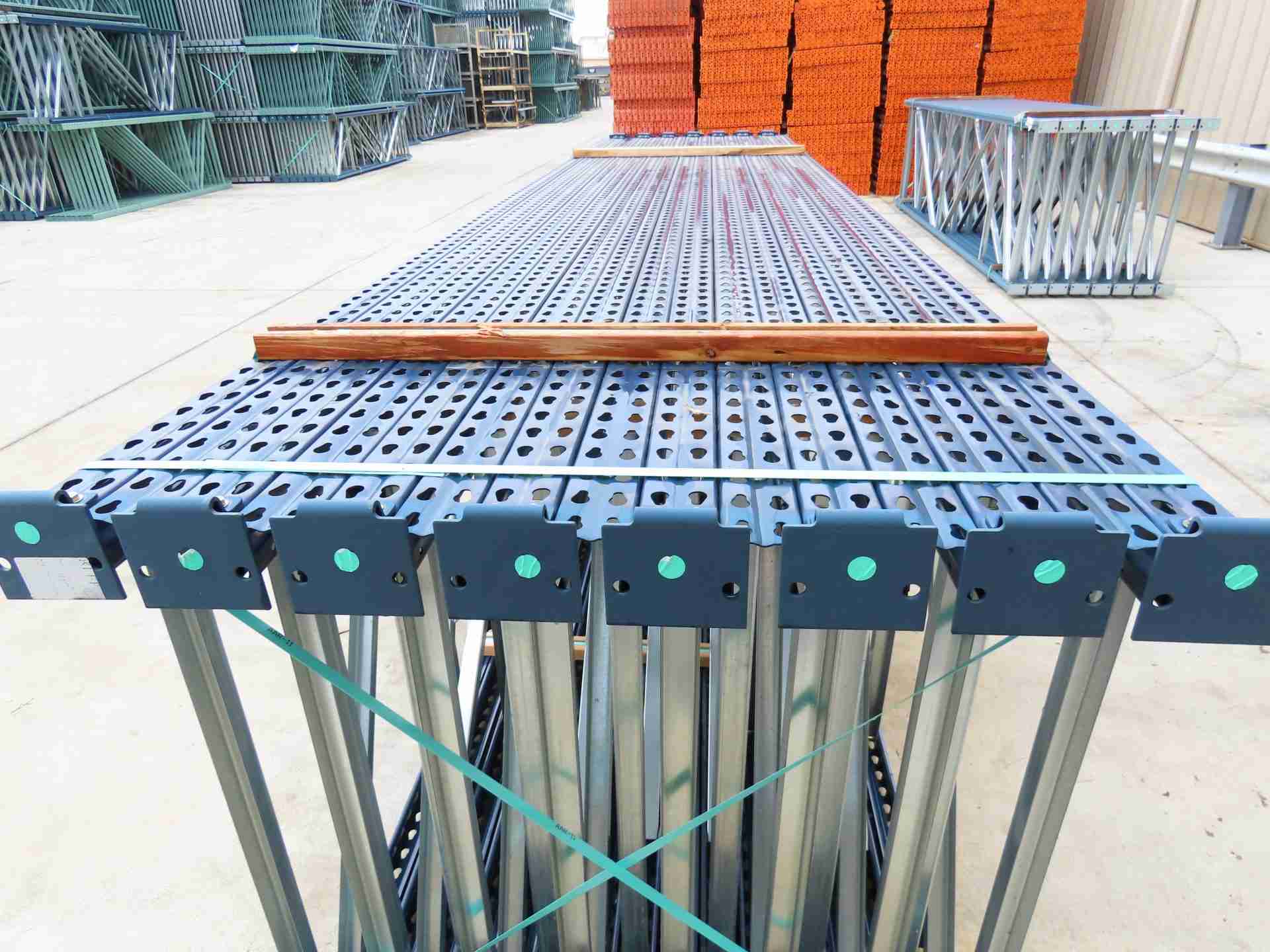
Conclusion
Conclusion:
- The depth of pallet racking is crucial for warehouse efficiency and operational effectiveness.
- Choosing the right depth can maximize storage capacity, enhance accessibility, and improve profitability.
- Specific inventory needs dictate optimal depth: 36” for smaller items and 48” for larger pallets or bulk storage.
- Customizable racking options allow businesses to optimize space and reduce handling times.
- Deeper racking systems lead to cost reductions through better inventory turnover and supplier relationships.
- Regularly analyze your storage configuration to ensure it meets current and future demands.
- Consult experts like Arrow Industrial Sales for tailored storage solutions to improve warehouse efficiency.

Conclusion
Other Resources

Other Resources
Here is a list of other resources you can review online to learn more:
- “Global Industrial Teardrop Pallet Rack Add-On 120″” W x 48 …”
- “Survey on automated systems for smart warehouses – Webthesis”
- “Warehouse design in the omnichannel context – POLITesi”
- “Pallet Racking Global Market Report 2024”
- “Amazon.com: Pallet Racking”
- “csi-logistics-trend-radar-6-dhl.pdf”
- “Site Map – Logistics Business® Magazine”
- “Key Differences Between AGVs and AMRs Explained”
- “Warehouse Racking Market Size to Surpass US$ 13.51 …”
- “WAREHOUSING MODULE”
- “(PDF) Trends in Warehousing and Material Handling …”
- “MHI – The Industry That Makes Supply Chains Work”
- “Pallet Storage – Maximise your storage space”
- “Automatic Guided Vehicles: Machine Vision in Warehousing”

Other Resources
Glossary Terms
How Deep Is Pallet Racking? – Glossary Of Terms
1. Pallet Racking: A storage system designed to hold palletized loads in horizontal rows with multiple levels.
2. Depth: The measurement of the distance from the front of the pallet rack to the back, which determines how much space is available for storage.
3. Load Beam: The horizontal component of a pallet rack that supports the pallets placed on it.
4. Upright Frame: The vertical structure of the pallet rack that supports the load beams and provides stability.
5. Pallet: A flat transport structure that supports goods in a stable fashion while being lifted by forklifts or pallet jacks.
6. Selectivity: A measure of how accessible stored items are. The deeper the rack, the lower the selectivity.
7. Bay: A section of pallet racking between two uprights, which houses one or more levels of load beams.
8. Aisle Width: The space between rows of pallet racking necessary for safe and efficient movement of forklifts or other equipment.
9. Pallet Depth: The measurement of the pallet itself from front to back, typically ranging from 40 to 48 inches.
10. Density Storage: A type of storage system that maximizes use of space, often resulting in deeper racking configurations.
11. Forklift Compatibility: The ability of a pallet rack design to accommodate various types of forklifts based on their size and maneuverability.
12. Column Spacing: The distance between upright frames, which impacts the depth of the racking and the overall design.
13. Weight Capacity: The maximum weight a pallet rack can safely support, determined by its depth and materials.
14. Dynamic Racking: A storage system that utilizes gravity and motion to facilitate the storage and retrieval of pallets, often less deep than static systems.
15. Static Racking: Traditional storage racks without moving components; often deeper to provide extra storage.
16. Tilted Load Beam: A load beam designed at an angle, which can affect pallet depth perception while stored.
17. Cross Beam: A horizontal support bar connecting two uprights, contributing to the overall structural integrity and depth.
18. Anchorage: The securing of pallet racks to the floor to prevent tipping over, particularly important in deeper configurations.
19. Storage Utilization: The percentage of available storage space that is actually used, often affected by rack depth.
20. Backstop: A component that prevents pallets from sliding off the back of racking, helpful in maximizing depth utilization.
21. Deep Reach Forklift: A forklift designed to extend its mast deeper into racks, useful for deep pallet racking.
22. Configuration: The specific arrangement of racking, determining its depth, width, and height based on operational needs.
23. Load Storage Type: The type of loads stored, which influences how deep the pallet racks should be designed.
24. Aisle Configuration: The arrangement of aisles in relation to deeper racks, impacting traffic flow and accessibility.
25. Safety Considerations: Guidelines and practices to ensure safe use of racking systems, especially when increased depth may pose risks.
26. Shelving Systems: Flat surfaces for storage that can often be combined with pallet racking, usually shallower than standard pallet depths.
27. Material Handling: The movement, protection, storage, and control of materials throughout the manufacturing, warehousing, distribution, consumption, and disposal stages.
28. Pallet Flow Racks: A type of racking system that combines deep storage with automatic retrieval mechanisms, enhancing access to items stored deeper.
29. Depth Adjustment: The ability to alter the depth of racking based on changing storage needs or pallet sizes.
30. Height Limitations: Regulations or structural constraints that determine how tall and deep a pallet racking system can be within a facility.

Glossary Of Terms
Other Questions
How Deep Is Pallet Racking? – Other Questions
If you wish to explore and discover more, consider looking for answers to these questions:
- What are the different types of pallet racking systems available?
- How can I determine the right depth for my specific warehouse needs?
- What are the costs associated with installing deeper pallet racking systems?
- Are there any limitations on pallet racking depth based on building codes?
- What safety regulations should I consider when selecting pallet racking depth?
- How can I improve access and efficiency in my existing racking system?
- What tools are available for measuring pallet racking systems accurately?
- How does the weight capacity of a pallet racking system affect depth choices?
- What are common mistakes to avoid when configuring pallet racking depth?
- How do different industries determine their optimal pallet racking depths?

Other Questions
Checklist
How Deep Is Pallet Racking? – A Checklist
*Maximize storage efficiency and ensure safety with this practical guide. *
1. Identify Your Inventory Type:
_____ Large, bulky items (e. g. , appliances, automobile parts):
_____ Recommended Depth: 48”+
_____ Smaller, boxed products (e. g. , electronics, pharmaceuticals):
_____ Recommended Depth: 36”
2. Evaluate Equipment Compatibility:
_____ Assess the maneuverability of your forklifts and handling equipment.
_____ Choose a rack depth that allows for safe and efficient operation:
_____ Limited maneuverability: 36” to 42”
_____ Robust equipment: 48” or more
3. Analyze Warehouse Layout:
_____ Measure aisle widths and overall dimensions.
_____ Ensure that depth includes provisions for safe passage and equipment movement.
4. Consider Picking Strategies:
_____ FIFO (First In, First Out):
_____ Depth: 36” for efficient rotation.
_____ LIFO (Last In, First Out):
_____ Depth: 48”+ for bulk storage.
5. Plan for Seasonal Demand Fluctuations:
_____ Adjust rack depths based on anticipated inventory changes.
_____ Increase depth before peak seasons as needed.
6. Address Changing Logistics Needs:
_____ Stay adaptable to market demands and product turnover rates.
_____ Consider deeper racks for quick response to e-commerce demands.
7. Review Industry Standards:
_____ Familiarize yourself with accepted depth ranges (24” to 48”).
_____ Ensure your selection matches industry best practices.
8. Consult with Experts:
_____ Seek advice from storage solutions professionals to customize your racking system.
_____ Discuss potential upgrades, including eco-friendly or automated options.
9. Regular Depth Inspections:
_____ Conduct assessments quarterly or more frequently if inventory changes are significant.
_____ Record findings to ensure compliance and safety.
10. Safety Considerations:
_____ Verify load capacity and safety standards for selected depths.
_____ Incorporate training for employees focused on safe handling and access techniques.
11. Use Adjustable Racking Systems:
_____ Look for flexibility in your racking options to accommodate varying inventory sizes.
_____ Invest in modular solutions to enhance space efficiency.
12. Stay Informed about Regulatory Changes:
_____ Keep up with updated safety regulations that could impact your racking systems.
_____ Modify depths accordingly to remain compliant.
By following this checklist, warehouse managers can make informed decisions on pallet racking depth, enhancing efficiency and safety while adapting to evolving business needs.

Checklist
At RackingWorld, we help guide you through selecting warehouse storage systems and racking.
Be sure to read our other related stories at RackingWorld to learn more about warehouse storage systems.
0 Comments