
Optimizing Warehouse Storage For Business Growth
By Tom Seest
At RackingWorld, we help guide you through selecting warehouse storage systems and racking.
Be sure to read our other related stories at RackingWorld to learn more about warehouse storage systems.
Could Your Warehouse Storage Solutions Be an Obstacle to Your Success?
When discussing success in business, it’s essential to look closely at the very foundation of operations—your warehouse storage solutions. Often, businesses overlook this critical component, assuming that simply having a roof over their products will suffice. But I’m here to tell you—neglected warehouse organization can be a silent killer of productivity and efficiency.
Imagine walking into a warehouse where products are haphazardly piled in the corners, aisles blocked, and every trip taken is an exercise in frustration. Chaos like this not only negatively impacts your employees’ morale, but it can also hinder customer satisfaction, leading to costly delays and errors. If your drilling team can’t find pallets with products due for shipping, you’re in for a world of hurt.
Enter pallet racking. The right pallet racking system can transform your space, creating order from chaos. It’s more than just a storage solution; it’s a way to optimize your operations for peak performance. Think of it as the skeletal framework of your warehouse—supporting not just the weight of your products but the very weight of your business ambitions. With ergonomically placed racks, your staff can easily locate, retrieve, and store products without the back-breaking labor that leads to low productivity and frustration.
However, your pallet racking isn’t a one-size-fits-all solution. Each warehouse is unique, and what works for one operation might become an obstacle for another. This is where understanding the specific needs of your business comes into play. Are you stocking bulky items that require a heavier-duty rack? Or are you managing smaller goods that might benefit from a more compact system?
Take a moment to evaluate your existing storage. Ask yourself: is it working for you or against you? If the latter is true, it’s time to take action. Whether you’re rethinking your current design or investing in upgraded pallet racking systems, the payoff can be monumental. You’ll not only improve efficiency but also inspire your team with a stress-free environment that makes every workday feel like a step toward success, rather than a battle against the odds.
Stop letting inefficient storage solutions stifle your growth. Embrace the potential of a well-organized warehouse and watch as your business flourishes!

Could Your Warehouse Storage Solutions Be an Obstacle to Your Success?
Could Your Warehouse Storage Solutions Be an Obstacle to Your Success?
- Warehouse storage solutions are fundamental to business operations and should not be overlooked.
- Neglected warehouse organization can harm productivity and efficiency.
- Disorganized warehouses lead to low employee morale and customer dissatisfaction.
- Pallet racking systems can optimize warehouse operations by creating order from chaos.
- Each warehouse has unique needs; pallet racking solutions must be tailored accordingly.
- Evaluate current storage solutions to determine if they are effective or hindering success.
- Investing in proper storage can improve efficiency and create a positive work environment.

Could Your Warehouse Storage Solutions Be an Obstacle to Your Success?
Table Of Contents
- Could Your Warehouse Storage Solutions Be an Obstacle to Your Success?
- What Are The Key Signs Your Warehouse Storage Is Inefficient?
- What Factors Should Be Considered When Evaluating Storage Options?
- How Does The Layout Of Your Warehouse Affect Storage Efficiency?
- Are There Advanced Technologies Available For Warehouse Storage?
- What Are The Costs Associated With Outdated Storage Systems?
- How Can Inventory Management Improve Your Warehouse Operations?
- Conclusion
- Other Resources
- Glossary Of Terms
- Other Questions
- Checklist
What Are The Key Signs Your Warehouse Storage Is Inefficient?
Have you ever stepped into your warehouse and felt an overwhelming sense of disorder? If you have, you’re not alone. Many warehouse managers grapple with inefficiencies that can cost time, money, and even employee morale. Identifying the telltale signs of inefficient storage is crucial for creating a streamlined operation that not only meets but exceeds expectations.
One of the most obvious indicators is the layout itself. If you’re navigating through a maze of boxes, crates, and cluttered aisles, it’s high time to examine your pallet racking system. Ideally, pallet racking should facilitate quick access to inventory, allowing workers to move items in and out with ease. If employees routinely spend excessive time searching for products, it’s a glaring red flag that your storage strategy needs a modern makeover.
Next, consider your inventory turnover rate. Are products gathering dust? If stock lingers on the shelves longer than it should, your distribution flow is likely compromised. This stagnation is not just a sign of poor organization but a signal that your warehouse processes need a fresh perspective. Implementing a first-in-first-out (FIFO) method for your pallet racking can help clear out non-moving inventory and keep your shelves stocked with items that are ready to fly off.
Another telling sign is the frequency of workplace accidents. An inefficient warehouse is a risky environment. If your team navigates through tight spaces or awkwardly stacked items, the chances of accidents escalate. Safety should never be an afterthought. Reassessing your pallet racking configuration to create more open space can transform your warehouse into a safe haven for your employees, leading to improved productivity.
Lastly, have you ever felt the sting of overstock? Excess inventory can sap your resources and create unnecessary costs. If you find yourself often reordering items that you already have stashed away, it’s time to harness data-driven solutions. By utilizing insights from inventory management software, you can calibrate your storage metrics to better align with real-time demand.
Recognizing these signs of inefficiency is your first step towards transformation. A well-organized warehouse is within your reach, and the benefits of a strategic overhaul will ripple through every aspect of your business. So roll up your sleeves, assess your storage solutions, and invest in your future success today. You deserve a warehouse that works as hard as you do!

What Are The Key Signs Your Warehouse Storage Is Inefficient?
What Are The Key Signs Your Warehouse Storage Is Inefficient?
- Warehouse managers often face inefficiencies that can impact time, money, and employee morale.
- The layout of the warehouse is a key indicator of inefficiency; cluttered aisles suggest a need for better pallet racking systems.
- Prolonged inventory turnover and stagnant stock point to compromised distribution flow and poor organization.
- Implementing a FIFO method for pallet racking can help manage non-moving inventory effectively.
- Increased workplace accidents often signal an inefficient warehouse; safety should be prioritized by reassessing pallet racking configurations.
- Excess inventory can lead to unnecessary costs and resource depletion; utilizing data-driven solutions can help optimize stock levels.
- Recognizing these signs is the first step toward achieving a well-organized warehouse that benefits all aspects of the business.
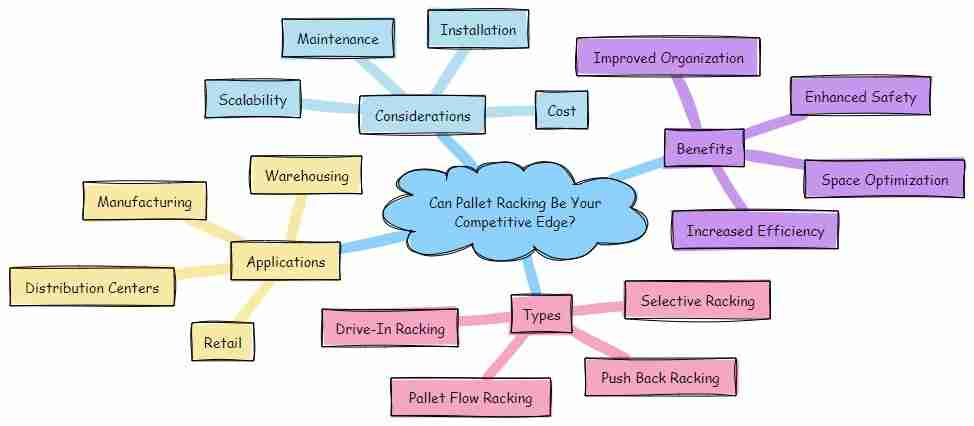
What Are The Key Signs Your Warehouse Storage Is Inefficient?
What Factors Should Be Considered When Evaluating Storage Options?
When it comes to choosing the right storage options for your business, it’s about more than just finding a spot to stash your goods. It’s about understanding your unique needs, minimizing costs, and maximizing efficiency. In this maze of choices, here are some powerful factors to guide your decision-making process.
First off, let’s talk about space efficiency. Are you making the most of the square footage in your facility? This is where options like pallet racking can be game-changers. They enable vertical storage, allowing you to utilize height rather than just floor space. Imagine turning that underutilized corner of your warehouse into a high-traffic area for stock—now that’s smart storage!
Next, consider your inventory turnover. Will the items stored be accessed frequently or infrequently? If you’re dealing in high-turnover goods, you’ll want easy access—that’s where systems like selective racking shine. Conversely, if you move bulk items that don’t see the light of day often, deeper storage solutions may work better for you. Keep your workflow in mind; the goal is to eliminate unnecessary time spent retrieving items, ensuring your operations run smoothly.
Another critical aspect to factor in is safety. It’s not just about fitting as much as possible into a space; it’s about doing so without compromising your team’s well-being. Assess the integrity of your current shelving or racking systems. Are they sturdy enough? Ensuring you have high-quality materials will promote safety and build trust in your operations.
Budget considerations are equally important. Yes, you want the best; however, this doesn’t mean you should break the bank. Think about the long-term costs and benefits. Investing in reliable pallet racking might seem daunting upfront, but the efficiency gains can drive down operational expenses. Balancing quality with cost is essential—consider it a strategic investment in your future.
Lastly, let’s not forget about scalability. Your business is growing, and your storage needs will evolve. An ideal storage solution should be adaptable, allowing you to modify or expand it as your operations change. Choose systems that can accommodate your growth, keeping you a step ahead in this fast-paced environment.
By carefully weighing these factors—space efficiency, inventory turnover, safety, budget, and scalability—you can trust that you’ll land on the best storage solution for your unique needs. Your business deserves nothing less.

What Factors Should Be Considered When Evaluating Storage Options?
What Factors Should Be Considered When Evaluating Storage Options?
- Understand unique storage needs for minimizing costs and maximizing efficiency.
- Utilize space efficiency through systems like pallet racking for vertical storage.
- Consider inventory turnover; opt for selective racking for high-turnover goods.
- Prioritize safety by ensuring shelving and racking systems are sturdy and high-quality.
- Balance budget considerations with long-term costs and benefits for strategic investment.
- Choose scalable storage solutions that can adapt to evolving business needs.
- Weigh factors such as space efficiency, inventory turnover, safety, budget, and scalability for optimal storage solutions.

What Factors Should Be Considered When Evaluating Storage Options?
How Does The Layout Of Your Warehouse Affect Storage Efficiency?
How Warehouse Layout Influences Storage Efficiency
Have you ever wandered through a warehouse, feeling like a lost traveler in a vast desert of pallets and products? Maybe you’ve experienced the frustration of searching for an item only to find it buried beneath a mountain of inefficiently stored goods. You’re not alone. The layout of your warehouse plays a pivotal role in determining not just how quickly you can find your inventory, but also how effectively you can utilize your space.
Picture this: a well-designed layout is like a well-orchestrated symphony. Every instrument, or in this case, every aisle and storage system, harmonizes to create an efficient workflow. Using strategies like pallet racking can significantly enhance your storage capacity while keeping your operations seamlessly efficient.
When it comes to maximizing storage efficiency, the arrangement of pallet racking systems is crucial. Think of pallet racking as the backbone of your warehouse. It enables vertical storage, makes better use of your overhead space, and allows quick access to products. But let’s not just settle for stacking pallets wherever there’s empty floor space. No, my friend! You need a strategic vision; a layout that facilitates a smooth and swift retrieval process.
Imagine implementing a layout where your most frequently accessed products are within arm’s reach, while less popular items are stored further out. This not only cuts down on the time spent searching but also minimizes the back-and-forth that hampers productivity. Inspired yet? You should be!
Now, consider the traffic flow in your warehouse. Are your workers navigating a maze, or do they have clear paths that lead them where they need to go? An efficient layout includes enough space for forklifts and employees to operate without colliding. A clear workflow means less downtime, more productivity, and happier employees.
But here’s the secret sauce: always listen to your team. Those on the ground know the real story. They know where bottlenecks happen and can provide insights that lead to improvements. Engage with your team, collect their feedback, and adapt your layout accordingly.
Your warehouse layout is the foundation of your operational success. By implementing strategic pallet racking and creating a clear, intuitive space, you’ll not only boost your storage efficiency but also cultivate a workplace where productivity thrives. Take action today, and transform your warehouse from a source of stress into a thriving hub of efficiency!

How Does The Layout Of Your Warehouse Affect Storage Efficiency?
How Does The Layout Of Your Warehouse Affect Storage Efficiency?
- The layout of a warehouse significantly affects inventory retrieval speed and spatial utilization.
- A well-designed layout improves workflow, similar to an orchestrated symphony.
- Pallet racking systems enhance storage capacity and enable vertical storage.
- Strategic arrangement of storage allows easier access to frequently used items and minimizes search time.
- Clear traffic flow is essential to prevent collisions between workers and forklifts, enhancing productivity.
- Listening to team feedback helps identify bottlenecks and informs layout improvements.
- An optimized warehouse layout boosts storage efficiency and creates a productive work environment.

How Does The Layout Of Your Warehouse Affect Storage Efficiency?
Are There Advanced Technologies Available For Warehouse Storage?
In the fast-paced world of logistics, the efficiency of your warehouse can make or break your bottom line. If you’ve ever felt the frustration of navigating a cluttered warehouse, you’re not alone. Many warehouse managers face the daily challenge of maximizing space and improving retrieval times. But what if I told you that advanced technologies exist to transform your operation into a well-oiled machine?
Let’s talk about pallet racking—an essential foundation for any efficient warehouse. Gone are the days of random stacks and inefficient use of vertical space. Today’s pallet racking systems are versatile and scalable, allowing you to configure your storage according to your specific needs. Imagine a sleek design that not only optimizes space but also enhances safety. With adjustable beams and smart layouts, your warehouse will become an organized haven, reducing time searching for products and minimizing the chance of accidents.
But let’s not stop there. Enter the realm of automation. Advanced robotics and automated storage retrieval systems (AS/RS) are revolutionizing the way warehouses operate. These systems work tirelessly alongside your team, speeding up picking processes and enhancing inventory accuracy. With every item in its right place, and every process streamlined, you’ll wonder how you ever managed without this technology.
Now, let’s sprinkle in some data-driven decision-making. Warehouse management software integrates seamlessly with your pallet racking systems. With real-time analytics and performance metrics at your fingertips, you can quickly identify bottlenecks, forecast needs, and optimize workflows. Imagine knowing exactly where each item is located within your expansive storage space, empowering your team to work smarter, not harder.
And if energy efficiency is on your radar (and shouldn’t it be?), modern warehouse solutions can lower your carbon footprint while saving you money. By investing in energy-efficient lighting and climate control systems, you make your warehouse not only a functional space but a sustainable one.
So, where do you start? Begin with an evaluation of your current processes and space. Research the latest pallet racking options, explore automation technology, and don’t hesitate to reach out to experts who can guide you through this transformative journey.
Remember, every day you delay moving towards these advanced technologies is another day you’re leaving efficiency and savings on the table. Dive in, embrace the change, and watch your warehouse evolve into a powerhouse of productivity!

Are There Advanced Technologies Available For Warehouse Storage?
Are There Advanced Technologies Available For Warehouse Storage?
- The efficiency of your warehouse is crucial for business profitability.
- Pallet racking systems optimize space utilization and improve safety.
- Modern pallet racking is versatile and scalable to meet specific needs.
- Automation, such as robotics and AS/RS, enhances warehouse operations.
- Warehouse management software provides real-time analytics to optimize workflows.
- Energy-efficient solutions can lower carbon footprints and reduce operational costs.
- Evaluate current processes and consider expert guidance for warehouse improvements.

Are There Advanced Technologies Available For Warehouse Storage?
What Are The Costs Associated With Outdated Storage Systems?
In today’s fast-paced business environment, the efficiency of your storage solutions can make or break your bottom line. So, let’s talk about outdated storage systems. Yep, we’re looking right at those ancient pallet racking setups and overstuffed warehouses that are the equivalent of a cluttered desk—disorganized and inefficient. You might think that keeping the old systems is a cost-saving move, but let’s unravel that misconception together.
First, let’s address the elephant in the room: the hidden costs. When you rely on outdated storage, you’re not just fighting with inefficient space—you’re battling time. Picture this: Your team spends countless hours navigating those rickety aisles, struggling to find items buried behind outdated pallet racking. That’s wasted labor, my friend. Every minute spent rummaging through shoddy storage systems is money that could be put to better use.
Then there’s the matter of errors. You wouldn’t believe how often a mix-up occurs when inventory isn’t easily accessible. An outdated system can lead to shipping the wrong products, misplaced stock, and other logistical nightmares. Those errors don’t just cost money; they chip away at customer trust and satisfaction. Imagine receiving a call from an unhappy client because their order was messed up. Ouch. That’s not just bad for business—it’s a brand nightmare!
And let’s not forget safety. What’s more expensive than a workplace injury? Absolutely nothing. That old pallet racking you’ve been holding onto could be a ticking time bomb. If it’s unstable, you risk serious accidents that can result in medical bills and legal issues that make your head spin.
Now, you might say, “This is all well and good, but what can I do?” The answer is simple: It’s time to modernize. Investing in updated storage systems doesn’t merely improve efficiency; it gives your business an undeniable edge. Streamlined operations mean faster service and happier customers. As you embrace innovation, you’re not just fixing a problem; you’re unlocking a world of opportunity.
So, take a moment to assess your current storage setup. Could it be the weak link that’s holding your business back? Don’t let outdated systems drag you down. Embrace the change, invest wisely, and pave the way for a more prosperous future. Your bottom line—and your customers—will thank you!

What Are The Costs Associated With Outdated Storage Systems?
What Are The Costs Associated With Outdated Storage Systems?
- Efficiency in storage solutions is crucial for business success.
- Outdated storage systems, like old pallet racking, can lead to disorganization and inefficiency.
- Hidden costs include wasted labor time as employees navigate cluttered storage spaces.
- Errors in inventory management can damage customer trust and satisfaction.
- Outdated systems pose safety risks that can lead to costly workplace injuries.
- Modernizing storage solutions can enhance operational efficiency and provide a competitive edge.
- Assessing and upgrading storage setups can lead to a more prosperous business future.

What Are The Costs Associated With Outdated Storage Systems?
How Can Inventory Management Improve Your Warehouse Operations?
Imagine walking into your warehouse, greeted not by chaos but by an orchestrated symphony of efficiency. A well-managed inventory system can turn that vision into reality, drastically improving your warehouse operations. Picture your shelves, organized and optimized, utilizing techniques like pallet racking to maximize space. This is more than just a storage solution; it’s the backbone of your operational success!
When you implement robust inventory management systems, you can make informed decisions that lead to tangible benefits. For instance, what if I told you that the right management strategy could reduce your overhead by at least 20%? That’s not just a number; it’s real money back into your pocket. By keeping your inventory levels in check and your products organized, you reduce the chances of overstock and understock situations. Pallet racking systems allow for vertical storage, giving you the ability to capitalize on every square foot of your warehouse space, ultimately transforming your inventory into cash flow.
Feeling overwhelmed by the thought of overhauling your existing system? Breathe easy! Improving your inventory management can start with small, manageable changes. Begin by analyzing your current processes to identify bottlenecks. Maybe you notice that certain high-demand products are often difficult to locate. Implementing a robust inventory tracking system can turn that frustration into a seamless operation, allowing your team to spend less time searching and more time serving your customers. And with every improvement, a sense of trust builds—both within your team and with your clients.
Furthermore, investing in technology tailored for inventory management fosters a culture of accountability and accuracy. Imagine having real-time data at your fingertips, allowing for swift decision-making that leads to reduced lead times and happier customers. With such enhancements, your warehouse is no longer just a storage facility—it’s a strategic advantage in a competitive landscape.
Take action today to transform your warehouse operations through effective inventory management. Embrace the power of pallet racking and workflow optimization to not only organize your space but to elevate your business to new heights. After all, your warehouse is a reflection of your brand; why not make it a testament to your professionalism and commitment to excellence?

How Can Inventory Management Improve Your Warehouse Operations?
How Can Inventory Management Improve Your Warehouse Operations?
- Effective inventory management transforms chaotic warehouses into efficient operations.
- Organized shelving and pallet racking techniques maximize warehouse space.
- Adopting robust inventory systems can reduce overhead costs by at least 20%.
- Maintaining optimal inventory levels minimizes overstock and understock issues.
- Small, manageable changes can significantly improve inventory management processes.
- Investing in technology leads to increased accountability, accuracy, and customer satisfaction.
- Optimized inventory management elevates your warehouse as a strategic business advantage.

How Can Inventory Management Improve Your Warehouse Operations?
Conclusion
Conclusion: Unleash Your Warehouse Potential with Arrow Industrial Sales
As you step back and assess your warehouse operations, it’s vital to recognize the transformative power of effective storage solutions. If the disarray in your storage systems is hindering your efficiency, you’re not merely facing a logistical challenge—you’re jeopardizing your potential for growth and success. At RackingWorld.com, we understand that maximizing your warehouse space is not just about stacking products; it’s about fostering a platform for innovation and productivity. Every moment spent wrestling with outdated, inefficient storage is a moment lost in your quest for business excellence.
The signs of ineffective storage are all around you, from cluttered aisles to frustrating delays. But identifying these weaknesses is only half the battle. To thrive, you must act decisively and thoughtfully, investing in advanced pallet racking solutions custom-tailored to your needs. Imagine creating a safe, organized environment where your team works efficiently and customers receive their orders without delay. This is not just a dream—it’s a reality that Arrow Industrial Sales can help you achieve.
Start by asking yourself crucial qualification questions: Are your storage systems promoting efficiency, or are they dragging you down? Are they adaptable to your evolving needs? With the guidance of Arrow Industrial Sales, you can explore innovative pallet racking options that not only utilize your existing space but open avenues for future growth.
Now, don’t let hesitation hold you back. The sooner you address your storage inefficiencies, the sooner you’ll reap the rewards—a bolstered bottom line, heightened employee morale, and most importantly, an enhanced customer experience. The clock is ticking; every day spent in disarray could cost you in ways you can’t afford to ignore.
So take action! Call Arrow Industrial Sales at (574) 349-6575 today for tailored advice and assistance in optimizing your warehouse layout and storage solutions. Don’t wait for growth—seize it now. Your future success lies in your ability to take the first bold step toward a better-organized, more efficient warehouse. Act fast, and watch your business flourish!

Conclusion
Conclusion:
- Assessing warehouse operations is crucial for recognizing effective storage solutions.
- Ineffective storage leads to inefficiency, hindering growth and success.
- Maximizing warehouse space promotes innovation and productivity.
- Signs of ineffective storage include cluttered aisles and delays in operations.
- Investing in advanced pallet racking solutions can enhance efficiency and safety.
- Addressing storage inefficiencies can improve employee morale and customer experience.
- Contact Arrow Industrial Sales for tailored advice to optimize warehouse layout.

Conclusion
Other Resources

Other Resources
Here is a list of other resources you can review online to learn more:
- Heavy-Duty Cantilever Storage Racks
- What is Selective Racking: Understanding Benefits & Options
- Rack Manufacturers Institute
- New Cantilever Racks and Racking Kits
- Teardrop Pallet Rack – Ridg-U-Rak
- Selective Racking
- American Surplus
- Used Pallet Rack for Sale in Illinois – American Surplus
- Chicago Pallet Racking
- Selective Pallet Racking Systems
Use This Prompt To Get More Resources With Your Favorite Online AI Tool: Please provide me with a list of online articles with their URLs in a bulleted list that I can read regarding Could Your Warehouse Storage Solutions Be an Obstacle to Your Success?

Other Resources
Glossary Terms
Could Your Warehouse Storage Solutions Be an Obstacle to Your Success? – Glossary Of Terms
1. Warehouse Management System (WMS): A software solution that helps manage and control warehouse operations, including inventory tracking, order fulfillment, and shipping logistics.
2. Inventory Management: The process of efficiently overseeing the storage, identification, and tracking of inventory to optimize supply chain operations.
3. Storage Capacity: The maximum amount of goods that a warehouse can store at any given time, influenced by space, shelving, and layout.
4. Efficiency: The ability to accomplish a task with minimal wasted effort, time, or resources in warehouse operations.
5. Lean Warehousing: A philosophy focused on minimizing waste without sacrificing productivity, often implemented through best practices and continuous improvement.
6. FIFO (First In, First Out): An inventory management method where the oldest stock is sold or used first, ensuring product freshness and reducing waste.
7. LIFO (Last In, First Out): An inventory management method where the most recently acquired inventory is sold first, often used for perishable goods or specific tax advantages.
8. Cross-Docking: A logistics practice where products from a supplier or manufacturer are distributed directly to customers with minimal storage time, reducing handling and storage costs.
9. Pallet Racking: A storage system designed to hold palletized goods, allowing for efficient use of vertical space within a warehouse.
10. SKU (Stock Keeping Unit): A unique identifier for each product or item in inventory, used for tracking and managing stock levels.
11. Material Handling: The movement, protection, and control of materials and products throughout the manufacturing and warehousing process.
12. Order Fulfillment: The complete process of receiving, processing, and delivering orders to customers, crucial for customer satisfaction and operational efficiency.
13. Warehouse Layout: The design and arrangement of storage areas, aisles, and operational zones within a warehouse to enhance workflow and efficiency.
14. Logistics: The planning, implementation, and control of the movement and storage of goods and services from the point of origin to the point of consumption.
15. Bulk Storage: A method of storing large quantities of similar items in a single area without packaging, allowing for efficient space utilization.
16. Temperature-Controlled Storage: A storage solution designed to maintain specific temperatures for sensitive products, such as food or pharmaceuticals.
17. Safety Stock: Additional inventory held to mitigate the risk of stockouts caused by uncertainties in demand or supply chain disruptions.
18. Barcoding: The use of machine-readable codes on products to streamline inventory management and tracking processes.
19. Cycle Counting: An inventory auditing procedure where a subset of inventory is counted on a specific day to ensure accuracy in stock levels.
20. Forklift: A powered industrial truck used for lifting and moving materials within a warehouse; vital for efficient loading and unloading.
21. Shipping and Receiving: The processes involved in the delivery of goods into and out of a warehouse, impacting overall operational efficiency.
22. Demand Forecasting: The practice of predicting future customer demand for products, used to guide inventory management and stock levels.
23. Returns Management: The process of handling returned goods efficiently, including restocking, refurbishing, or disposing of products.
24. Outsourcing: The practice of hiring external firms to handle specific warehouse functions, such as order fulfillment or inventory management.
25. Consolidation: The process of combining multiple orders or shipments for more efficient transport and storage.
26. Sustainability: The integration of environmentally friendly practices in warehousing, focusing on energy efficiency, waste reduction, and responsible sourcing.
27. Picking: The act of selecting products from storage locations to fulfill customer orders, an essential part of the order fulfillment process.
28. Automated Storage and Retrieval System (AS/RS): A technology that automates the storage and retrieval of goods, minimizing manual labor and maximizing efficiency.
29. Utilization Rate: A metric that measures how much of a warehouse’s available storage space is actually being used, indicating efficiency.
30. Work-in-Progress (WIP): Inventory that is partially finished and requires further processing, representing capital tied up in the manufacturing or order fulfillment processes.

Glossary Of Terms
Other Questions
Could Your Warehouse Storage Solutions Be an Obstacle to Your Success? – Other Questions
If you wish to explore and discover more, consider looking for answers to these questions:
- What are some common warehouse organization mistakes to avoid?
- How can I assess the current efficiency of my warehouse storage?
- What are the benefits of automating warehouse storage systems?
- How do I choose the right pallet racking system for my specific needs?
- What role does employee feedback play in improving warehouse layout?
- How can data analytics enhance warehouse performance?
- What are the long-term savings associated with modern storage solutions?
- How frequently should I review and update my warehouse storage systems?
- What training is necessary for staff to effectively utilize new storage technologies?
- How can I measure the return on investment (ROI) of upgrading storage systems?

Other Questions
Checklist
Could Your Warehouse Storage Solutions Be an Obstacle to Your Success? – A Checklist
Warehouse Storage Solutions Optimization Checklist
Evaluate Your Current Warehouse Layout
_____ Is your warehouse layout intuitive and streamlined for easy navigation?
_____ Are high-demand items positioned for quick access?
_____ Are aisles clear and free of obstructions?
_____ Have you consulted your team for insights on layout improvements?
Assess Your Pallet Racking System
_____ Does your pallet racking system utilize vertical space effectively?
_____ Is the racking system suitable for the types of products you store?
_____ Are there signs of wear or instability in your current racking units?
_____ Have you considered adjustable racking systems for adaptability?
Monitor Inventory Management Practices
_____ Do you have a system in place for tracking inventory levels accurately?
_____ Are you utilizing first-in-first-out (FIFO) methods to minimize stock stagnation?
_____ Are products being overstocked or understocked frequently?
_____ Do you have real-time analytics from inventory management software?
Enhance Safety Measures
_____ Are your workers able to navigate safely through the storage areas?
_____ Have you conducted a safety audit focusing on your storage systems?
_____ Are heavy or hazardous items stored safely and labeled clearly?
_____ Are safety measures in place to prevent accidents related to storage?
Evaluate Costs and Budgeting
_____ Have you analyzed hidden costs associated with outdated storage systems?
_____ Can you identify potential savings from upgrading to modern solutions?
_____ Is your storage investment balanced with long-term operational efficiency needs?
_____ Have you factored in maintenance costs of your current systems?
Explore Advanced Technologies
_____ Are you aware of automated storage and retrieval systems (AS/RS) available?
_____ Have you considered integrating warehouse management software (WMS) for process improvements?
_____ Is energy efficiency a consideration in your storage solutions?
_____ Do you have a plan for researching and implementing new technologies?
Plan for Scalability
_____ Are your current storage solutions capable of adapting to future growth?
_____ Have you forecasted future inventory and space requirements?
_____ Is your racking system modular for easy expansion when needed?
_____ Are your team and resources prepared for potential increases in workload?
Use this checklist to assess your warehouse storage solutions effectively and identify areas for improvement that can foster business growth and efficiency!

Checklist
At RackingWorld, we help guide you through selecting warehouse storage systems and racking.
Be sure to read our other related stories at RackingWorld to learn more about warehouse storage systems.
0 Comments