
Maximizing Your Warehouse Space: The Ultimate Guide To Pallet Racking Solutions
By Tom Seest
At RackingWorld, we help guide you through selecting warehouse storage systems and racking.
Be sure to read our other related stories at RackingWorld to learn more about warehouse storage systems.
Where to Find Pallet Racking Solutions?
In the fast-paced world of warehousing and logistics, the smart manager knows that efficiency and organization can make or break a business. When it comes to optimizing your storage space, pallet racking solutions are essential. But where do you turn to find the perfect system to fit your needs? Let’s explore your options.
1. Online Retailers and Wholesale Suppliers
Modern convenience often lies at your fingertips, and the same applies to pallet racking systems. Websites like Amazon Business, ULINE, and Global Industrial offer a compelling range of products designed for businesses of all sizes. They frequently showcase customer reviews, allowing you to weigh your options carefully before making a purchase. Plus, with competitive pricing and promotional sales—such as those for Black Friday, Cyber Monday, or seasonal clearances—you may find high-quality solutions at a fraction of the cost.
2. Local Industrial Supply Companies
If you’re looking for personalized service, try sourcing your pallet racking from local industrial suppliers. These companies often provide tailored solutions based on your specific storage requirements, and you can expect knowledgeable staff who understand the industry. They can even assist with the installation process, ensuring your systems meet safety regulations—a crucial aspect in avoiding costly fines. Look for businesses in your area that specialize in warehouse equipment—this is a segment that has been resilient and growing, even amid economic fluctuations.
3. Trade Shows and Expos
Don’t underestimate the power of face-to-face interactions. Trade shows offer an unparalleled opportunity to see products in action and gauge the latest innovations in pallet racking technology. Events such as ProMat or Modex showcase cutting-edge warehousing solutions, allowing you to network with manufacturers and suppliers while comparing different systems side by side.
4. Industry Referrals
Leverage your connections within the industry. Reach out to fellow business owners or logistics professionals who recently overhauled their storage systems. Their experiences can provide invaluable insights, helping you avoid common pitfalls in selecting racking solutions. Furthermore, engaging with online forums or communities can uncover lesser-known suppliers that deliver exceptional quality at competitive prices.
5. Specialized Manufacturers
For unique or large-scale operations, consider working directly with pallet racking manufacturers. Companies like Interlake and Steel King offer customized solutions tailored to your specific needs and can even help with layout designs for your warehouse space. Collaborating with manufacturers allows more flexibility in your selection, ensuring you get a solution that fits your workflow perfectly.
Emerging trends in sustainability and efficiency can also guide you to innovative systems designed to save space and energy. Stay informed about the latest developments to ensure your warehouse remains competitive in an evolving marketplace. Your ideal pallet racking solution is out there—now it’s time to go find it!

Where to Find Pallet Racking Solutions?
Where to Find Pallet Racking Solutions?
- Pallet racking solutions are essential for optimizing storage space in warehousing and logistics.
- Online retailers like Amazon Business and ULINE offer a variety of pallet racking products with customer reviews and competitive pricing.
- Local industrial supply companies provide tailored solutions and knowledgeable service, assisting with installation to meet safety regulations.
- Trade shows and expos, such as ProMat and Modex, showcase the latest innovations and allow for networking with manufacturers and suppliers.
- Industry referrals from business owners can provide insights and help avoid common pitfalls in selecting racking systems.
- Specialized manufacturers like Interlake and Steel King offer customized racking solutions and help with warehouse layout designs.
- Staying informed about emerging trends in sustainability and efficiency will ensure your warehouse remains competitive.

Where to Find Pallet Racking Solutions?
Table Of Contents
- Where to Find Pallet Racking Solutions?
- What Are The Key Features To Look For In Pallet Racking?
- How Do I Determine The Best Pallet Racking Type For My Needs?
- Where Can I Find Reliable Pallet Racking Suppliers?
- What Are The Most Common Pallet Racking Systems Available?
- How Do I Assess The Quality Of Pallet Racking Options?
- What Safety Standards Should I Consider For Pallet Racking?
- How Can I Optimize My Warehouse Space With Pallet Racking?
- What Is The Cost Range For Different Pallet Racking Systems?
- How Do I Install Pallet Racking Safely And Efficiently?
- Are There Alternatives To Traditional Pallet Racking Systems?
- What Are The Benefits Of Upgrading To New Pallet Racking?
- Conclusion
- Other Resources
- Glossary Of Terms
- Other Questions
- Checklist
What Are The Key Features To Look For In Pallet Racking?
When it comes to maximizing your warehouse efficiency, choosing the right pallet racking system is not just a decision; it’s a game-changer. With the growing demand for rapid fulfillment and the recent shifts in supply chain management—especially in the wake of global disruptions like the pandemic—ensuring your storage solution is both efficient and resilient has never been more crucial. Here are the key features you should prioritize when evaluating pallet racking systems.
1. Load Capacity and Durability:
First and foremost, your racking needs to handle the weight of your inventory. While the average load capacity of standard pallet racking can range from 2,000 to 4,000 pounds per shelf, opting for heavy-duty racking might be necessary for industrial environments. For example, the automotive sector often requires racks that can sustain heavier components, so investment in robust steel racking made from high-tensile materials is essential.
2. Customizability:
Every warehouse has unique needs, and flexibility in design is a must. Think about your inventory types and turnover rates. Modular systems can be adjusted as your business evolves—adding more levels or converting a section to accommodate bulk storage without having to reinvest entirely. With many companies now reassessing their inventory strategies post-pandemic, having a customizable racking solution proves vital for adapting to fluctuating demand.
3. Safety Features:
Safety should never be an afterthought. Look for racking systems that feature safety pins, secure bolt configurations, and safety straps. Recent OSHA regulations highlight the importance of adhering to safety standards—failure to comply can lead to hefty fines and, more importantly, potential injuries. Investing in racking that is designed with safety in mind protects your employees and your bottom line.
4. Accessibility:
Consider the layout of your warehouse. Racking that allows easy access to products will enhance picking efficiency. For example, selective pallet racking provides straightforward front access to all pallets, while drive-in racking maximizes storage density but may require a more complex retrieval process. With e-commerce demand increasing, ensuring that products are easily accessible means faster order fulfillment.
5. Scalability and Future-Proofing:
Finally, your chosen system should equip you for future growth. Given the unpredictability of market trends, selecting racking that can seamlessly scale with your operations is essential. As more companies transition to omnichannel distribution, the capacity for quick reconfiguration becomes invaluable.
By honing in on these key features, your pallet racking system won’t just be a storage solution; it will be a strategic asset that drives efficiency and growth in an ever-evolving market. Remember, smart investments now lead to solid returns later!

What Are The Key Features To Look For In Pallet Racking?
What Are The Key Features To Look For In Pallet Racking?
- Load Capacity and Durability: Ensure racking can handle inventory weight, especially in sectors like automotive, which may require heavy-duty solutions.
- Customizability: Opt for flexible, modular systems that can adjust to changing inventory needs and turnover rates.
- Safety Features: Prioritize safety with systems that include safety pins, secure bolts, and straps to comply with OSHA regulations.
- Accessibility: Choose racking that enhances picking efficiency, such as selective or drive-in racking, to improve order fulfillment.
- Scalability and Future-Proofing: Select systems that can scale with business growth and adapt to market changes for optimal performance.
- Strategic Asset: A well-chosen pallet racking system serves as a strategic asset, driving efficiency and growth.
- Smart Investments: Invest wisely in racking solutions for better returns and adaptability in the evolving market.

What Are The Key Features To Look For In Pallet Racking?
How Do I Determine The Best Pallet Racking Type For My Needs?
When it comes to maximizing warehouse efficiency, the right pallet racking system is your golden key. But how do you determine which type of pallet racking aligns best with your operational needs? Let’s break it down.
First, start with an assessment of your inventory. Are you storing a few large items or a multitude of smaller products? For warehouses that deal with a diverse range of items, selective pallet racking is often the best choice. This system allows easy access to every pallet, making it ideal for operations that require constant inventory turnover—think of those flourishing e-commerce companies handling varied SKUs daily. As of 2023, with supply chains still reeling from global disruptions, a system that allows for quick access and movement of stock can mean the difference between a satisfied customer and an abandoned cart.
Next, consider the volume of your products. If your items are uniform in size and you have a large quantity of the same product, drive-in racking may be a better fit. This system maximizes storage density by allowing multiple pallets of the same item to be stored in a compact space, essentially creating a “first in, last out” (FILO) scenario. This is particularly advantageous for businesses like food distributors or manufacturing plants that frequently deal in high-rise inventories.
Don’t overlook the future. Your selection should not only meet current needs but also scale as your operations grow. If you anticipate adding new products or increasing inventory levels, adjustable pallet racking offers flexibility. With the ability to resize racks to accommodate different heights and weights, adjustable systems can ebb and flow with market demands. For example, as the trend towards on-demand delivery continues to surge in 2023, businesses must remain agile—adjustable racking systems can seamlessly evolve with your inventory needs.
Another crucial consideration is safety. The right design can help mitigate risks associated with heavy lifting and high stacks of goods. For example, if you operate in a high-traffic area, consider a racking system that allows for clear visibility and access to each aisle. Your employees’ safety should always remain paramount.
Finally, consult with experts who understand your unique requirements. An in-depth analysis of your operational workflow, combined with a discussion of your objectives, can help pinpoint the best strategy for your business.
In today’s fast-paced environment, aligning with the right pallet racking system isn’t just a choice; it’s a strategic decision that can propel your business forward. When done correctly, the return on investment may just surpass your expectations—transforming a mundane warehouse into a bustling hub of productivity.

How Do I Determine The Best Pallet Racking Type For My Needs?
How Do I Determine The Best Pallet Racking Type For My Needs?
- The right pallet racking system is essential for maximizing warehouse efficiency.
- Assess your inventory: Selective pallet racking is optimal for diverse items with frequent turnover.
- For uniform products with high volume, drive-in racking maximizes storage density using a “first in, last out” approach.
- Consider future scalability: Adjustable pallet racking offers flexibility for changing inventory requirements.
- Safety is crucial: Choose a system that enhances visibility and accessibility in high-traffic areas.
- Consult with experts to align operational needs with the best racking strategy.
- The right system can transform your warehouse into a hub of productivity and provide a strong return on investment.

How Do I Determine The Best Pallet Racking Type For My Needs?
Where Can I Find Reliable Pallet Racking Suppliers?
In the fast-paced world of logistics and warehousing, the efficiency of your inventory management hinges on your choice of equipment, and that begins with selecting a dependable pallet racking supplier. If you’re ready to elevate your operations and optimize space, understanding where to locate reputable suppliers is paramount.
First and foremost, tap into the power of industry associations. Organizations such as the Material Handling Industry (MHI) and the Warehouse Education and Research Council (WERC) offer valuable resources and member directories. By aligning yourself with these entities, you gain access to a network of established vendors known for quality and reliability. For example, MHI recently highlighted innovative pallet racking advancements at its annual conference, showcasing suppliers who have responded proactively to market shifts, including supply chain challenges stemming from the pandemic.
Next, leverage online platforms and marketplaces that specialize in warehouse equipment. Websites like ThomasNet or Alibaba feature extensive listings of suppliers, complete with ratings and reviews from previous customers. Look for suppliers that have robust customer feedback, as a positive reputation is often a bellwether for professionalism and service. For instance, with the ongoing fluctuations in material costs due to recent global economic changes, finding a supplier who communicates transparently about pricing can save you both time and money.
Don’t underestimate the power of local business directories. Google “pallet racking suppliers near me” and explore results from Google Maps, Yelp, or Angie’s List. Local suppliers often provide personalized service and can respond more swiftly to your needs—critical if you face time-sensitive storage challenges. Given the current trends in e-commerce growth, many businesses are recalibrating their warehouse capacities, so your local suppliers may be equipped with the latest in adaptive racking systems designed for high-velocity environments.
Moreover, engage in industry forums and social media groups dedicated to warehousing and logistics. Platforms like LinkedIn or Reddit’s r/logistics community can connect you with professionals who share firsthand experiences. Often, someone in your network has valuable insights about suppliers that can steer you toward solid choices.
Finally, don’t forget the importance of visiting potential suppliers if possible. An in-person inspection of their facilities will provide clarity on their operational capacity and commitment to quality. As we move into a new era of supply chain reliability, choosing the right pallet racking supplier is not just a decision; it’s an investment in the foundation of your warehouse efficiency. By doing your homework and tapping into available resources, you can confidently find a partner that aligns with your business growth ambitions.

Where Can I Find Reliable Pallet Racking Suppliers?
Where Can I Find Reliable Pallet Racking Suppliers?
- Efficient inventory management relies on choosing a reliable pallet racking supplier.
- Join industry associations like MHI and WERC for access to quality vendor networks.
- Utilize online platforms such as ThomasNet and Alibaba for extensive supplier listings and reviews.
- Check local business directories for suppliers who offer personalized service and rapid response.
- Engage in industry forums and social media groups to gather insights on suppliers from professionals.
- Visit potential suppliers for an in-person inspection of their facilities and operational capacity.
- Choosing the right supplier is crucial for warehouse efficiency and an investment in your operations.

Where Can I Find Reliable Pallet Racking Suppliers?
What Are The Most Common Pallet Racking Systems Available?
In the dynamic world of inventory management and warehousing, choosing the right pallet racking system is not just a logistical necessity; it can be the difference between chaos and streamlined efficiency. Businesses today face the daunting task of maximizing space while enhancing productivity amidst rising operational costs. Luckily, there’s a plethora of options tailored to varied needs. Let’s explore the most prevalent pallet racking systems available.
Selectivity Racking: Often referred to as the “traditional” solution, selective racking is synonymous with versatility. This system provides direct access to each pallet, making it ideal for facilities with a wide range of products that require frequent picking. Retail giants and distribution warehouses often lean on selective racking for its simplicity and effectiveness. As e-commerce continues its upward trajectory, with companies like Amazon focusing on rapid delivery, selective racking remains a cornerstone for optimizing incoming and outgoing goods.
Drive-In and Drive-Through Racking: Perfect for maximizing storage space, these systems allow forklifts to enter the racking structure for pallet loading and retrieval. Drive-in racks allow pallets to be pushed into a deep lane, while drive-through racks enable access from both sides, boosting operational efficiency. Recent shifts towards bulk storage and pallet-based inventory systems have made drive-in solutions a favorite in industries where high-density storage is essential, such as food and beverage distribution.
FIFO Racking: First In, First Out (FIFO) racking systems have gained popularity, particularly in sectors dealing with perishable goods. By ensuring that older stock is accessed before newer arrivals, FIFO racking aligns with the growing global emphasis on sustainability and waste reduction. As consumers become more eco-conscious, businesses are adapting their warehouse operations accordingly. The adoption of FIFO systems demonstrates a commitment to minimizing waste, allowing brands to resonate with increasingly discerning shoppers.
Cantilever Racking: When dealing with long or bulky items, cantilever racking is indispensable. This system features arms that extend outwards, making it perfect for storing items like lumber, pipes, or furniture. With recent infrastructure investments and a marketplace leaning heavily into construction and renovation, cantilever racking provides a robust solution for companies aiming to optimize their storage without sacrificing floor space.
Flow Racking: For those businesses looking to streamline their operations further, flow racking utilizes gravity to manage stock rotation, making it a favorite in high-demand environments. With supply chains strained by current challenges, such as global shipping delays and inventory shortages, flow racks can enhance responsiveness by ensuring inventory is always agile and accessible.
In an ever-evolving market, understanding which pallet racking system best fits your operations is crucial. Each system offers distinct advantages, and by choosing wisely, businesses can enhance efficiency, boost profitability, and stay ahead of the competition.

What Are The Most Common Pallet Racking Systems Available?
What Are The Most Common Pallet Racking Systems Available?
- Choosing the right pallet racking system is crucial for effective inventory management and warehousing.
- Selective racking offers direct access to each pallet, ideal for facilities with diverse products and frequent picking.
- Drive-In and Drive-Through racking systems maximize storage by allowing forklifts to load and retrieve pallets efficiently.
- FIFO racking systems ensure older stock is used first, supporting sustainability efforts in handling perishable goods.
- Cantilever racking is perfect for long or bulky items, optimizing storage space for constructions and renovations.
- Flow racking utilizes gravity for efficient stock rotation, making it advantageous in high-demand environments.
- Understanding the distinct advantages of each racking system can enhance efficiency and profitability in business operations.

What Are The Most Common Pallet Racking Systems Available?
How Do I Assess The Quality Of Pallet Racking Options?
In the world of warehousing and logistics, selecting the right pallet racking is not just a matter of convenience; it’s a strategic decision that can impact your bottom line. As supply chains strive for greater efficiency, the quality of your pallet racking can make or break your operational success. Here’s a roadmap to evaluating your options, ensuring you invest in racking systems that are more than just sturdy—they should align with your overall operational strategy.
1. Understand Your Needs:
Before diving into the market, conduct a thorough assessment of your storage requirements. Consider the type of products you handle. For heavy goods, high-density pallet racking might be necessary, whereas lighter items may benefit from selective racking systems for easy access. For instance, the pandemic brought e-commerce to the forefront, necessitating warehouses to rethink their space utilization. If you’re moving to a just-in-time inventory system, flexibility in your racking options will be vital.
2. Inspect the Material Quality:
Quality materials distinguish superior pallet racking from subpar alternatives. Inspect the design and construction—look for racking made of high-strength steel with protective coatings to prevent rusting and wear. If you’re considering a supplier’s racking, ask for material specifications and certifications. A recent surge in demand for sustainable practices means many suppliers are now focusing on eco-friendly materials. Choose companies that provide transparent sourcing of their materials and offer products that minimize environmental impact.
3. Safety Features:
Never underestimate the importance of safety in your racking systems. Check for features such as safety pins, locking mechanisms, and adequate weight distribution capabilities. Following OSHA guidelines is non-negotiable. An example is the rise in inspections after the tragic warehouse collapse incidents that rocked the industry last year. Ensuring your racking systems meet or exceed these regulations isn’t just good for safety—it’s good for business reputation.
4. Flexibility and Scalability:
What’s trendy today may not hold up tomorrow. With the rapid changes in technology and market demands, a quality racking solution will offer the flexibility to adapt. Modular systems that allow for easy reconfiguration are a wise investment. When looking at new systems, inquire about their scalability. Are they designed to easily accommodate future expansion or product changes? With the uncertainty of global supply chains, maintaining adaptability can safeguard your operations against sudden shifts in demand.
5. Supplier Reputation and Support:
Finally, consider the supplier’s reputation. Check customer testimonials and case studies. Are they a trusted partner in the industry? Do they offer reliable support and installation services? Investing time in this assessment can save you headaches down the line.
Investing in quality pallet racking isn’t just choosing a storage solution; it’s about creating an efficient, safe, and adaptable operational backbone for your business. Make the right choice today and reap the rewards for years to come.

How Do I Assess The Quality Of Pallet Racking Options?
How Do I Assess The Quality Of Pallet Racking Options?
- Choosing the right pallet racking is a strategic decision that affects operational efficiency and profitability.
- Assess storage requirements based on the types of products handled to determine the appropriate racking system.
- Inspect material quality; prioritize high-strength steel with protective coatings and sustainable practices.
- Ensure safety features comply with OSHA guidelines, such as safety pins and adequate weight distribution.
- Look for flexible and scalable racking solutions that can adapt to changing market demands and future expansions.
- Research supplier reputation through testimonials and case studies, considering their support and installation services.
- Investing in quality pallet racking contributes to a safe, efficient, and adaptable operational foundation for your business.
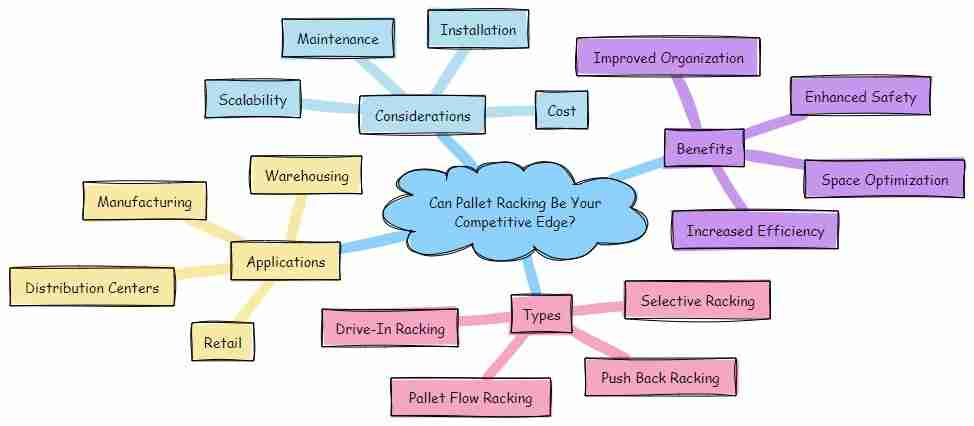
How Do I Assess The Quality Of Pallet Racking Options?
What Safety Standards Should I Consider For Pallet Racking?
When it comes to pallet racking systems, safety is not just a consideration; it’s an obligation. In today’s fast-paced warehouse and retail environments, the efficient management of inventory relies heavily on the robustness of your racking system. But ensure that your investment is fortified by understanding the essential safety standards.
1. ANSI/RMI Standards: The American National Standards Institute (ANSI) and the Rack Manufacturers Institute (RMI) have established crucial standards for the design and quality of pallet racking systems. ANSI MH16.1, for example, focuses specifically on the safety requirements for industrial steel storage racks. Compliance with these standards not only secures a safer workplace but also significantly reduces liabilities from potential accidents.
2. OSHA Regulations: The Occupational Safety and Health Administration (OSHA) also plays a vital role in establishing workplace safety measures. Reviewing OSHA’s guidelines for racking systems can ensure you’re meeting the governmental standards required for safe operation. This is particularly relevant in light of recent events, such as increased scrutiny on workplace accidents in warehouses following high-profile incidents. Staying compliant can help prevent accidents and also make your business more attractive to partners concerned with safety.
3. Regular Inspections: It is crucial to schedule routine inspections of your pallet racking systems. Implementing a regular inspection schedule can identify signs of wear and tear or potential hazards before they become problematic. As the saying goes, an ounce of prevention is worth a pound of cure. For instance, recent studies show that warehouses that regularly inspect their racking systems reduce incidents related to collapse by almost 30%.
4. Training and Education: Having the right safety standards is useless unless your team is educated on them. Conduct regular training programs that focus on safe operation practices, load limits, and proper handling techniques. The more knowledgeable your workforce, the lower your risk of accidents. Remember, it’s not just about compliance; it’s about fostering a safety-first culture within your organization.
5. Choose Reputable Manufacturers: Partner with manufacturers that adhere to the highest safety standards. Research their commitment to quality and see if they have certifications or endorsements from recognized bodies. A reliable supplier not only provides safe solutions but also stands behind their products with warranties and support.
In sum, prioritizing safety in your pallet racking systems isn’t just good practice—it’s a necessity that safeguards your business and employees. Invest wisely in compliance with relevant standards, and you’ll not only protect your asset but also enhance your brand’s reputation in a competitive marketplace. Remember, safety isn’t just an expense; it’s an investment in your company’s future.

What Safety Standards Should I Consider For Pallet Racking?
What Safety Standards Should I Consider For Pallet Racking?
- ANSI/RMI Standards: Adhere to established standards like ANSI MH16.1 for safety in industrial steel storage racks, reducing liabilities and enhancing workplace safety.
- OSHA Regulations: Follow OSHA guidelines to meet governmental safety requirements and prevent accidents, increasing appeal to safety-conscious partners.
- Regular Inspections: Schedule routine inspections to identify wear and tear before they lead to hazards; studies show this can reduce collapse incidents by almost 30%.
- Training and Education: Conduct regular training sessions on safe operation practices and load limits to foster a safety-first culture and minimize accidents.
- Choose Reputable Manufacturers: Partner with manufacturers that adhere to high safety standards and offer certifications, warranties, and support.
- Safety as an Investment: Prioritize safety not just as compliance but as a critical investment in your business’s reputation and future.
- Comprehensive Approach: Implementing safety standards contributes to a safer workplace and enhances operational efficiency in warehouse and retail environments.

What Safety Standards Should I Consider For Pallet Racking?
How Can I Optimize My Warehouse Space With Pallet Racking?
In today’s fast-paced, ever-evolving marketplace, every square foot of your warehouse matters. The ability to maximize that space can mean the difference between soaring profits and disappointing losses. Enter pallet racking—a transformative solution for optimizing warehouse space that not only improves efficiency but also enhances organization and accessibility.
Imagine this scenario: a company struggling with excess inventory and cluttered aisles. They’re wasting precious time searching for products, leading to delays in fulfilling customer orders. This inefficiency could easily translate into lost sales and frustrated clients. By implementing a well-designed pallet racking system, that same warehouse can swiftly transition from chaos to order.
First, let’s talk about the types of pallet racking. You have selective racking, which provides easy access to each pallet, making it ideal for warehouses with a wide variety of products. On the other hand, if your business has a high volume of identical items, consider drive-in or drive-through racking, which allows for high-density storage without sacrificing accessibility.
A recent shift in e-commerce has highlighted the importance of adapting warehouse space for quicker turnarounds. With consumers expecting faster delivery, warehouses need to be agile. Companies like Amazon have demonstrated the effectiveness of high-density pallet racking systems that can streamline storage while maintaining order accuracy. By allowing forklifts to efficiently navigate the space, they can pick and pack items within minutes—allowing them to meet customer expectations and reinvent the delivery game.
But optimizing your warehouse space goes beyond simply installing pallet racks. You must also consider the layout. For instance, arranging your racking in a U-shape can enhance workflow, reducing the distance workers need to travel. This strategic organization not only increases productivity but also boosts employee morale. After all, a streamlined environment fosters a sense of accomplishment and minimizes frustration.
Don’t overlook the importance of technology in your pallet racking optimization strategy. Warehouse Management Systems (WMS) can integrate with your racking setup to provide real-time inventory tracking, ensuring that you always know where everything is located. As supply chain disruptions remain prevalent, ensuring your inventory is organized and accessible is a competitive advantage.
Optimizing your warehouse space with pallet racking is both an art and a science. By investing in the right systems and technologies, you can transform a cluttered space into a well-oiled operation. Take the leap today, and watch your efficiency—and profits—skyrocket.

How Can I Optimize My Warehouse Space With Pallet Racking?
How Can I Optimize My Warehouse Space With Pallet Racking?
- Maximizing warehouse space is crucial for profitability in today’s fast-paced marketplace.
- Pallet racking provides a transformative solution that improves efficiency, organization, and accessibility.
- Implementing a pallet racking system can help companies manage excess inventory and streamline order fulfillment.
- Selective racking is ideal for diverse products, while drive-in/drive-through racking suits high-volume identical items.
- E-commerce demands quicker turnarounds, showcasing the need for high-density pallet racking systems for speed and order accuracy.
- Warehouse layout, such as a U-shape arrangement, can enhance workflow and boost employee morale.
- Integrating Warehouse Management Systems (WMS) with racking setups enables real-time inventory tracking and organization.

How Can I Optimize My Warehouse Space With Pallet Racking?
What Is The Cost Range For Different Pallet Racking Systems?
When it comes to optimizing your warehouse space, one of the most significant investments you’ll make is in pallet racking systems. But let’s face it: the costs can be as varied as the products lining your shelves. Understanding the price range for these systems is essential to making informed decisions that align with your budget and operational goals.
First, let’s break down the types of pallet racking systems available. The most common include selective racking, drive-in racking, and cantilever racking, each catering to specific storage needs and inventory management strategies.
Selective Racking is the most widely used system, known for its ease of access and versatility. The cost for selective pallet racking generally ranges from $100 to $250 per beam level, depending on factors like material quality and weight capacity. For a medium-sized warehouse needing about 10 racking units, expect anywhere from $5,000 to $15,000, excluding installation costs. With recent supply chain disruptions, prices have fluctuated, so it’s essential to get quotes from several suppliers to ensure a competitive rate.
On the other hand, Drive-In Racking is ideal for businesses with high-density storage needs. This system allows for forklift access to multiple pallets deep, maximizing vertical space. Drive-In systems come with a higher price tag, starting at approximately $200 to $400 per pallet position, meaning you might be looking at a total investment of $15,000 to $40,000 or more for complete systems. Keep your eye on the evolving demand for e-commerce fulfillment centers, as this could influence availability and pricing.
Lastly, Cantilever Racking is particularly suited for storing long or bulky items like lumber or pipes. Costs for cantilever racks typically start at around $150 per arm, with full systems potentially exceeding $10,000 depending on the configuration and size.
Now, let’s consider the impact of current events. Recent increases in steel prices due to global supply shortages could affect your budget for these systems. As companies shift towards automation and more sophisticated inventory management solutions, investing in eco-friendly or adjustable racks might be worth the premium, providing long-term savings and sustainability benefits.
While you may need to invest significantly in the right pallet racking system, remember that this is more than just an upfront expense; it’s a cornerstone of operational efficiency. By understanding the cost ranges of different systems, you can make the savvy choice that balances your budget with the long-term productivity goals of your business. Always shop around, consider future scaling needs, and keep a pulse on market trends to maximize your investment—a smart strategy that could pay dividends beyond mere storage solutions.

What Is The Cost Range For Different Pallet Racking Systems?
What Is The Cost Range For Different Pallet Racking Systems?
- Pallet racking systems are a significant investment for optimizing warehouse space, with varying costs based on system type and material.
- The most common types include selective racking, drive-in racking, and cantilever racking, each suited to specific storage needs.
- Selective racking is the most popular and costs between $100 to $250 per beam level, totaling $5,000 to $15,000 for a medium-sized warehouse.
- Drive-in racking, ideal for high-density storage, ranges from $200 to $400 per pallet position, leading to total costs of $15,000 to $40,000 or more.
- Cantilever racking is for long or bulky items, with costs starting around $150 per arm and full systems exceeding $10,000 in some configurations.
- Current events, such as rising steel prices and increased demand for automation, may impact budget needs for these systems.
- Investing in the right pallet racking is a key strategy for operational efficiency, balancing upfront costs with long-term productivity goals.

What Is The Cost Range For Different Pallet Racking Systems?
How Do I Install Pallet Racking Safely And Efficiently?
Installing pallet racking is not merely a task; it’s a pivotal investment in the efficiency and safety of your warehouse operations. The stakes are high—improper installation can lead to damaged goods, workplace injuries, and costly downtime. So, how do you install pallet racking safely and efficiently? Let’s delve into some proven steps that not only ensure safety but also enhance operational productivity.
1. Conduct a Thorough Site Assessment
Before you even think about lifting a single beam, conduct a comprehensive assessment of your space. Measure your warehouse height, width, and depth, and evaluate the workflow currently in place. This will help you determine the most effective racking configuration. For instance, given the ongoing labor shortages and supply chain challenges many companies are currently experiencing, an optimized layout can significantly mitigate these issues by ensuring products move smoothly through your warehouse.
2. Choose the Right Equipment
Selecting the right equipment doesn’t just refer to your pallet racking type; it extends to the tools you’ll use for installation. Investing in high-quality materials—like heavy-duty beams and accessories—is vital. Avoid the temptation to cut corners to save a few dollars; the long-term costs of replacing inferior racking can offset any initial savings dramatically.
3. Engage Trained Professionals
While DIY projects can be enticing, pallet racking installation is a place where expertise pays off. Hiring trained professionals not only minimizes risks but also ensures that all safety standards are adhered to. Companies like AHS and Steel King have specialized teams that have seen it all—they’ll know how to install racking systems that comply with the latest industry standards. Given the increased scrutiny over workplace safety regulations in light of recent OSHA guidelines, enlisting experts ensures you stay on top of compliance.
4. Use Proper Safety Gear
Even with professionals on hand, the importance of using the right safety gear cannot be overstated. Helmets, gloves, and steel-toed boots are non-negotiable. For instance, a recent study showed that workplaces with a strong safety culture report 70% fewer accidents. Don’t underestimate the power of a safe working environment.
5. Regular Inspections Post-Installation
After your pallet racking is installed, don’t just set it and forget it. Regular inspections are essential for maintaining integrity and safety. With the ongoing chatter about supply chain resilience, ongoing checks will ensure your operations remain fluid and responsive to any challenges.
The installation of pallet racking is an investment in safety and productivity. By prioritizing these steps, you’ll cultivate a safer, more efficient workplace that positions your business for success—even in today’s challenging economic climate. Remember, when it comes to racking, personal safety and long-term efficiency are inextricably linked!

How Do I Install Pallet Racking Safely And Efficiently?
How Do I Install Pallet Racking Safely And Efficiently?
- Installing pallet racking significantly impacts warehouse efficiency and safety.
- Conduct a thorough site assessment to measure warehouse dimensions and evaluate workflow for optimal racking configuration.
- Select high-quality equipment and materials to avoid costly replacements down the road.
- Hire trained professionals for installation to minimize risks and ensure compliance with safety standards.
- Use proper safety gear, including helmets, gloves, and steel-toed boots, to enhance workplace safety.
- Perform regular inspections post-installation to maintain the integrity and safety of the racking system.
- Prioritizing these installation steps contributes to a safer and more efficient workplace, enhancing long-term productivity.

How Do I Install Pallet Racking Safely And Efficiently?
Are There Alternatives To Traditional Pallet Racking Systems?
In today’s fast-paced logistics and warehousing landscape, the quest for efficiency is relentless. While traditional pallet racking systems have long been the go-to solution for inventory management, a repertoire of innovative alternatives has emerged, designed to maximize storage and streamline operations.
One noteworthy option is mobile racking systems. These systems allow racks to move laterally on tracks, creating a compact storage solution that drastically reduces the space required between aisles. Imagine reclaiming up to 80% of your warehouse’s footprint! This is not just a theoretical benefit; businesses across sectors have seen immediate reductions in operational overheads—critical at a time when costs are under scrutiny amid economic uncertainties.
Let’s consider the rise of automated storage and retrieval systems (AS/RS). As e-commerce continues to soar, with logistics giants adapting to meet skyrocketing demands, AS/RS technology has gained traction. These systems integrate robotics with computer-controlled mechanisms to efficiently store and retrieve products. With the ability to increase speed and accuracy, businesses can better serve their customers. Just last quarter, a major retailer integrated AS/RS to handle increased inventory and experienced a 30% boost in fulfillment speed—turning over their stock faster than ever.
Another alternative is the multi-tier racking system. This clever solution uses vertical space and enables businesses to utilize heights previously uncaptured by traditional systems. Particularly beneficial for warehouses with limited ground space, multi-tier systems can elevate inventory management efficacy. A recent industry report indicated that manufacturers adopting these systems realized a 15% increase in storage capacity, showcasing how innovation translates directly to bottom-line improvements.
Consider the growing trend of gravity flow racking. This design utilizes inclined shelves where products slide down on rollers or wheels. It helps facilitate first-in, first-out (FIFO) inventory storage, ideal for industries dealing with perishables or fast-moving consumer goods. During recent supply chain challenges, companies leveraging gravity flow systems have been able to adapt more rapidly, ensuring that stock turnover remains efficient and that waste is minimized.
With the pressure on warehouse operations intensifying, businesses can no longer afford to rely solely on traditional pallet racking systems. Exploring alternative solutions not only boosts efficiency but also positions a company to thrive amidst the challenges of a competitive marketplace. As logistics continue to evolve, embracing these alternatives may well be the key to staying ahead.

Are There Alternatives To Traditional Pallet Racking Systems?
Are There Alternatives To Traditional Pallet Racking Systems?
- Efforts for efficiency in logistics and warehousing are increasing.
- Mobile racking systems allow lateral movement on tracks, saving up to 80% of warehouse space.
- Automated storage and retrieval systems (AS/RS) are being adopted to enhance speed and accuracy in handling inventory, with some retailers reporting a 30% boost in fulfillment speed.
- Multi-tier racking systems effectively utilize vertical space, leading to a reported 15% increase in storage capacity for manufacturers.
- Gravity flow racking systems facilitate FIFO inventory management, helping businesses adapt swiftly during supply chain challenges.
- Businesses must move beyond traditional pallet racking to remain competitive and efficient.
- Exploring innovative racking solutions is essential for thriving in a challenging logistics environment.

Are There Alternatives To Traditional Pallet Racking Systems?
What Are The Benefits Of Upgrading To New Pallet Racking?
In today’s fast-paced business environment, efficiency is paramount. Upgrading your pallet racking system isn’t just an option—it’s a necessity for companies looking to boost productivity and maximize their return on investment. The benefits of investing in modern pallet racking are multifaceted, each leading to a substantial improvement in your operations.
Enhanced Safety
First and foremost, safety is a non-negotiable aspect of any warehouse operation. New pallet racking systems come equipped with the latest safety features, including stricter load capacities and improved structural integrity. In recent years, the Occupational Safety and Health Administration (OSHA) has heightened its focus on workplace safety, strongly emphasizing compliance standards. By upgrading, you can ensure you meet or exceed these standards, protecting your employees and minimizing the risk of costly accidents or injuries—ultimately saving you from potential legal liabilities.
Increased Storage Capacity
Modern pallet racking systems can maximize available space better than their older counterparts. Many newer models allow for double-deep or drive-in configurations, which can increase storage density significantly—perfect for organizations facing space constraints. For instance, in the e-commerce sector, where demand fluctuates wildly, an efficient storage solution can mean the difference between keeping up with orders or falling behind. By optimizing your racking system, you provide an agile response to market demands, allowing your team to work smarter, not harder.
Improved Inventory Management
Upgrading to a new pallet racking system can be a game-changer for inventory management. Many contemporary racking systems incorporate advanced features like barcode scanning compatibility or integrated technology that tracks product movement. This level of integration not only enhances accuracy but also leads to faster picking times. You may have seen recently how large retailers are pivoting towards real-time inventory data to manage supply chain challenges. By leveraging these modern racking solutions, you position your business to stay ahead of competitors who cling to outdated methods.
Cost-Effectiveness
While the upfront costs may appear daunting, long-term savings make the investment worthwhile. Modern racking systems are designed with durability in mind, resulting in fewer maintenance costs and a longer lifespan. This durability translates to lower total cost of ownership, allowing you to allocate resources toward other core business initiatives.
Conclusion
Upgrading your pallet racking system is not merely an operational enhancement; it’s a strategic move towards future-proofing your business. In an age where agility, safety, and efficiency are paramount, investing in a modern pallet racking solution is one step closer to achieving not just success, but industry leadership. So go ahead, make the leap—your bottom line will thank you.

What Are The Benefits Of Upgrading To New Pallet Racking?
What Are The Benefits Of Upgrading To New Pallet Racking?
- Efficiency is crucial: Upgrading pallet racking systems is necessary for boosting productivity and maximizing ROI.
- Enhanced safety: Modern systems feature improved safety features, helping companies comply with OSHA standards and reduce accident risks.
- Increased storage capacity: New pallet racking configurations can significantly enhance storage density, especially for businesses facing space constraints.
- Improved inventory management: New systems often include advanced technology that enhances accuracy and accelerates picking processes.
- Cost-effectiveness: Although initial costs may be high, modern racking systems are durable, minimizing maintenance and lowering total ownership costs.
- Future-proofing: Upgrading is a strategic move that supports agility, safety, and efficiency, positioning businesses for industry leadership.
- Long-term investment: Enhancements in racking systems contribute to sustained success and better resource allocation.

What Are The Benefits Of Upgrading To New Pallet Racking?
Conclusion
In the ever-evolving landscape of warehousing and logistics, your ability to stay ahead hinges on one crucial factor: optimization. The right pallet racking systems can turn chaotic, cluttered spaces into organized, efficient hubs of productivity, impacting your bottom line and customer satisfaction levels. Each section of this guide underscores the alarmingly clear truth—your chosen pallet racking solution is not merely a storage solution; it is a strategic asset vital for growth and efficiency.
From understanding what features to prioritize—like load capacity, customizability, and safety—to identifying the most suitable types of racking systems for your unique needs, this comprehensive guide empowers you to make informed decisions. Bind that wisdom with actionable steps to source reliable suppliers and leverage industry trends, and you walk away equipped to transform your operations effectively.
Moreover, we uncovered the importance of upgrading to modern systems that seamlessly integrate technology and adhere to safety standards—a crucial factor in today’s marketplace where compliance is more than a checkbox; it’s your shield against liability and operational disruption. As enticing as it may be to stay the course, clinging to outdated systems puts you at risk of falling behind competitors who have embraced innovation, leading to lost sales and diminished market share.
But with so many options and variables in play, it’s easy to feel overwhelmed. That’s where the experts at Arrow Industrial Sales come in. We have honed our expertise in understanding not just what businesses like yours need today, but what they will require tomorrow. Our comprehensive solutions cater to diverse storage needs, while our personalized approach ensures you receive tailored recommendations that align with your business goals.
Now is the time to act. Don’t let inefficiency hold your business back. Call Arrow Industrial Sales at (574) 349-6575 to learn how we can elevate your warehouse operations with cutting-edge pallet racking solutions. The clock is ticking; seize this opportunity to optimize your space and enhance your productivity. Remember, investing wisely today translates into significant returns tomorrow. Your ideal racking solution awaits—let’s unlock your warehouse’s full potential together!

Conclusion
Conclusion:
- Optimization is crucial in warehousing and logistics for enhancing productivity and customer satisfaction.
- Choosing the right pallet racking system turns cluttered spaces into organized hubs, vital for growth.
- Key features to prioritize include load capacity, customizability, and safety when selecting racking systems.
- Upgrading to modern systems that integrate technology is essential for compliance and reducing liability risks.
- Staying with outdated systems may lead to lost sales and decreased market share due to competitors’ advancements.
- Arrow Industrial Sales offers personalized recommendations and comprehensive solutions tailored to storage needs.
- Contact Arrow Industrial Sales to unlock your warehouse’s full potential and enhance operational efficiency.

Conclusion
Other Resources

Other Resources
Here is a list of other resources you can review online to learn more:
Use This Prompt To Get More Resources With Your Favorite Online AI Tool: Please provide me with a list of online articles with their URLS in a bulleted list that I can read regarding Where to Find Pallet Racking Solutions?

Other Resources
Glossary Terms
Where to Find Pallet Racking Solutions? – Glossary Of Terms
1. Pallet Racking: A storage system designed to hold and organize pallets, facilitating efficient material handling and access.
2. Warehouse Management System (WMS): Software designed to support warehouse or distribution center operations, including inventory management and pallet racking optimization.
3. Load Capacity: The maximum weight a pallet rack can safely support, crucial for ensuring structural stability and safety.
4. Vertical Storage: Utilizing vertical space in a warehouse by stacking pallets, maximizing the available storage area.
5. Selective Racking: A type of pallet racking that provides direct access to each pallet, allowing for easy inventory management and quick retrieval.
6. Push Back Racking: A dynamic storage system that allows pallets to be pushed back on tracks, maximizing space while maintaining accessibility.
7. Drive-In Racking: A high-density storage solution where forklifts drive into the rack structure to deposit pallets, ideal for bulk storage.
8. Cantilever Racking: A style of racking specifically designed for storing long or awkward items, supported by arms extending from vertical columns.
9. Pallet Flow Racking: A dynamic system that uses gravity to move pallets from the loading side to the picking side, ensuring a FIFO (first in, first out) inventory method.
10. Mezzanine: A raised platform or floor inside a warehouse that creates additional storage space without expanding the building’s footprint.
11. Custom Fabrication: Tailored pallet racking solutions designed specifically to meet the unique needs and specifications of a business.
12. Safety Inspections: Regular assessments of racking systems to ensure they meet safety standards and are free from damage.
13. Inter-Store Transfers: The process of relocating inventory between different warehouses or storage locations, facilitated by effective racking solutions.
14. Forklift Compatibility: The ability of a racking system to accommodate different types and sizes of forklifts, crucial for operational efficiency.
15. E-commerce Fulfillment: The process of storing and distributing products for online orders, often utilizing efficient pallet racking to streamline operations.
16. Industry Standards: Regulations and guidelines governing the design and installation of pallet racking systems, ensuring safety and efficiency.
17. Load Beams: Horizontal components of a pallet rack that support the pallets, varying in strength and size based on load requirements.
18. Column Guards: Protective equipment installed around racking columns to prevent damage from forklifts and increase safety.
19. Racking Accessories: Additional components like safety clips, pallet supports, and wire decking that enhance the functionality of pallet racking systems.
20. Dynamic Storage: Systems that allow for the movement of inventory while optimizing space, such as pallet flow or shuttle systems.
21. Static Storage: Traditional racking systems where inventory is stored in fixed locations, typically requiring manual access to each pallet.
22. Installation Services: Professional support provided for the assembly and setup of pallet racking systems, ensuring proper compliance with safety standards.
23. Second Hand Racks: Previously owned pallet racking systems that can provide cost-effective solutions for businesses looking to save on storage expenses.
24. Weight Distribution: The even distribution of weight across a racking system to prevent tipping or collapse and ensure safety.
25. Access Aisles: Paths between racking systems designed for forklift maneuverability and safe access to stored goods.
26. Inventory Turnover: A measure of how quickly inventory is sold and replaced, often influenced by effective pallet racking solutions.
27. Ergonomics: Design principles aimed at improving safety and efficiency in handling materials, impacting the layout of pallet racking.
28. Third-Party Logistics (3PL): Services provided by external companies to manage warehousing and distribution, often utilizing varied racking systems.
29. Compliance: Adherence to local, state, and federal regulations regarding storage solutions, critical for safety and operational legality.
30. Consultation Services: Expert guidance offered to evaluate a company’s storage needs and recommend appropriate pallet racking solutions.

Glossary Of Terms
Other Questions
Where to Find Pallet Racking Solutions? – Other Questions
If you wish to explore and discover more, consider looking for answers to these questions:
- What are the different types of pallet racking systems available?
- How can pallet racking systems improve efficiency in my warehouse?
- What are some factors to consider when choosing a pallet racking supplier?
- How do I maintain and inspect my pallet racking systems?
- What is the timeline for installing pallet racking systems?
- How do I train my employees on the safe use of pallet racking systems?
- What are the latest trends in pallet racking technology?
- How does climate control affect pallet racking installation and use?
- What are the warranty options for pallet racking systems?
- How can I integrate technology with my pallet racking systems for better inventory management?
- Are there tax incentives or grants for upgrading warehouse equipment like pallet racking?
- What are the signs that it’s time to upgrade my existing pallet racking system?
- How do I budget for a pallet racking installation project?
- What are the most common mistakes to avoid during pallet racking installation?
- How can pallet racking systems help with sustainability in my warehouse operations?

Other Questions
Checklist
Where to Find Pallet Racking Solutions? – A Checklist
1. Assess Your Needs
_____ Evaluate the types of products you store (size, weight, variety).
_____ Determine your inventory turnaround rates.
_____ Identify space constraints and layout requirements.
2. Research Suppliers
_____ Explore online retailers (e. g. , Amazon Business, ULINE, Global Industrial).
_____ Look for local industrial supply companies for personalized service.
_____ Attend trade shows and expos (e. g. , ProMat, Modex) for networking.
_____ Consult industry referrals from fellow business owners and professionals.
3. Explore Different Racking Systems
_____ Understand the key features of various systems (load capacity, customizability, safety).
_____ Compare different racking types (selective, drive-in, FIFO, cantilever, flow).
_____ Consider advanced alternatives (mobile racking, AS/RS, multi-tier racking).
4. Evaluate Quality and Compliance
_____ Inspect material quality (heavy-duty steel with protective coatings).
_____ Check for safety features (safety pins, locking mechanisms, weight distribution).
_____ Ensure compliance with ANSI/RMI standards and OSHA regulations.
5. Installation Preparation
_____ Conduct a thorough site assessment for layout and workflow.
_____ Choose the right equipment and tools for installation.
_____ Hire trained professionals or ensure team training in safety measures.
6. Safety Protocols
_____ Use proper safety gear during installation (helmets, gloves, steel-toed boots).
_____ Schedule regular inspections to identify wear and maintain safety.
_____ Conduct employee training on safe handling and load limits.
7. Monitor and Optimize
_____ Utilize Warehouse Management Systems (WMS) for real-time inventory tracking.
_____ Regularly assess the usage and efficiency of your racking system.
_____ Stay informed about industry trends and innovations.
8. Consider Cost
_____ Understand the cost range for different pallet racking systems ($100 to $400+ per unit).
_____ Evaluate long-term cost-effectiveness versus initial investment.
_____ Get quotes from multiple suppliers to ensure competitive pricing.
9. Plan for Future Needs
_____ Choose racking systems that allow for flexibility and scalability as your business grows.
_____ Stay updated on market changes to adjust your racking configuration as needed.
10. Review and Adapt
_____ After installation, gather feedback from staff on system efficiency.
_____ Reassess your racking solution periodically to ensure ongoing suitability.
_____ Be open to adapting your system as your inventory and business needs evolve.
This checklist is designed to guide you through the process of selecting, implementing, and optimizing your pallet racking solutions effectively.

Checklist
At RackingWorld, we help guide you through selecting warehouse storage systems and racking.
Be sure to read our other related stories at RackingWorld to learn more about warehouse storage systems.
0 Comments